
How CDP Enables Real-Time Meta Ad Targeting
How CDPs use first-party data and server-side APIs to sync audiences in real time for precise targeting and lower acquisition costs.
Meta Ads are evolving, and Customer Data Platforms (CDPs) are at the center of this change. With privacy laws tightening and third-party cookies becoming less reliable, advertisers are turning to first-party data for better targeting and compliance. CDPs collect and unify customer data from various sources, creating accurate profiles that power dynamic, real-time ad campaigns.
Here’s why this matters:
Better Targeting: CDPs use first-party data to create Custom Audiences, leading to 2-5x higher conversion rates and 47% lower acquisition costs.
Real-Time Updates: Automatically adjust ad audiences based on user actions with real-time conversion tracking, ensuring no wasted ad spend.
Privacy-Compliant Integration: Server-side tools like Meta’s Conversions API (CAPI) bypass cookie limitations while adhering to GDPR and CCPA.
Smarter Campaigns: Use insights for Lookalike Audiences, retargeting, and suppressing ads for converted users.
CDPs simplify ad management and improve performance by syncing data instantly with Meta, making campaigns more precise and efficient.

How CDPs Enable Real-Time Meta Ad Targeting: Complete Workflow
What Customer Data Platforms (CDPs) Do
What is a CDP?
A Customer Data Platform (CDP) is software that pulls together enriched first-party data from multiple sources - like websites, mobile apps, CRMs, and offline databases - into unified customer profiles. Unlike older tools that rely on third-party cookies or make assumptions based on interests, CDPs focus solely on the information you've gathered directly from your audience, with their permission.
Every time someone interacts with your business - whether they visit your site, make a purchase, open an email, or use your app - those actions are recorded in separate systems. A CDP bridges these systems, creating a single, cohesive view of each customer’s behavior and preferences. This unified profile allows for real-time, personalized marketing that reacts to what customers actually do, rather than relying on predictions or assumptions.
"The integration of Meta's Conversions API (CAPI) into Adobe Real-Time Customer Data Platform (CDP) enables marketers to access the first-party data they need to target the right buyers effectively." - Josée Healey, Senior Product Marketing Manager, Adobe
CDPs also excel at segmenting users automatically into specific audiences, such as cart abandoners, high-value customers, recent buyers, or VIPs. These segments are updated continuously as new data comes in, ensuring your audience lists stay fresh without requiring manual updates. Plus, these platforms can retain data for up to 180 days. Next, let’s look at how CDPs work seamlessly with Meta Ads.
How CDPs Connect with Meta Ads
CDPs link with Meta Ads using server-side connections via Meta's Conversions API (CAPI). This method is different from traditional browser-based tracking, which relies on cookies or pixels. Instead, server-side integration sends data straight from your CDP to Meta’s servers, bypassing browser restrictions and cookie-related challenges.
These API connections allow for real-time data sharing and audience updates. For instance, a CDP can instantly add someone who abandoned their cart to a retargeting audience or remove a buyer from that list as soon as they complete a purchase. This happens automatically, without the need for manual file uploads or batch updates.
When customer lists are uploaded through a CDP, match rates typically range from 30% to 60%, though well-maintained B2C lists can achieve match rates of 60% to 80%. Meta requires a minimum of 100 people in a Custom Audience for targeting, but having at least 1,000 is recommended for better results. Since server-side integration ensures data accuracy and complies with privacy laws like GDPR and CCPA, it provides a reliable and privacy-conscious way to manage your audiences. This setup enables dynamic audience segmentation and keeps your campaigns running smoothly.
Real-Time Audience Segmentation with CDPs
Dynamic Audience Updates
Customer Data Platforms (CDPs) keep your Meta Ads audiences fresh by automatically adding or removing users based on their latest actions. For example, if someone abandons their cart, they’re instantly added to a retargeting audience. Once they complete their purchase, they’re shifted to a post-purchase segment - no manual updates needed. This seamless process is powered by server-side connections through Meta’s Conversions API, which syncs behavioral data from your website, app, and CRM directly to Meta’s servers in real time. Unlike browser-based tracking, which can be blocked by privacy settings or ad blockers, this server-side integration ensures your audience lists stay accurate and current.
Timing is everything when it comes to retention windows. You can set specific timeframes based on customer behavior, like a 7-day window for cart abandoners, 14 days for product viewers, or up to 180 days for past purchasers. These tailored windows help you exclude past buyers from acquisition campaigns or target them for cross-sells. By continuously updating these segments, you’re not just optimizing your audience lists - you’re also setting the stage for delivering more personalized and effective ad content.
Personalized Ad Experiences
Real-time segmentation enables you to create ads that align perfectly with where each buyer is in their full-funnel journey. First-time visitors might see educational content introducing your brand, while users exploring pricing pages could receive ads featuring testimonials or time-sensitive discounts.
This approach makes your ads feel more relevant and less like generic promotions. By leveraging first-party data - information willingly shared by your customers - you can craft messages that resonate with their current needs and interests. The result? Ads that feel helpful rather than intrusive, building trust and engagement with your audience.
Using CDP Data in Meta Ad Campaigns
Using CDP Insights for Ad Targeting
CDP insights open up opportunities to refine your Meta ad targeting. By tapping into first-party data for Meta growth, you can create more effective campaigns. Here's how:
Smarter Lookalike Audiences: Use your most valuable customers as the foundation for Lookalike Audiences instead of generic site visitors. This helps Meta's algorithm find prospects who are more likely to convert.
Custom Audiences: Build audiences based on specific behaviors, like users who viewed the pricing page but didn’t buy, or customers who made a purchase 60 days ago and might be due for a refill.
Conversions API (CAPI): Send conversion events directly to Meta, allowing it to learn which actions generate revenue and optimize your campaigns accordingly.
These strategies can be tailored to different stages of the sales funnel. Here's a breakdown:
Funnel Stage | CDP-Meta Strategy | Key KPIs |
|---|---|---|
Awareness | Use high-value customer traits to refine Lookalike Audiences | Reach, Impressions, Video Completion |
Consideration | Retarget users based on site actions (e.g., viewed pricing) | CTR, Lead Generation, Time on Site |
Conversion | Send server-side conversion events via CAPI; suppress converted users | Conversion Rate, CPA, ROAS |
Setting Up Real-Time Campaigns
To get started, ensure you have Admin permissions in Meta Business Manager, agree to the Custom Audience Terms of Service, and connect your CDP. Use a System User Token for the integration instead of OAuth. Unlike OAuth tokens, which expire every 60 days and risk disrupting syncs, System User Tokens provide continuous access.
Once authenticated, map your CDP data fields to Meta’s identifiers. For better privacy and match rates, normalize your data (e.g., lowercase email addresses, remove spaces in phone numbers) and hash it using SHA-256. Tailor retention windows to match purchase intent - 7–30 days for high-intent actions like cart abandonment, and 60–180 days for broader campaigns.
Set your sync frequency based on your campaign needs. Use real-time updates for immediate retargeting or batch updates (hourly or daily) for larger audience segments. Enable "Delete Behavior" to automatically remove users who no longer qualify for a segment. Finally, check Meta Events Manager to confirm your match rates and ensure your audience status shows as "Ready".
This process ensures your campaigns stay aligned with your audience segmentation, maximizing their effectiveness in real time.
How CDPs Improve Meta Ad Performance
Case Studies and Performance Metrics
Integrating Customer Data Platforms (CDPs) with Meta Ads can dramatically lower acquisition costs and improve campaign efficiency. By leveraging first-party data for Custom Audiences, businesses can achieve 2-5x higher conversion rates while slashing acquisition costs. Plus, real-time data improves ad targeting by ensuring that ad spend isn't wasted on redundant impressions, making every dollar work harder.
One standout feature is automated campaign pausing. When a user completes a purchase, they're instantly removed from retargeting audiences. This prevents ads from being shown to customers who’ve already converted, eliminating unnecessary spending and improving overall campaign performance.
In addition to these benefits, many solution providers offer automation tools to maximize the impact of CDP data, streamlining processes even further.
How AdAmigo.ai Enhances CDP-Meta Integrations
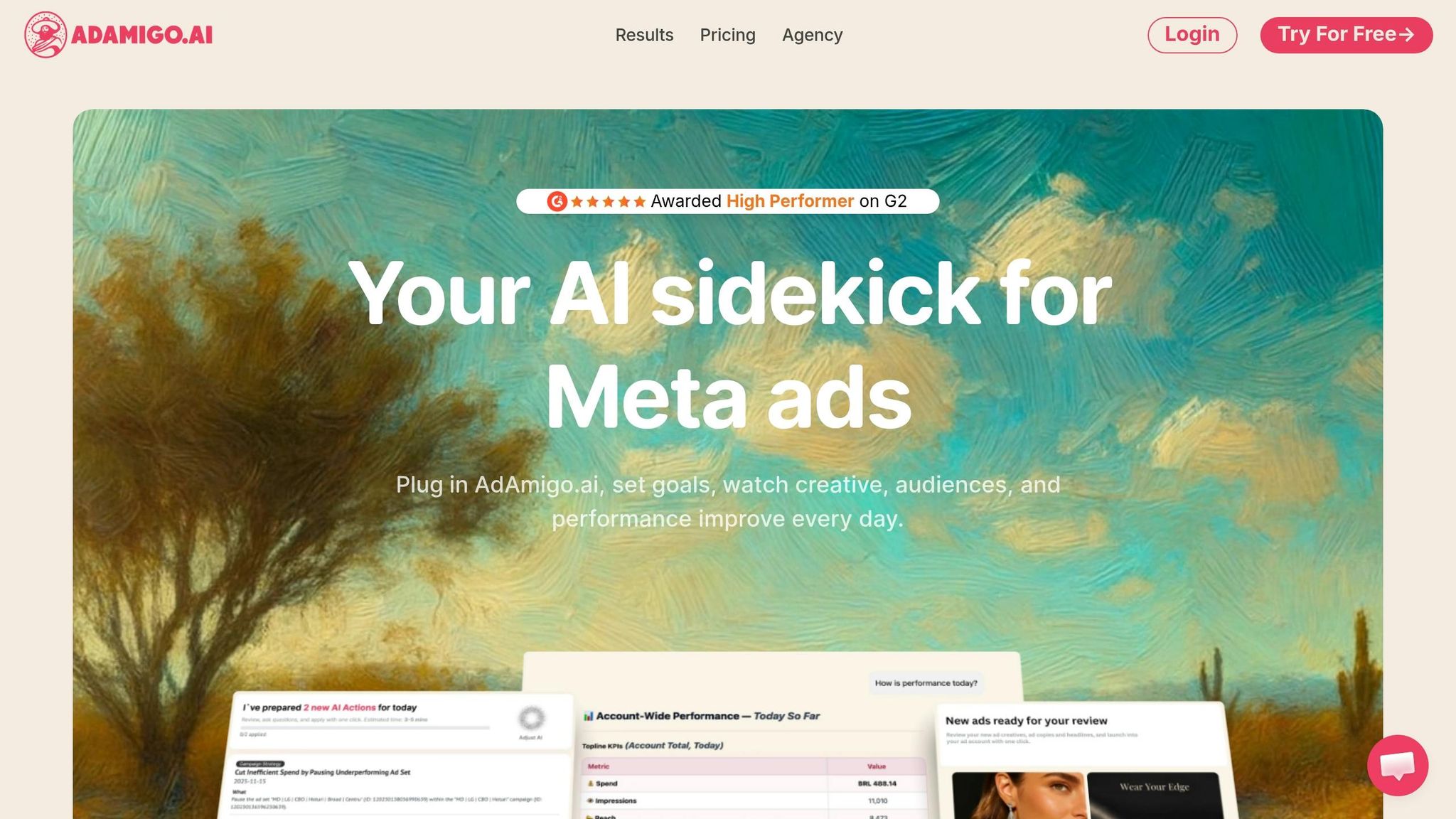
While CDPs excel at organizing data and syncing audiences, AdAmigo.ai takes it a step further by automating campaign management. This platform handles tasks like testing, budget adjustments, scaling successful campaigns, and refreshing creative assets. With these tools, a single media buyer can efficiently manage multiple client accounts without breaking a sweat.
What really sets AdAmigo.ai apart is its AI Chat Agent. This feature allows you to manage campaigns through simple, conversational commands. For example, you can ask, "Why did ROAS drop yesterday?" or direct it to "Launch a new retargeting campaign for cart abandoners." The AI not only analyzes your CDP data and provides insights but also implements changes on the spot.
Creating Targeted In-Market Audiences in Meta Ads for Better ROI | Click Track Data
Conclusion
Customer Data Platforms (CDPs) are changing the game for Meta ad targeting by directly integrating first-party data into campaigns through tools like the Conversions API. This approach avoids browser restrictions and cookie limitations, ensuring your audience data stays precise and current. With real-time syncing, visitors can be added to retargeting audiences within minutes, all while adhering to privacy guidelines. This constant flow of accurate data sets the stage for stronger campaign performance.
CDP-driven campaigns often lead to lower acquisition costs and higher conversion rates. Features like real-time suppression ensure you're not wasting ad spend on customers who’ve already made a purchase, keeping your campaigns efficient and focused.
But it doesn’t stop there. Automation tools take things further by fine-tuning campaign execution. Standardizing and synchronizing data is essential for optimizing performance. Platforms like AdAmigo.ai manage tasks such as budget allocation, creative testing, and campaign scaling based on live performance metrics. This allows for advanced campaign management without the need for constant manual oversight.
When you combine CDP data with AI-powered automation, the results are impressive. CDPs maintain high-quality audience data and enable real-time updates, while AI tools handle everything from launching tests to reallocating budgets and refreshing creatives. Instead of managing audiences, creatives, and budgets as separate tasks, the system optimizes them as a unified process.
While setting up CDP-Meta integrations requires some technical effort upfront, the long-term benefits are undeniable. Improved data accuracy, privacy compliance, and automated processes work together to lower acquisition costs and enhance targeting precision through full-funnel AI optimization.
FAQs
Do I need a CDP to use Meta’s Conversions API (CAPI)?
No, you don’t need a CDP to use Meta’s Conversions API. However, using a CDP like Adobe Real-Time CDP can streamline data collection and refine audience targeting, helping to make your campaigns perform better.
What first-party data fields improve Meta Custom Audience match rates?
First-party data, such as email addresses, phone numbers, names, and locations, plays a key role in boosting match rates for Meta Custom Audiences. When customer lists include multiple identifiers and are updated monthly, they generally achieve match rates between 30% and 60%. Including more data points not only improves accuracy but also ensures more precise targeting for your campaigns.
How fast can CDP segments update Meta audiences for retargeting and suppression?
CDP segments sync with Meta audiences almost instantly - usually within seconds to a few minutes. This rapid update means activities like sign-ups, cart additions, or purchases are promptly accounted for. The result? More precise audience targeting and suppression, keeping your campaigns aligned with real-time user behavior.