
AI Tools for Behavioral Targeting in Meta Ads
Learn how behavioral targeting works on Meta, how AI detects signals manual methods miss, and which AI tools execute it best for DTC brands.
Most advertisers treat behavioral targeting and interest targeting like they're the same thing. They're not — and confusing them is why so many Meta ad campaigns underperform before the AI even gets a chance to optimize.
Behavioral targeting uses what people actually do — purchases made, devices used, trips taken, life events experienced. Interest targeting uses what people say they like — pages followed, topics engaged, content consumed. One is action; the other is affinity. And on Meta, the difference determines whether your ad spend finds buyers or browsers.
Here's what this page covers:
What behavioral targeting is on Meta — the specific signals Meta tracks and how they work
How it differs from interest targeting — with a concrete example so you never confuse them again
Why AI matters for behavioral targeting — the pattern-recognition advantage manual approaches can't match
The best AI tools for behavioral targeting — AdAmigo, Advantage+, AdRoll, Madgicx, and Revealbot, evaluated specifically on behavioral capabilities
Four actionable DTC setups — purchase-behavior, device-usage, travel-pattern, and life-event targeting you can deploy today
What Is Behavioral Targeting in Meta Ads?
Behavioral targeting on Meta means building audiences based on real, observable user actions — not stated preferences or self-reported interests. Meta collects behavioral signals from across its ecosystem (Facebook, Instagram, Messenger, and partner apps/websites) and makes them available as targeting criteria inside Ads Manager.
These are the behavioral categories Meta surfaces to advertisers:
Behavioral Category | What It Tracks | Real Example |
|---|---|---|
Purchase Behavior | Past purchases, purchase frequency, spending habits | "Engaged shoppers" who bought online in the last 30 days |
Digital Activities | App installs, website visits, in-app actions, ad clicks | Users who installed a fitness app and opened it 5+ times this week |
Mobile Device User | Device type, OS version, network type, device age | iPhone 15 Pro users on Verizon — ideal for a premium mobile accessory brand |
Travel | Frequent travelers, international vs. domestic, commuters | "Frequent international travelers" for a DTC luggage brand |
Life Events | New job, marriage, moving, anniversary, new baby | "Recently moved" for a home-goods brand or "anniversary in 30 days" for a gifting brand |
Engagement Behaviors | Ad interactions, video watch time, page engagements, form opens | Users who watched 75%+ of your last three video ads but haven't purchased |
These signals go deeper than demographics or interests because they reflect intent momentum — a user who just booked an international flight is far more valuable to a luggage brand than a user who simply follows a travel page. The action signal is stronger than the affinity signal, and that's the whole game.
Behaviorally targeted campaigns generate 40% to 60% higher conversion rates compared to untargeted campaigns, according to DataIntelo's behavioral targeting market report. The gap exists because behavioral data captures what people do rather than what they click "like" on.
🎯 Guide to Meta Ads Targeting | Part 2
1. AdAmigo.ai

AdAmigo.ai is an AI-powered tool designed to analyze your Meta ad account data and automatically refine targeting to align with your performance goals.
Key Features
Real-time performance tracking
Smart budget allocation
One-click implementation of AI recommendations
Once connected to your Meta ad account, the AI agent quickly turns complex behavioral data into actionable strategies. It pinpoints the most effective targeting methods to help you achieve better results by improving ROAS and cutting CPA.
AdAmigo.ai even backs its promise with a guarantee: if you don’t see a 30% boost in performance within 30 days, you don’t pay. Users have reported impressive results - one advertiser saw an 83% improvement in ROAS during their first week using the Recommendation tool.
Flexible Control Options
AdAmigo.ai gives you the flexibility to manage your campaigns the way you prefer:
Activate autopilot mode for hands-free optimization
Set specific performance goals and budget limits
Launch hundreds of ads simultaneously with ease
Feature | What It Does |
|---|---|
AI Agent | Continuously fine-tunes targeting parameters |
Bulk Ad Launch | Lets you run multiple campaigns efficiently |
Daily Analytics | Tracks performance metrics in real-time |
Voice Commands | Allows quick adjustments to targeting strategies |
For businesses juggling multiple campaigns, the bulk ad launch feature is a game-changer. It enables marketers to deploy hundreds of behaviorally targeted ads with just one click, saving time while maintaining accuracy.
Pricing
AdAmigo.ai offers a pricing model tailored to suit different ad budgets. Plans start at $98 per month for accounts spending up to $5,000 monthly. For ongoing optimization, the AI Recommendations feature is available at $149 per ad account, ensuring you get continuous insights to refine your targeting efforts.
Behavioral Targeting vs. Interest Targeting: What's the Difference?
This is the distinction that trips up most Meta advertisers — and it's the reason many campaigns waste spend on the wrong audiences.
Behavioral Targeting | Interest Targeting | |
|---|---|---|
What it uses | Real actions — purchases, device usage, travel, life events | Stated or inferred preferences — pages liked, topics engaged, content consumed |
Signal strength | High — action already taken | Medium — affinity, not intent |
Example | "People who purchased online in the last 30 days" | "People interested in online shopping" |
Best for | Conversion campaigns, retargeting, high-intent offers | Top-of-funnel awareness, broad interest exploration |
Data source | Meta's cross-platform behavioral tracking + advertiser pixel data | Page likes, group memberships, ad engagement history |
Concrete example: Say you sell premium coffee subscriptions. Interest targeting would serve ads to people who follow Starbucks, like coffee-related pages, or engage with barista content — they might buy. Behavioral targeting would serve ads to people who purchased coffee online in the last 60 days, use a high-end mobile device (signaling disposable income), and frequently shop on mobile — they already demonstrated the behavior you want. The behavioral audience is smaller but converts at multiples of the interest audience.
Why does this matter now? Because Meta's algorithm has shifted aggressively toward broad-audience optimization with Advantage+. When you feed it behavioral signals instead of (or layered on top of) interest signals, the AI has richer, higher-intent data to optimize against. You're not just telling Meta "find people like this" — you're telling it "find people who did this."
For a deeper dive into how AI powers audience discovery beyond manual controls, see our pillar page on audience targeting for Meta ads.
How AI Detects Behavioral Signals Manual Targeting Misses
You can manually set a behavioral audience in Ads Manager in about two minutes — pick "Engaged Shoppers," set your demographics, launch. That works. But it leaves an enormous amount of behavioral signal on the table, because a human media buyer can only process what Meta's UI surface shows them.
AI tools process what the UI hides.
Pattern Recognition at Scale
Meta tracks behavioral signals across billions of user interactions daily. Even within a single ad account, an AI agent ingests every auction outcome, every scroll depth, every session timestamp, every device-switch pattern — and finds clusters a human would never surface manually.
Consider this real pattern an AI tool can detect: late-night mobile browsers who view product pages at 11 p.m.–2 a.m. on iOS but convert the next morning on desktop. A manual media buyer would see two separate behaviors and miss the connection. An AI sees the cohort, segments it, and adjusts delivery timing and device targeting accordingly.
Real-Time Signal Aggregation
Behavioral signals decay fast. A user's purchase intent window might be 72 hours. Manual audience refreshes happen weekly at best — meaning you're always targeting yesterday's behavior. AI tools continuously aggregate fresh behavioral signals and adjust audience composition in real time, so you're targeting what users are doing right now, not what they did last week.
Non-Obvious Behavioral Clusters
The most valuable behavioral segments are the ones you'd never name yourself. AI surfaces clusters like:
Users who engage with competitor ads but not yours (behavioral conquesting)
High-AOV purchasers who exclusively buy between 6 a.m. and 9 a.m. on weekdays
Cart abandoners who return and convert only after seeing a specific creative format (video vs. static)
These aren't segments you can build in Ads Manager's dropdown menus. They're behavioral patterns that only emerge when an algorithm processes thousands of data points per user across time.
McKinsey research found that companies that excel at personalization generate 40% more revenue from those activities than average players — and that personalization most often drives a 10% to 15% revenue lift (with company-specific results spanning 5% to 25%). Behavioral targeting is the data layer that makes that personalization possible.
None of this is theoretical. The AI behavioral data analysis tools available today already do this work — and the gap between AI-assisted and purely manual behavioral targeting widens every quarter as Meta adds more signal types.
Top AI Tools for Behavioral Targeting in Meta Ads
Every tool on this list does something with behavioral data. But they approach it differently — and the best choice depends on whether you want a fully autonomous AI agent, a native Meta solution, or a specialized behavioral retargeting platform.
Here's how they compare specifically on behavioral targeting capabilities:
Tool | Behavioral Signals Used | Automates Behavioral Segments? | Real-Time Behavioral Adjustments? | Best For |
|---|---|---|---|---|
AdAmigo.ai | Account-level auction data, conversion paths, engagement patterns, cross-campaign behavior | ✅ Yes — AI agent auto-detects and refines behavioral segments | ✅ Yes — continuous daily optimization | DTC brands wanting a full AI media buyer with behavioral targeting built in |
Meta Advantage+ | Meta's proprietary behavioral data (purchase, device, engagement, travel) | ✅ Yes — dynamic audience expansion from behavioral seed data | ✅ Yes — real-time auction-level adjustments | Advertisers wanting Meta-native behavioral optimization with minimal tool overhead |
AdRoll | On-site behavior, purchase intent signals, cross-site browsing patterns | ⚠️ Partial — strong retargeting segments, less proactive discovery | ✅ Yes — dynamic retargeting adjustments | Brands focused on behavioral retargeting and cross-channel behavioral campaigns |
Madgicx | User engagement behaviors, ad interaction patterns, conversion path analysis | ⚠️ Partial — custom audience builder with behavioral triggers | ✅ Yes — engagement-triggered real-time adjustments | Media buyers wanting granular behavioral audience control with AI assistance |
Revealbot | Campaign performance signals, rule-based behavioral triggers | ❌ No — rule-based, not AI-discovered segments | ⚠️ Partial — rule-triggered adjustments, not continuous | Teams needing behavioral-rule-based campaign automation and budget management |
2. Meta Advantage+ Audiences
Advantage+ Audiences is Meta's native AI-powered targeting engine, and it's built almost entirely on behavioral data. When you create an Advantage+ campaign, Meta uses its proprietary behavioral signals — purchase history across Facebook and Instagram, device usage patterns, engagement with apps and websites, and travel behaviors — to dynamically build and refine your audiences.
Behavioral targeting strengths:
Proprietary behavioral data: No third-party tool has access to the depth of behavioral signal Meta holds internally. Advantage+ uses purchase records, engagement histories, and device fingerprints that only Meta can see.
Dynamic audience expansion: Feed Advantage+ a seed audience (even a small one) and it finds behavioral lookalikes — users whose actions mirror your best customers, not just users with similar interests.
Real-time auction optimization: Advantage+ adjusts targeting at the individual auction level, factoring in behavioral recency — a user who just made a related purchase is weighted differently than one who did so three months ago.
Limitations: Advantage+ is a black box. You can't see which behavioral segments it's targeting or why — you only see aggregate results. For advertisers who want transparency into which behaviors drive performance, a tool like AdAmigo or Madgicx complements Advantage+ by surfacing what Meta's native reporting hides.
For a detailed breakdown of how Advantage+ segments audiences, see our Meta Advantage+ audience segmentation guide.
3. AdRoll
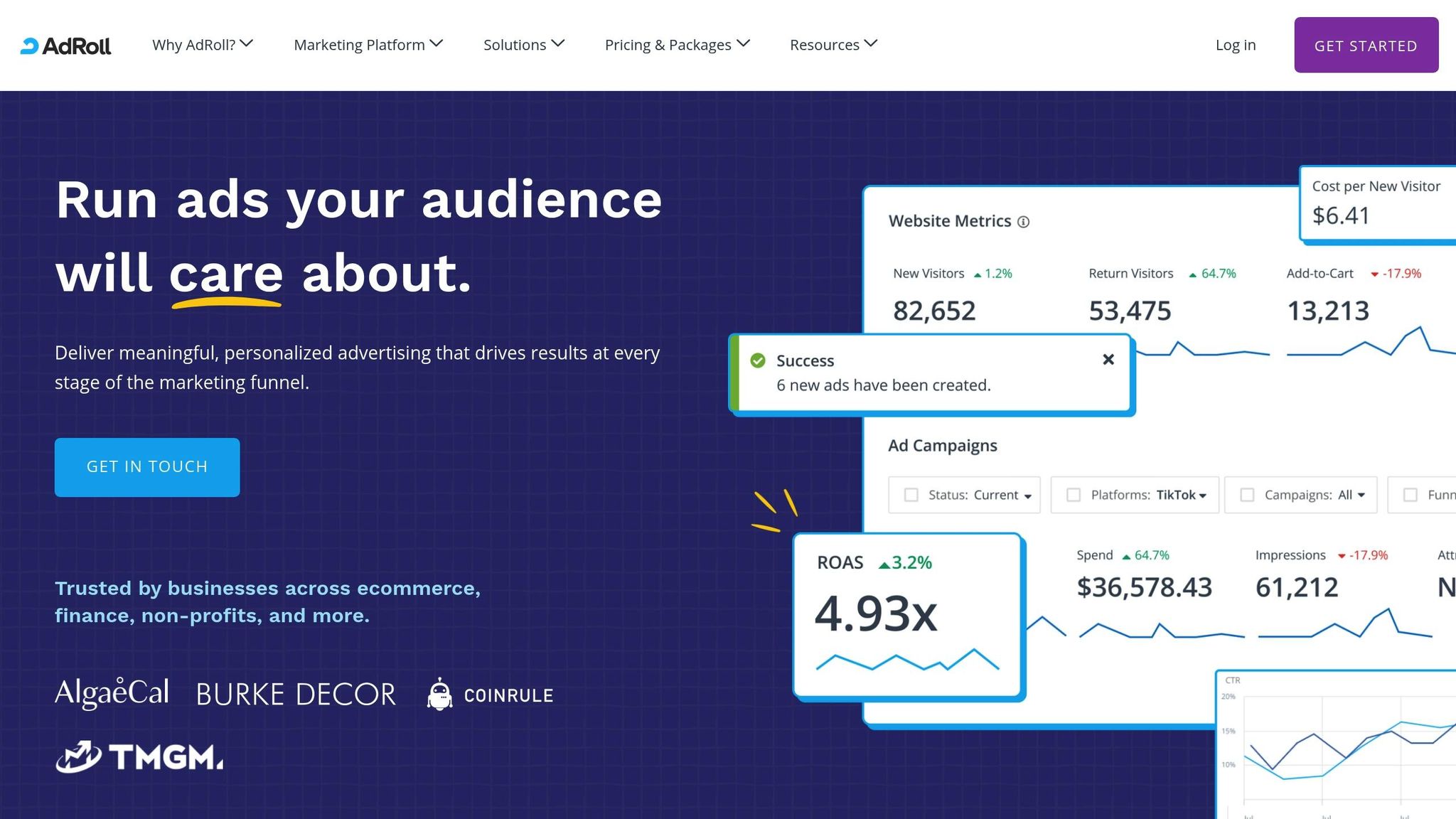
AdRoll's strength in behavioral targeting is retargeting — specifically, segmenting users based on their on-site and cross-site behavior and re-engaging them with dynamic ads across Meta and the web.
Behavioral targeting strengths:
On-site behavioral segmentation: AdRoll tracks what users do on your site — product page views, cart adds, time on page, scroll depth — and builds behavioral segments from that first-party data. Someone who viewed three product pages and spent 90 seconds on your pricing page gets a different ad than someone who bounced after 5 seconds.
Purchase-intent scoring: AdRoll scores users on behavioral purchase intent based on browsing patterns and cross-site behavior, then adjusts bid levels and creative accordingly.
Cross-channel behavioral retargeting: AdRoll runs behavioral retargeting across Meta, display, and email, so the behavioral segment follows the user across channels rather than existing in a Meta-only silo.
Best for: DTC brands that need strong behavioral retargeting infrastructure — not just on Meta but across the full customer journey.
4. Madgicx
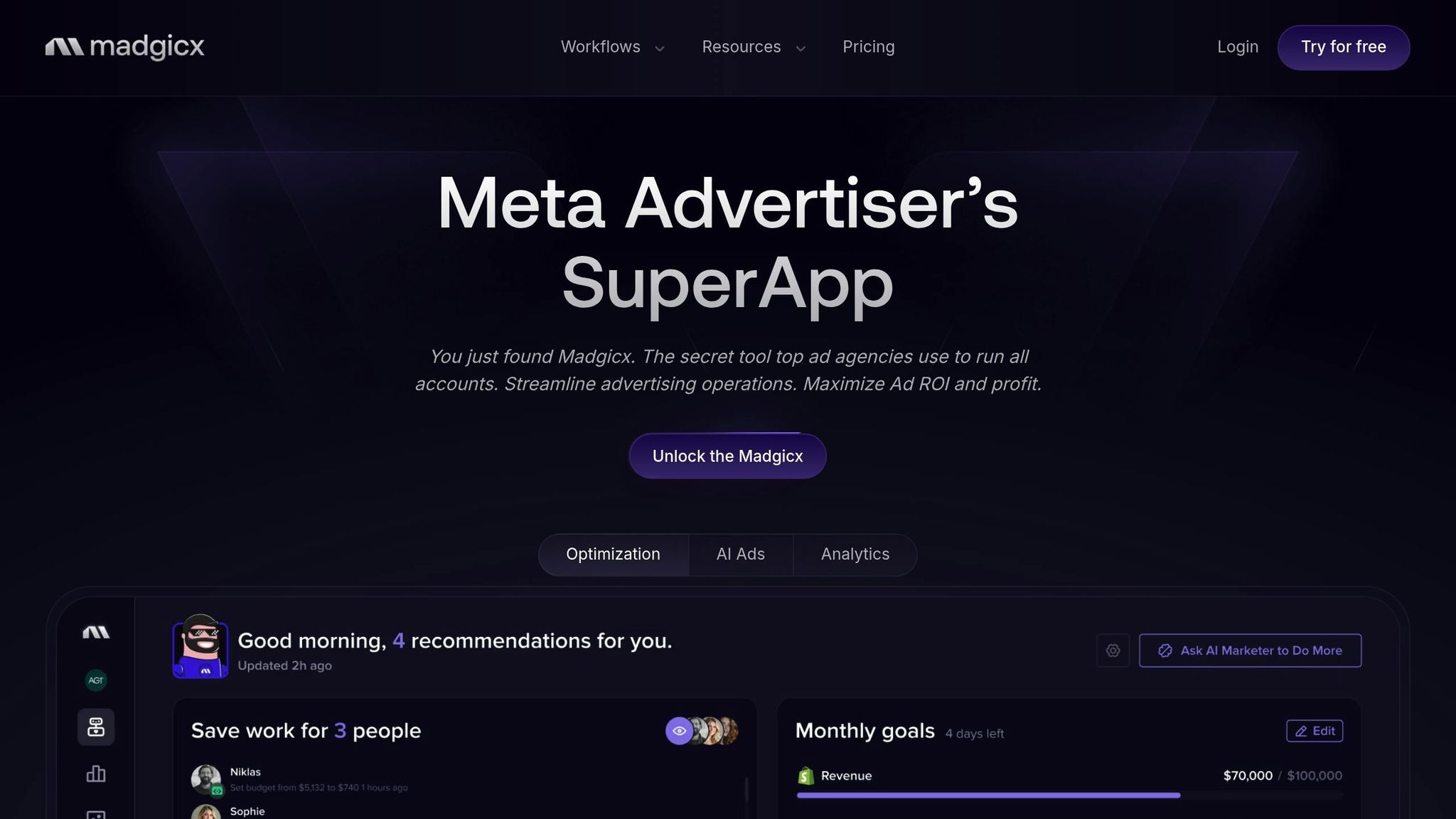
Madgicx approaches behavioral targeting from the media buyer's perspective: it gives you granular visibility into which behaviors drive performance, then lets you build custom audiences triggered by specific behavioral events.
Behavioral targeting strengths:
Behavioral audience insights: Madgicx's analytics surface which user behaviors correlate with conversions — ad engagement patterns, video completion rates, click timing, session frequency — so you can build audiences around behaviors that actually predict purchase, not just vanity signals.
Custom audience builder with behavioral triggers: You can create audiences that fire when a user takes a specific behavioral action — watched 50%+ of a video ad, clicked two ads in 24 hours, visited your site three times without purchasing. These behavior-triggered audiences update in real time.
Visual behavioral analytics: Madgicx's interface makes it easier to spot behavioral trends visually — useful for media buyers who want to understand the why behind AI-recommended segments before acting on them.
Best for: Experienced media buyers who want AI-assisted behavioral targeting with full visibility and control — rather than a fully autonomous agent.
5. Revealbot

Revealbot is a campaign automation platform that uses rule-based triggers — not AI-discovered behavioral patterns — to adjust targeting and budgets. Its behavioral targeting value is automation reliability rather than pattern discovery.
Behavioral targeting strengths:
Behavior-triggered rules: Set conditions like "if CPA exceeds $30 for this behavioral audience, reduce budget 15%" or "if ROAS on purchase-behavior segment exceeds 3x, increase budget 20%." These rules execute automatically.
Campaign-level behavioral automation: Revealbot can pause, scale, or restructure campaigns based on behavioral performance signals — useful for protecting spend on behavioral audiences that are performing well and cutting losers fast.
Limitations: Revealbot doesn't discover behavioral segments — it automates actions around segments you've already defined. Pair it with an AI tool that does the discovery (AdAmigo or Madgicx) and Revealbot becomes much more powerful.
For a broader view of AI tools beyond behavioral targeting specifically, check out our guide to AI ad targeting tools for Meta ads — it covers the full landscape of AI-powered audience solutions.
Practical Behavioral Targeting Setups for DTC/E-Commerce
Here are four behavioral targeting setups you can run this week — each mapped to the AI tool best suited to execute it.
1. Purchase-Behavior Targeting for Upsell Campaigns
The setup: Target Meta's "Engaged Shoppers" behavioral category — users who made an online purchase in the last 30 days — and layer on your own customer data to exclude existing buyers of the specific product you're upselling.
Example: A DTC skincare brand targets engaged shoppers who purchased cleanser but not moisturizer in the last 60 days, serving them a moisturizer upsell ad with a bundle discount.
Best AI tool: AdAmigo.ai — its AI agent auto-detects which purchase-behavior segments respond to upsell offers and shifts budget to the winning cohorts without manual intervention. The behavioral clustering engine handles the segmentation; you handle the creative.
2. Device-Usage Segmentation for Creative Optimization
The setup: Segment your audience by device behavior — mobile-first browsers vs. desktop converters — and tailor creative and landing pages to each group's context.
Example: A DTC apparel brand discovers through AI analysis that mobile browsers convert best with short-form video ads (Reels format) and a one-page checkout, while desktop users respond to carousel ads with detailed product specs. The brand runs separate ad sets for each device-behavior segment with format-matched creative.
Best AI tool: Meta Advantage+ Audiences — its auction-level optimization naturally adjusts delivery based on device-behavior patterns. Layer on AdRoll if you need cross-device behavioral retargeting (the mobile browser who switches to desktop).
3. Travel-Pattern Targeting for Location-Specific Offers
The setup: Target users in the "Frequent International Travelers" behavioral category and serve them location-specific offers or product lines.
Example: A DTC luggage brand targets frequent international travelers with ads featuring their lightweight carry-on, emphasizing international size compliance — then retargets the same segment with destination-specific packing lists to build brand affinity between trips.
Best AI tool: AdAmigo.ai for behavioral discovery + campaign automation, or Madgicx if you want to manually build and monitor travel-behavior audiences with visual analytics.
4. Life-Event Targeting for Gifting and Seasonal Brands
The setup: Use Meta's life-event behavioral categories — "Anniversary in 30 days," "Recently moved," "New job" — to serve time-sensitive, emotionally relevant ads.
Example: A DTC gifting brand targets users with an anniversary coming up within 30 days, serving them a "Still need the perfect gift?" ad with a curated gift guide and a countdown urgency element. A home-goods brand targets "Recently moved" users with new-home bundles.
Best AI tool: AdAmigo.ai or Madgicx — life-event targeting windows are short (often 30 days or less), so you need AI that adjusts in real time. Manual audiences stale before the window closes.
FAQ
What's the difference between behavioral targeting and interest targeting on Meta?
Behavioral targeting uses real user actions — purchases made, devices used, trips taken, life events experienced. Interest targeting uses what users say they like — pages followed, topics engaged, content consumed. Behavioral signals are stronger because they reflect actual behavior, not stated preferences. A user who bought running shoes is a better target than a user who liked a running page. Read the full breakdown in the comparison table above.
Does Meta Advantage+ use behavioral targeting?
Yes — Advantage+ Audiences is built almost entirely on Meta's proprietary behavioral data, including purchase history, device usage patterns, engagement behaviors, and travel signals. It uses these behavioral signals to dynamically build and refine audiences at the auction level. However, Advantage+ is a black box — you can't see which specific behavioral segments it's using, which is why many advertisers pair it with a transparent AI tool like AdAmigo.
Which AI tool is best for behavioral targeting on Meta?
It depends on your needs. AdAmigo.ai is the most complete option — a full AI media buyer that auto-detects behavioral patterns and executes targeting without manual intervention. Meta Advantage+ is the best native option if you want behavioral targeting built into Meta's own infrastructure. AdRoll excels at cross-channel behavioral retargeting. Madgicx is ideal for media buyers who want granular behavioral visibility with AI assistance. See the full comparison table above.
Can I use behavioral targeting without an AI tool?
Yes — Meta Ads Manager lets you manually select behavioral categories like "Engaged Shoppers" or "Frequent International Travelers." But manual behavioral targeting only surfaces broad, pre-defined segments. AI tools detect the non-obvious behavioral patterns that drive the biggest performance gains — things like "users who view product pages at night and convert the next morning on desktop." You can run behavioral targeting manually; you just leave significant performance on the table.
Next Steps
Behavioral targeting on Meta isn't complicated — but doing it well requires the right data and the right tools. Here's how to move forward:
Audit your current targeting. Open Ads Manager and check whether your active campaigns are using behavioral segments, interest segments, or broad targeting only. If you're not using behavioral data at all, you're competing with one hand tied.
Pick your behavioral targeting approach. Based on the tool comparison above, decide whether you want a fully autonomous AI agent (AdAmigo), Meta's native behavioral engine (Advantage+), or a specialized behavioral tool (AdRoll, Madgicx, Revealbot). The right choice depends on your team's size, ad spend, and appetite for automation vs. control.
Start with one behavioral setup. Don't overhaul every campaign at once. Pick one of the four DTC setups above — purchase-behavior upsells, device segmentation, travel-pattern targeting, or life-event targeting — and test it against your current approach for two weeks.
Let the AI learn. Behavioral targeting tools get better with data. Give your chosen AI tool at least a full conversion cycle (7–14 days) before judging results — behavioral patterns take time to surface.