
How to Build a Full-Funnel Meta Ads Setup (Prospecting, Re-engagement, Retargeting, Retention)
Build a Meta Ads full-funnel with prospecting, re-engagement, retargeting, and retention—covering audiences, creatives, budgets, and AI automation.
When running Meta Ads, most businesses focus on one-off campaigns and struggle with high costs. A full-funnel strategy solves this by guiding users through four stages: awareness, consideration, conversion, and retention. Each stage targets a specific audience with tailored messaging, reducing wasted ad spend and navigating the Meta Ads Learning Phase and optimizing ROI. This approach can cut customer acquisition costs by up to 40%.
Here’s how to set up an effective funnel structure:
Prospecting (Awareness): Use broad targeting or lookalike audiences to reach new users.
Re-engagement (Consideration): Retarget users who’ve interacted with your content using custom audiences.
Retargeting (Conversion): Focus on high-intent users like cart abandoners with dynamic ads.
Retention: Engage past customers with loyalty offers and upsells.
Tools like AdAmigo.ai simplify the process by optimizing multi-campaign Meta ad setups with automation, saving time and improving performance. Starting at $99/month, it’s a cost-effective way to scale your ad strategy without the manual workload.
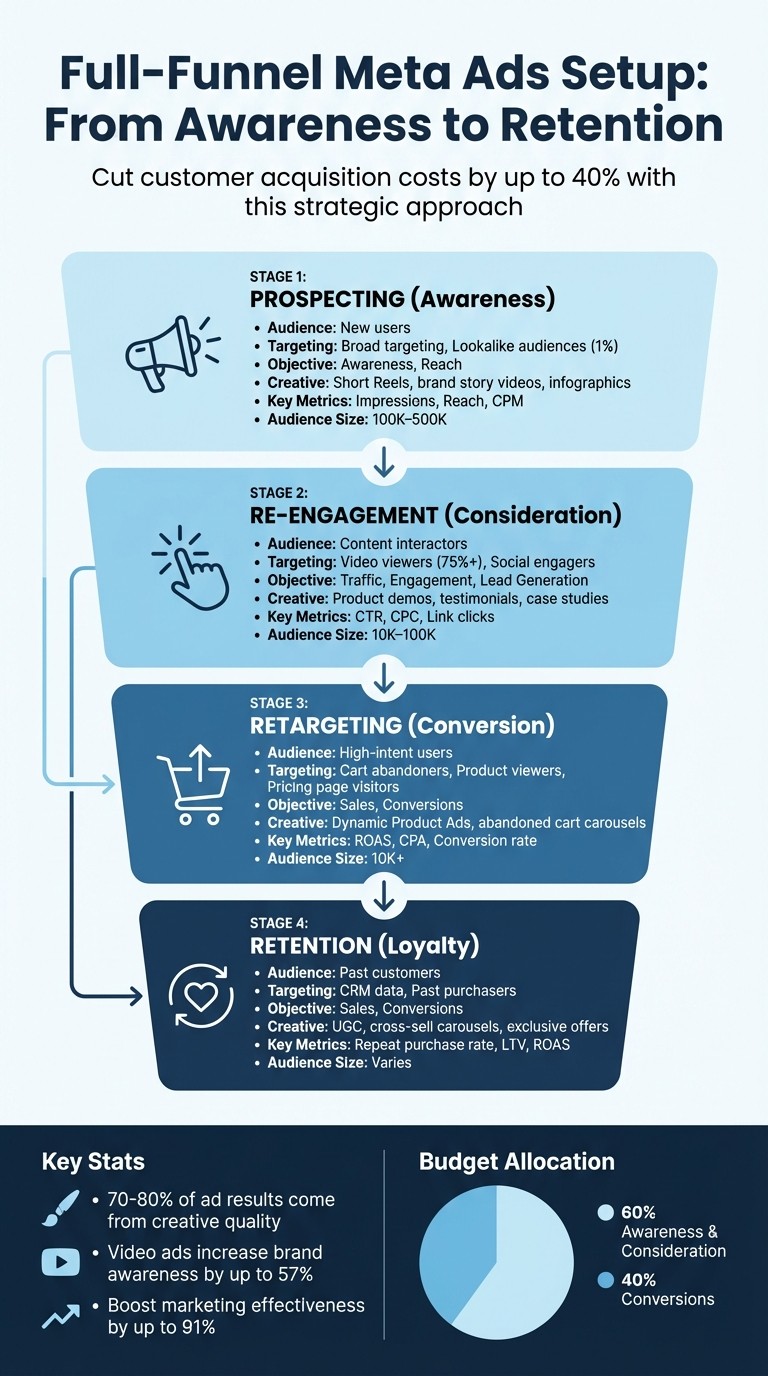
Full-Funnel Meta Ads Strategy: 4-Stage Framework for Customer Acquisition
Facebook Ads Funnel Explained: From Clicks to Conversions
Step 1: Structure Your Full-Funnel Campaign
Setting up a campaign manually can be tricky, but you can simplify the process by following Meta Ads Manager's three-tier structure: Campaign (objective), Ad Set (audience, budget, schedule), and Ad (creative). This setup organizes your campaigns effectively and helps Meta optimize your ads. Here's how to fine-tune your campaigns for better results.
Set Objectives for Each Funnel Stage
Each stage of the funnel should have a clear, specific goal. For prospecting (top of funnel), focus on building brand awareness. Use objectives like Awareness or Reach to introduce your business to new audiences. In the re-engagement phase (middle of funnel), aim to nurture interest by using objectives like Traffic, Engagement, or Lead Generation. These work best for users who have already interacted with your brand. At the retargeting and retention stage (bottom of funnel), prioritize driving purchases. Following a conversion optimization checklist can help ensure your tracking and targeting are set up for success. Objectives like Sales or Conversions are ideal for engaging high-intent users. Meta simplifies this process by grouping objectives into primary categories, making it easier to align your campaign goals with your broader business metrics.
Organize Campaigns in Meta Ads Manager
Staying organized is essential, and Meta ad naming conventions can make a big difference. For example, a campaign named ECOM_PROSP_SHOES_LOOKALIKE_2025Q1 quickly tells you the business unit, campaign type, product line, target audience, and campaign period. To make your retargeting efforts more effective, segment ad sets by recency - such as 7-day, 30-day, or 90-day visitors - and tailor your messaging accordingly. At the ad set level, apply exclusion rules to avoid wasted spending. For instance, exclude recent purchasers from prospecting campaigns.
Match Campaign Goals to Business Metrics
Tie each stage of the funnel to measurable KPIs. For prospecting, track metrics like impressions, reach, and CPM to see how far your brand’s message is spreading, while keeping ROAS benchmarks in mind for future scaling. In re-engagement campaigns, focus on metrics such as click-through rate (CTR) benchmarks, cost per click (CPC), and link clicks to assess user interest. For retargeting, monitor return on ad spend (ROAS), cost per acquisition (CPA), and conversion rate to ensure your efforts are profitable. Proper analytics tool integration is vital for tracking these metrics accurately. Finally, for retention, evaluate metrics like repeat purchase rate, customer lifetime value (LTV), and ROAS to measure long-term loyalty.
To manage your budget effectively, consider the 60/40 rule - allocate about 60% of your budget to awareness and consideration, and 40% to conversions. adjust your bidding strategies to match your objectives: use CPM for awareness, CPC for consideration, and CPA for conversions. This approach ensures your campaigns are both efficient and aligned with your business goals.
Step 2: Configure Audiences for Each Stage
To get the most out of your campaigns, it's essential to target the right audience at every stage of the funnel. Meta offers various options to help you connect with people - from those who’ve never heard of your brand to loyal customers who are ready to purchase again. The trick is to align your audience strategy with where users are in their journey.
Prospecting: Reaching New Customers
When prospecting, your goal is to connect with people unfamiliar with your brand. This is where Broad Targeting comes into play. Instead of manually selecting interests or using AI, let Meta’s AI analyze intent signals to identify potential buyers. As Máté Hunyor from Wupscale Marketing explains:
Hand picking interests can limit discovery and push you into narrow pockets that cost more and underdeliver.
For more focused testing, you can use Interest-Based Targeting, which allows you to select demographics and behaviors. However, this method works best for niche campaigns .
One of the most effective tools for prospecting is Lookalike Audiences. These audiences are built using high-quality seed data, such as your top 10% of spenders or repeat customers, rather than general website traffic . Start with a 1% Lookalike for maximum similarity to your best customers. If you need to expand your reach, test larger percentages like 3–5% . Given the recent privacy changes that have impacted pixel data reliability, Lookalikes created from first-party data (like email addresses or phone numbers from your CRM) tend to deliver better results.
Once you’ve cast a wide net, the next step is to focus on users who’ve shown initial interest.
Re-engagement: Connecting with Interested Users
Re-engagement is about warming up prospects who’ve interacted with your brand but haven’t converted yet. To do this, build Custom Audiences based on specific engagement behaviors. For instance, if you’re targeting video viewers, segment them by how much of the video they watched - those who viewed 75% or 95% are likely more engaged and worth targeting separately .
You can also include people who’ve engaged with your social media profiles on platforms like Instagram or Facebook within the last 90 days. For brands with high traffic, narrowing this window to 30–60 days may be more effective. While general website visitors can be included, it’s smart to exclude them from retargeting campaigns to keep your audiences distinct .
Retargeting and Retention: Converting and Keeping Customers
Once you’ve engaged warm audiences, it’s time to refine your strategy to convert and retain them. For retargeting, focus on high-intent behaviors that suggest users are ready to buy. These include cart abandoners, product viewers, and visitors to your pricing page . Segment these audiences by recency - someone who abandoned their cart three days ago is much more likely to convert than someone who did so 30 days ago. Using Dynamic Product Ads, you can even show users the exact items they viewed. This works best when following Meta ads schema best practices to ensure accurate event tracking.
When it comes to retention, leverage your CRM or Shopify data to target past buyers with loyalty rewards, VIP launches, or upsell offers . To avoid wasting ad spend and ensure a seamless experience, exclude recent purchasers (those within the last 30–90 days) from both prospecting and retargeting campaigns . If you’re running Advantage+ campaigns and need strict exclusions, switch to the "Original Audience" settings to prevent Meta from overriding your rules.
Funnel Stage | Audience Type | Primary Source | Typical Size |
|---|---|---|---|
Prospecting | Broad / Lookalike (1%) | AI signals, Customer lists | 100K–500K |
Re-engagement | Custom Audiences | Video viewers (75%+), Social engagers | 10K–100K |
Retargeting | High-Intent Custom | Cart abandoners, Product viewers | 10K+ |
Retention | Customer Lists | CRM data, Past purchasers | Varies |
Step 3: Create Ad Creatives for Each Stage
Crafting tailored ad creatives for every stage of the funnel ensures your strategy resonates with customers at all touchpoints. Creative design isn’t just a detail - it’s the backbone of Meta ad performance. Alex Jakma from Meta Marketing Agency highlights that 70-80% of ad results come from creative quality, not budget or targeting choices. Even the most carefully selected audience won’t convert if the creative doesn’t connect. To make an impact, align your formats and messaging with the customer’s journey.
Choose the Right Creative Format
Each stage of the funnel calls for a different creative approach. Here’s how to align your content with your audience’s needs:
Prospecting: Introduce your brand with short Reels, brand story videos, or infographics that highlight the problem your product solves. These audiences are unfamiliar with your brand, so focus on education rather than pushing for a sale.
Re-engagement: At this stage, users are aware of your brand but need reassurance. Use product demos, testimonials, and case studies to build trust. Include credibility markers like awards or certifications. Video ads work particularly well here, increasing brand awareness by up to 57%.
Retargeting: For users who’ve shown interest but haven’t converted, Dynamic Product Ads and abandoned cart visuals are key. Combine these with customer testimonials and clear calls-to-action like “Complete Your Order” or “Get 20% Off Today” to drive urgency.
Retention: Once someone has made a purchase, focus on building loyalty. Exclusive offers, user-generated content, and cross-sell carousels can encourage repeat purchases and strengthen customer relationships.
When it comes to format, vertical designs are king. Use 4:5 ratios for Feed ads and 9:16 for Stories and Reels to maximize screen space. Keep essential visuals and text centered to prevent cropping on different placements. After selecting your formats, test variations and follow dynamic creative optimization best practices to find what truly works.
Test Variations to Find What Works
Testing is essential for identifying which creative elements drive conversions. Start with 2–3 ad sets per funnel stage, tweaking one variable at a time - like testing two headlines with the same image or two images with identical copy.
Use Ad Set Budget Optimization (ABO) during testing to distribute spend evenly across variations. Avoid Campaign Budget Optimization (CBO) at this stage, as it may favor one ad too early, skewing results. Let tests run for 7–14 days or until each variation hits 100 conversion events. Watch for ad fatigue - purchase intent can drop by 16% after users see the same ad six times or more. Refresh your creatives when ad frequency hits 2.5–3.0.
Top brands refresh their creatives roughly every 10 days. Allocate 10-20% of your daily budget specifically for testing. To help Meta’s algorithm optimize effectively, provide up to five primary text variations and five headlines per ad.
How AdAmigo.ai Simplifies Creative Production
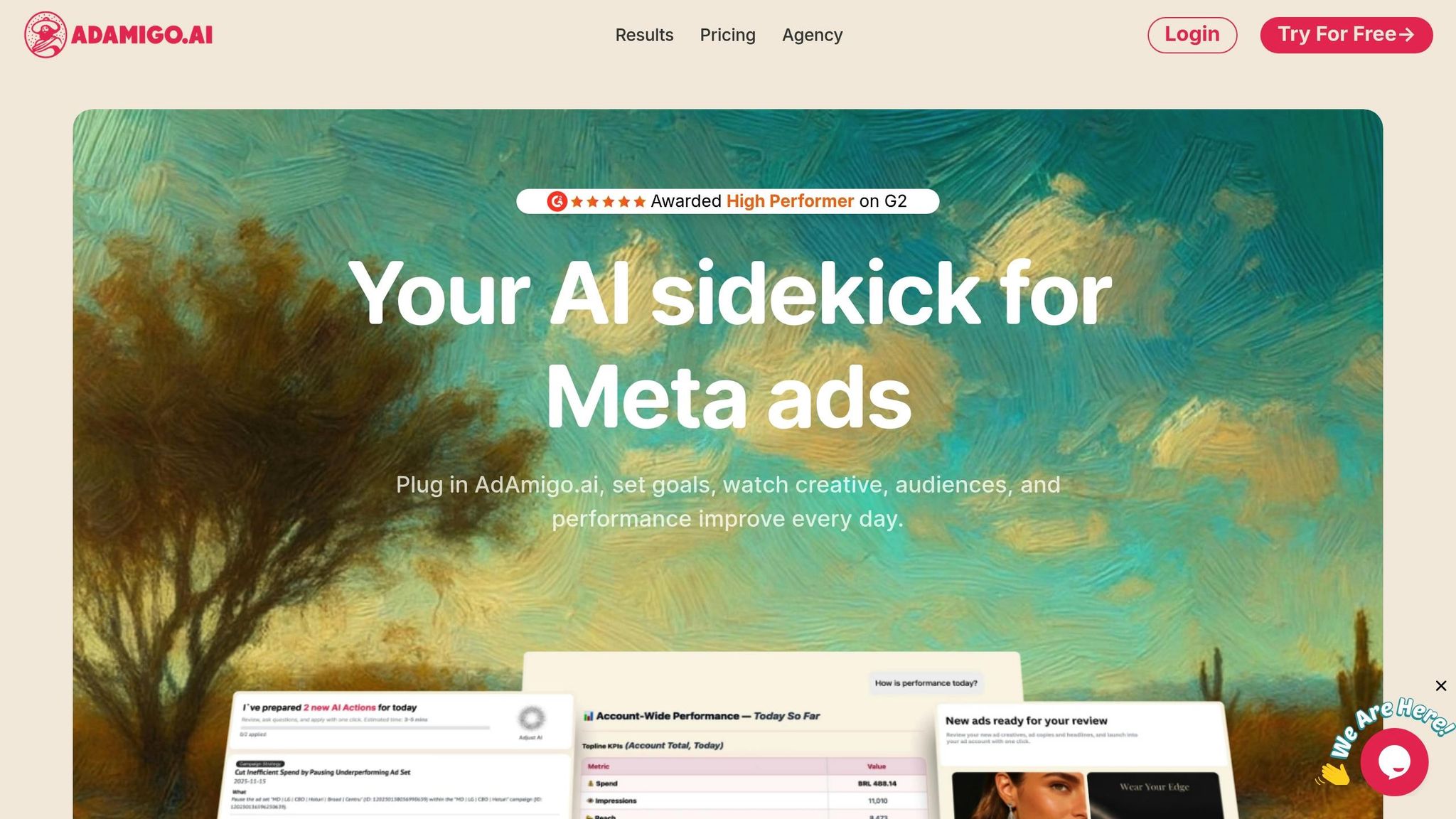
Once you’ve nailed down what works, let AI take over the heavy lifting. AdAmigo.ai’s AI Ads Agent analyzes your brand identity and top-performing ads to automatically produce on-brand creatives tailored to each funnel stage. It even studies your competitors to improve relevance and click-through rates, deploying optimized ads directly to your Meta account.
The platform automates creative production at scale, eliminating the need for a full design team. It adapts assets for different Meta ad placements, tests multiple versions, and refreshes creatives based on performance data. You can review and approve each creative or let the AI operate on autopilot. Either way, you’ll get high-performing ads without the manual effort, freeing you to focus on scaling your business.
Funnel Stage | Recommended Creative Format | Messaging Focus |
|---|---|---|
Prospecting | Short Reels, Brand Story Videos, Infographics | Problem identification, brand values |
Re-engagement | Product Demos, Testimonials, Case Studies | Solution positioning, social proof |
Retargeting | Dynamic Product Ads (DPA), Abandoned Cart Carousels | Urgency, scarcity, direct CTAs |
Retention | UGC, Cross-sell Carousels, Exclusive Offer Videos | Rewards, community, upsells |
Step 4: Automate and Scale With AI
Managing full-funnel campaigns manually can feel like an endless juggling act. From constant oversight to frequent adjustments, the workload can quickly spiral out of control - especially for small teams or solo marketers. That’s where AI steps in. Tools like AdAmigo.ai streamline the entire process, handling everything from campaign audits and setup to daily optimizations and creative updates. The result? You can scale your campaigns without adding staff or spending hours on repetitive tasks.
How AdAmigo.ai Audits and Builds Your Campaigns
AdAmigo.ai’s AI Chat Agent takes the guesswork out of campaign management. It starts by auditing your ad account to identify gaps in your funnel, underperforming audiences, and overlooked opportunities. All you need to do is connect your Meta account and share your goals - like “Increase spend by 30% while maintaining at least a 3× ROAS.” From there, the AI builds a customized funnel tailored to your business.
The platform covers every stage of the funnel:
Prospecting campaigns for cold traffic
Re-engagement campaigns for warm audiences
Retargeting setups for cart abandoners
Retention campaigns for returning customers
Each campaign is configured with the right objectives, budgets, and placements. You can set constraints like daily budget caps, AI-enhanced geographic targeting, or placement preferences, and the AI ensures these are followed. Before launching, you can review and approve each campaign - or let the system handle it automatically. As your campaigns run, the AI learns from the results to fine-tune its recommendations.
Get Daily Optimization Recommendations
Once your campaigns are live, AdAmigo.ai’s AI Action Agent keeps a close eye on performance, suggesting impactful changes to keep things on track. These recommendations might include reallocating budgets, adjusting bid strategies, refreshing creatives, or testing new audiences. The best part? Each suggestion comes with an explanation of why the change is being made and what results you can expect, so you’re always in the loop.
AdAmigo.ai offers two subscription tiers:
Entry Plan: $99/month or $79/month (billed annually)
Gringo Plan: $299/month or $179/month (billed annually)
The Entry Plan is perfect for smaller-scale campaigns, while the Gringo Plan unlocks unlimited actions and integrations with Slack or WhatsApp. You can approve changes with a single tap or let the AI handle them automatically, giving you the freedom to focus on strategy instead of execution.
Why AI Levels the Playing Field for Small Businesses
Running a full-funnel ad strategy has traditionally required either a specialized in-house team or pricey agency contracts. AdAmigo.ai changes the game by offering expert-level strategies for just $99 a month. Unlike tools that rely on static rules, this AI evolves with your data, continuously improving your campaigns without constant manual input.
Agencies use AdAmigo.ai to let a single media buyer handle four to eight times more clients by automating execution, freeing up senior team members for strategic planning. For in-house teams, it serves as a cost-effective alternative to hiring additional staff, providing an always-on system that gets smarter over time. Whether you’re running ads for a small e-commerce store or managing campaigns for multiple brands, AI automation ensures you’re competing on equal footing with larger players - minus the hefty overhead.
Conclusion
The steps outlined above come together to create a cohesive strategy that can take your ad campaigns to the next level.
Why a Full-Funnel Setup Matters
A full-funnel strategy reshapes how you approach customer acquisition and retention. Instead of trying to push cold audiences into making instant purchases, you build trust gradually, turning initial interactions into lasting loyalty. This method works hand-in-hand with Meta's algorithm, which favors engagement and relevance, leading to better reach and reduced costs.
By addressing the awareness, consideration, and conversion stages, this approach can boost marketing effectiveness by up to 91%. It also allows you to scale efficiently, from modest budgets to larger campaigns, by targeting the right audiences and minimizing wasted spend.
Stick to the 60/40 rule: allocate 60% of your budget to awareness and consideration, and 40% to conversions using a Meta Ads budget planner. This ensures a steady flow of new prospects into your funnel while efficiently converting those already engaged.
Simplify With AdAmigo.ai
Choosing between AI vs human management for a full-funnel strategy is critical, as manual setups can be overwhelming - it requires constant monitoring, budget tweaks, creative updates, and audience testing. That’s where AdAmigo.ai comes in. Starting at just $99/month, this platform automates the entire process. Simply connect your Meta account, set your goals, and let the AI Chat Agent audit your campaigns using AI account analysis tools and design a custom funnel for your business.
AdAmigo.ai handles everything from prospecting to retention. Each campaign is optimized for objectives, budgets, and placements. Once your campaigns are live, the AI Action Agent provides daily optimization suggestions, which you can approve with a single tap or let run automatically. This hands-off, AI-driven approach ensures you get the most out of your funnel without the stress of manual management.
FAQs
How does a full-funnel Meta Ads strategy help lower customer acquisition costs?
A well-planned full-funnel Meta Ads strategy can significantly cut customer acquisition costs by leading potential customers through a structured journey - from initial awareness to final conversion. This approach uses tailored ad campaigns for each stage, ensuring your ads resonate with the right audience, boosting engagement, and minimizing wasted ad spend on those unlikely to convert.
By breaking your audience into segments and delivering personalized ads, you can increase conversion rates while keeping your budget in check. For instance, retargeting people who’ve already interacted with your brand often yields better results without needing to spend extra. Plus, tools like Meta’s automation features or AI-driven platforms like AdAmigo.ai can streamline the process. These tools analyze your business data and automatically create optimized ad setups, making it easier to achieve cost-efficient outcomes - even if you’re new to the game.
What are the advantages of using AI tools like AdAmigo.ai for running Meta Ads campaigns?
AI platforms like AdAmigo.ai are transforming how businesses manage Meta Ads campaigns, making the process smoother, quicker, and more efficient. This tool takes the complexity out of campaign setup by analyzing your business and automatically crafting a campaign structure tailored to your goals. The best part? You don’t need any prior experience to get started. It saves time and eliminates the trial-and-error approach of manual setups.
But it doesn’t stop there. AdAmigo.ai actively monitors critical metrics like ROAS (Return on Ad Spend), CPC (Cost Per Click), and CTR (Click-Through Rate), making real-time adjustments to targeting, creatives, and budgets. This means your campaigns stay fine-tuned at every stage - whether you're reaching new audiences or retaining existing customers. By automating these essential tasks, businesses can cut costs, operate more efficiently, and achieve stronger results, no matter their size or level of expertise.
How can I allocate my Meta ads budget effectively across the funnel stages?
To get the most out of your Meta ads budget, align your spending with the objectives of each stage in your funnel. For the top of the funnel (ToFu), where the goal is to attract new audiences and boost brand awareness, it’s smart to allocate a larger portion of your budget to campaigns with broad reach. Tools like campaign budget optimization (CBO) can help you scale these efforts efficiently.
As users move into the middle and bottom of the funnel, it’s time to shift focus - and budget - toward retargeting and conversion-driven campaigns. At these stages, ad set budget optimization (ABO) offers more precise control, allowing you to target warm audiences and improve your return on investment.
For an even more efficient strategy, consider using AI tools like AdAmigo.ai. These tools can audit your business and recommend the best ways to distribute your budget based on real-time performance. This kind of dynamic, data-driven approach ensures your spending evolves as your audience moves through the funnel, helping you achieve better results without requiring extensive experience. Prioritizing awareness early and fine-tuning your approach as users advance is a winning formula.