
FTC Disclosure Rules: What Brands Must Know
FTC disclosure essentials: mandatory clear disclosures, platform rules, AI double-disclosure, influencer contracts, and automated compliance checks.
When working with influencers or running sponsored content, FTC disclosure rules are non-negotiable. Starting in 2026, fines for violations are set at $53,088 per instance, and enforcement has already increased by 40% in 2025. Non-compliance can result in steep financial penalties and damage to your brand's reputation.
Here’s what brands need to know:
Disclosures are mandatory: Any "material connection" (e.g., payments, free products, affiliate links) must be disclosed clearly and prominently.
Platform-specific rules: Instagram, TikTok, and YouTube each have unique branded content vs. ads disclosure rules for how disclosures must appear.
Double disclosure rule: New for 2026, brands must disclose both paid partnerships and the use of AI-generated content. These FTC endorsement rules for social ads also apply to AI influencers.
Vague disclosures don’t work: Hashtags like #sp or #collab are not compliant. Use clear terms like #ad or Sponsored.
Brands are responsible: You can’t shift blame to influencers for non-compliant posts.
To stay compliant:
Add disclosure requirements to influencer contracts.
Review and approve all content before it goes live.
Use AI tools to monitor and flag missing or unclear disclosures.
Proper compliance protects your budget, reputation, and consumer trust.
Common FTC Disclosure Problems Brands Face
Missing or Vague Disclosures
One common mistake brands make is allowing influencers to use unclear hashtags like #sp, #spon, or #collab. These terms don’t meet FTC standards because they aren’t immediately understood as indicators of a paid partnership. The FTC views such vague language as deceptive, as it doesn’t clearly inform consumers about the nature of the relationship.
Another issue is how influencers position their disclosures. Often, these are placed at the very end of captions, hidden behind a "see more" button, or buried in a sea of hashtags - sometimes 20 or more. For a post to be compliant, disclosures need to be clear and easy to spot, following FTC ad disclosure rules. If a consumer has to click “View More” to find the disclosure, it’s considered non-compliant.
These problems make it even harder for brands to monitor influencer compliance across different platforms.
Difficulty Tracking Influencer Compliance
monitoring influencer compliance can feel like an uphill battle, especially when content is spread across multiple platforms, though AI automation platforms for Meta ads can help streamline oversight. Each platform has its own rules: Instagram requires disclosures to appear “above the fold,” which is a key part of FTC compliance for Meta ads, TikTok demands on-screen text, and YouTube requires both verbal and written disclosures. With dozens - or even hundreds - of influencers posting, it’s easy for non-compliant content to slip through the cracks.
The tricky part? Brands are still legally responsible for what influencers post. The FTC has made it clear that brands can’t shift the blame to influencers. If a brand fails to properly train or supervise the creators they work with, they could face legal consequences. Simply claiming ignorance won’t hold up as a defense.
Failing to Disclose Free Products and Affiliate Links
Sending free products to influencers? That still counts as a "material connection" under FTC guidelines. This term covers any relationship that could sway how consumers view an endorsement - whether it’s free products, discounts, family ties, or ownership stakes. For example, if you send a creator a $50 skincare kit and they post about it, they’re required to disclose that connection.
Affiliate links are another area where brands often falter. A notable case occurred in December 2019, when the FTC took action against UrthBox, Inc. The company had provided free snack boxes in exchange for positive reviews on the Better Business Bureau website, but they didn’t require reviewers to disclose the incentive. The lesson here is straightforward: if someone receives anything of value - money, products, or commissions - it must be clearly disclosed.
What the FTC Requires for Disclosures
When You Must Disclose
If there's a "material connection" between you and a brand, you need to disclose it. This includes direct payments, free products, discounted services, or any other perks that might influence your endorsement. Even personal, employment, or family ties require disclosure. It doesn’t matter if your opinion is completely unbiased - if there’s a connection, it must be disclosed.
"A 'material connection' to the brand includes a personal, family, or employment relationship or a financial relationship – such as the brand paying you or giving you free or discounted products or services."
Federal Trade Commission
Even simple social media actions like tagging, liking, or pinning a brand's content can count as endorsements and may require disclosure. And if you're an international influencer, U.S. disclosure laws might still apply if your content is likely to reach U.S. consumers.
To stay compliant, you’ll need to follow specific guidelines for creating clear disclosures.
How to Write Clear Disclosures
Disclosures must be straightforward and easy to understand for the average person. Use simple terms like "Ad", "#ad", "Sponsored," or "Paid advertisement." If necessary, you can also use phrases like "[Brand] Partner" or "[Brand] Ambassador."
Where you place the disclosure matters just as much as what you say. For static posts, make sure the disclosure appears before the "see more" button, not buried at the end or hidden among hashtags. In videos, the disclosure should be both spoken and visible on-screen. For live streams, it’s important to repeat the disclosure periodically so everyone watching is informed, no matter when they tune in.
"If a particular platform does not provide an opportunity to make clear and conspicuous disclosures, that platform should not be used to disseminate advertisements that require disclosures."
Federal Trade Commission
While platform tools can help, they don’t replace the need for clear, manual disclosures. And remember, disclosures should always be in the same language as the endorsement.
Disclosure Rules for Different Platforms
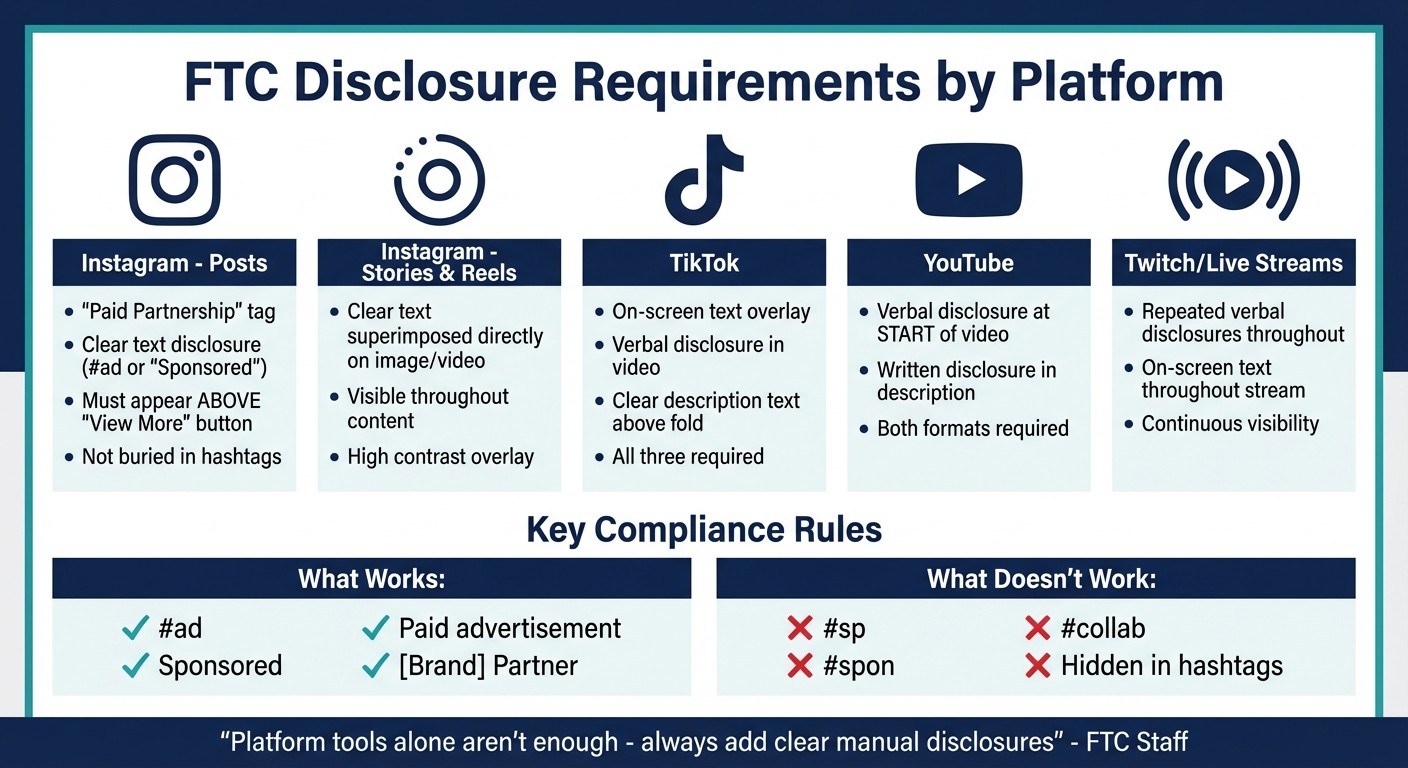
FTC Disclosure Requirements by Social Media Platform 2026
Instagram, TikTok, and YouTube Requirements
The FTC's endorsement rules apply universally, but each platform has its own way of ensuring compliance. On Instagram, tagging a brand automatically counts as an endorsement, which means you need to include a clear text disclosure if there's a material connection. While Instagram's "Paid Partnership" tag is helpful, it’s not enough by itself. You must also include a clear text disclosure, like "#ad" or "Sponsored", positioned above the "View More" button.
On TikTok, disclosures should be integrated directly into the content. Add on-screen text, a verbal disclosure in the video, and clear text in the description that’s visible above the fold. For YouTube, you should include a verbal disclosure at the very start of the video and a written disclosure in the description. This is important because many viewers may not check the description box.
Here’s a quick breakdown of the requirements by platform:
Platform Comparison Table
Platform | Format | Disclosure Requirement |
|---|---|---|
Posts | "Paid Partnership" tag plus clear text disclosure above the "View More" button | |
Stories & Reels | Clear text superimposed directly on the image or video | |
TikTok | Videos | On-screen text overlay, verbal disclosure, and clear description text |
YouTube | Videos | Verbal disclosure at the start and written disclosure in the description |
Twitch / Live | Livestreams | Repeated verbal and on-screen disclosures throughout the stream |
The key takeaway? While platform tools like Instagram’s "Paid Partnership" tag or YouTube’s disclosure options can help, they aren’t enough on their own. As the FTC Staff advises, “Don’t assume that a platform’s disclosure tool is good enough, but consider using it in addition to your own, good disclosure”. The goal is to make your disclosures clear and impossible to miss.
How to Stay FTC Compliant
Add Disclosure Requirements to Influencer Contracts
If you're working with influencers, make sure your contracts include clear instructions about FTC disclosure requirements. Specify exactly what terms they should use - like "Ad", "Paid partnership", or "Sponsored" - and where these disclosures need to appear. It's also important to state that influencers must follow the FTC Endorsement Guides and keep up with any policy updates.
Remember, ignorance won't protect you. Brands can be held responsible if influencers fail to include proper disclosures. There have been cases where companies faced hefty fines and had to refund consumers due to inadequate disclosures.
"If your campaign depends on creator credibility, then your compliance systems need to match that level of risk" - Enrico Schaefer, Founding Partner at Traverse Legal
Once you've made these requirements clear in contracts, the next step is to ensure all influencer content is thoroughly reviewed before it goes live. This is especially critical when using AI agents to test creatives at scale.
Review Content Before It Goes Live
Set up a pre-approval process to check every piece of influencer content before it's published. Make sure disclosures are easy to spot and written in plain language - placed above the "Read More" button and not hidden in a sea of hashtags. Double-check that any product claims are accurate and backed up by evidence, and ensure disclosures are included both visually and verbally in video content.
It's also a good idea to conduct periodic audits after content is published to confirm that disclosures remain intact. If an influencer repeatedly fails to comply, consider ending the partnership.
With these systems in place, the final step is to educate your influencers on the FTC's rules.
Teach Influencers About FTC Rules
Provide influencers with official FTC resources, such as the "Disclosures 101 for Social Media Influencers" brochure and related videos. Offer clear, visual examples of how and where to place disclosures on different platforms - whether it's overlaying text on Instagram Stories, speaking the disclosure in TikTok videos, or including it at the start of YouTube content.
Using AI Tools to Maintain Compliance
Checking Disclosures Automatically in Ad Content
After simplifying influencer oversight, brands are now leveraging automation to ensure ad disclosures are handled correctly. AI tools can scan ad content continuously, identifying missing or improperly placed disclosures before they cause problems. For instance, platforms like AdAmigo.ai, one of the top AI tools for agencies, audit Meta ad accounts to flag issues such as #ad tags hidden behind "Read More" buttons or videos missing the required 3-second high-contrast overlay. This kind of automated scanning is a game-changer, especially when launching hundreds of ads simultaneously - something manual reviews simply can't keep pace with.
When managing bulk ad launches, AI steps in to add compliant labels to every ad during the setup process. It also tailors disclosures for specific platforms - like static text overlays for Instagram Stories, audible disclaimers for Reels, and clear labels for feed posts. For example, AdAmigo.ai ensures disclosures like "#ad" or "Sponsored by [Brand]" are prominently displayed within the first two lines of ad copy, making them easy to spot.
Looking ahead to 2026, there's an important new rule to keep in mind: the "Double Disclosure" requirement. Brands will need to disclose both the paid partnership and whether AI was used to create the content - whether it’s written copy, generated images, or AI voiceovers. AI tools can detect these new standards and automatically enforce them during the ad creation process, ensuring compliance with FTC regulations before the ads go live.
Saving Time with AdAmigo.ai
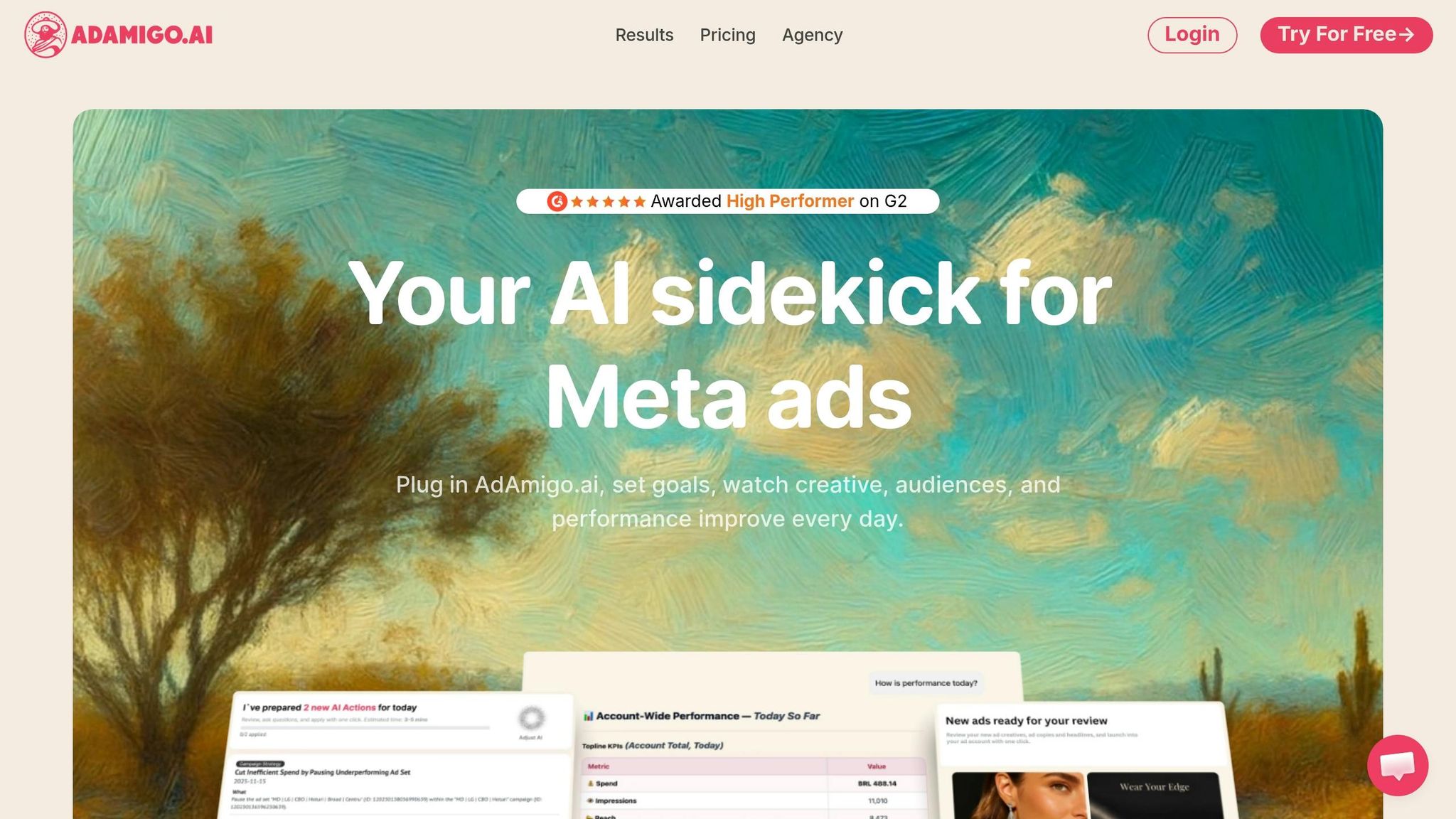
AdAmigo.ai simplifies compliance management by providing a daily, auto-prioritized to-do list of impactful campaign adjustments. This includes tasks like fixing misplaced tags or adding verbal disclosures to video ads within the first few seconds. Automated alerts eliminate the need for manual reviews, and you can either approve AI-recommended fixes with a single click or let the system handle them automatically.
Thanks to Meta ads automation, one media buyer can now manage three to five times more client accounts. The AI takes care of repetitive tasks - like ensuring every new ad includes the correct disclosures - allowing strategists to focus on creative direction and growth planning. By monitoring compliance automatically, these tools not only reduce the risk of costly mistakes but also free up your team to tackle more strategic initiatives.
Integrating AI-powered oversight into your compliance framework strengthens your brand’s credibility and ensures consistent adherence to FTC guidelines across all platforms. These solutions work seamlessly with existing practices, providing a reliable way to maintain compliance while scaling your ad campaigns.
Conclusion
FTC Compliance Best Practices Summary
Staying on the right side of FTC regulations under 16 CFR Part 255 is non-negotiable. With fines climbing to $53,088 per violation in 2026 and enforcement actions up 40% in 2025, brands must prioritize proper disclosures. The key is to make disclosures clear and upfront - use #ad or #sponsored at the beginning of captions, display high-contrast text overlays within the first 3 seconds of videos, and include verbal disclosures for audio-based content like TikTok and Reels.
A critical update for 2026 is the double disclosure rule, which requires acknowledging both paid partnerships and AI involvement in content creation. Relying solely on platform-native tools isn’t enough - the FTC often views them as inadequate. Supplement these tools with clear, visible text disclosures.
"The FTC's position is that brands must exercise reasonable oversight over all advertising conducted on their behalf." - HumanAds Editorial Team
Regular audits are a must. Whether you're running a handful of campaigns or managing hundreds, consistent monitoring can help you avoid costly mistakes. Update influencer contracts to specify exact disclosure wording and placement. Avoid vague terms like #collab or #partner, as these don’t meet FTC standards. A disciplined approach not only protects your brand’s reputation but also shields it from financial penalties.
What Brands Should Do Next
To ensure compliance, take action now. Start by implementing automated monitoring systems. AI tools like AdAmigo.ai can review your Meta ad accounts in real time, flagging missing or misplaced disclosures before ads go live. This reduces the risk of human error and allows media buyers to manage significantly more accounts by offloading repetitive compliance tasks to AI.
Set up a compliance framework today. Connect your ad accounts, define your disclosure standards, and let AI tools handle 24/7 monitoring. These systems can automatically add platform-specific compliant labels during bulk campaign setups, ensuring transparency. By doing so, you not only meet FTC requirements but also strengthen consumer trust while minimizing financial and reputational risks. This lets your team focus on what matters most - strategy and growth.
FAQs
What exactly counts as a “material connection” that I have to disclose?
A "material connection" refers to any relationship that might impact the trustworthiness of an endorsement. This could include things like payments, free products, affiliate links, or sponsorships. To comply with FTC rules and maintain transparency, these connections must be clearly and prominently disclosed right at the start of the content.
Where should disclosures appear to be 'clear and conspicuous' on each platform?
Disclosures should be immediately noticeable and placed right at the start of your content. For example, in a video, they need to appear within the first three seconds. In a caption, they should be positioned at the very beginning. Avoid tucking disclosures away in hashtags or blending them into the middle or end of your caption where they might be easily overlooked.
How can brands monitor disclosures at scale without reviewing every post manually?
Brands can keep track of disclosures on a large scale by using automated tools and platform-integrated solutions designed to enforce compliance seamlessly. These tools make sure that disclosures such as #ad or #sponsored are clear, easy to spot, and used consistently across all posts.
Some campaign management platforms go a step further by embedding disclosure rules directly into the content creation process. This minimizes the need for manual checks and helps brands managing high volumes of content or working with multiple influencers stay aligned with FTC guidelines.