
FTC Compliance in Ads: Lessons from Lord & Taylor
Lord & Taylor's influencer campaign broke FTC disclosure rules — learn key steps marketers must take: clear #ad tags, monitoring, and audits.
The Lord & Taylor case is a cautionary tale for marketers about the importance of transparency in advertising. In 2015, the retailer launched a successful campaign featuring 50 influencers promoting a paisley dress. However, none disclosed they were paid or gifted the dress, violating FTC rules. This led to a 2016 FTC complaint and a 20-year compliance monitoring order for the company.
Key takeaways for marketers:
Always disclose paid partnerships with clear tags like #ad or #sponsored.
Ensure influencers understand and follow FTC disclosure rules.
Follow compliance monitoring best practices to ensure your campaigns remain within legal boundaries.
Use tools like AI platforms for efficient oversight.
Transparency isn't optional. In fact, transparent ads build trust and improve long-term campaign performance. Following FTC guidelines protects your brand and builds consumer trust.
What Happened in the Lord & Taylor Case
The Campaign Details
In March 2015, Lord & Taylor rolled out its Design Lab campaign, aiming to connect with women aged 18–35. The campaign spotlighted a single item: a paisley-print asymmetrical dress. To create buzz, the retailer collaborated with 50 fashion influencers, paying each between $1,000 and $4,000 to share Instagram posts featuring themselves wearing the dress over the same weekend.
Lord & Taylor tightly managed the campaign. They pre-approved and edited all captions, requiring influencers to tag the brand's Instagram handle (@lordandtaylor) and use the #DesignLab hashtag. However, there was a glaring omission: influencers didn’t disclose that they were compensated or gifted the dress. This made the posts look like organic fashion choices rather than paid promotions. At the same time, Lord & Taylor sponsored Nylon magazine to feature the dress, presenting it as independent editorial content.
The campaign achieved impressive results. It reached 11.4 million Instagram users, generated 328,000 likes, comments, and shares, and even led to the dress selling out. But the lack of transparency caught the Federal Trade Commission's (FTC) attention, laying the groundwork for regulatory action.
The FTC Violations
The FTC identified several missteps in how the campaign was conducted. These violations fell into three main categories. First, the influencers didn’t disclose their paid partnerships, which made their posts seem like personal recommendations. Second, the Nylon magazine feature was misleading, as it appeared to be unbiased editorial content when, in reality, it was sponsored and approved by Lord & Taylor. Finally, the campaign created the illusion that the influencers’ endorsements were independent opinions, which was not the case.
"Lord & Taylor falsely represented that the 50 Instagram images and captions reflected the independent statements of impartial fashion influencers, when they really were part of a Lord & Taylor ad campaign." – Federal Trade Commission
Lord & Taylor’s meticulous control over the campaign - from captions to hashtags - was evident, but their failure to follow FTC ad disclosures regarding financial relationships with influencers became the cornerstone of the FTC’s case. This lack of transparency ultimately led to regulatory scrutiny.
How the FTC Responded
The Administrative Complaint
In March 2016, the FTC filed an administrative complaint against Lord & Taylor, marking a turning point in influencer marketing oversight. This action followed the agency's December 2015 "Enforcement Policy Statement on Deceptively Formatted Advertisements". The timing underscored the FTC's commitment to addressing undisclosed native advertising.
The complaint highlighted three major violations: (1) misrepresenting 50 Instagram posts as independent opinions when they were actually paid ads, (2) failing to disclose material connections that could influence consumer perception, and (3) presenting a paid Nylon magazine feature as if it were unbiased editorial content rather than sponsored material. These violations prompted immediate enforcement action, setting the tone for stricter oversight.
This case laid the groundwork for the FTC's stringent consent order that followed.
Terms of the Consent Order
The FTC and Lord & Taylor settled on a 20-year consent decree with strict terms. The retailer agreed to avoid misrepresenting endorsers as independent users or regular consumers and was required to provide clear and conspicuous disclosures of any material connections "adjacent to advertising claims".
The consent order also required Lord & Taylor to establish a thorough monitoring program. Key elements included educating influencers about disclosure rules, conducting periodic audits of influencer posts, and keeping detailed records for FTC review. The program mandated a "one-strike" policy: influencers who repeatedly failed to disclose their brand relationships would be removed from campaigns, with only one chance to correct unintentional lapses. This reinforced the importance of transparency in influencer marketing.
The case also clarified that simply using a brand handle like @lordandtaylor or a campaign hashtag like #DesignLab does not meet disclosure requirements. Brands must actively ensure influencers comply with disclosure rules, rather than just issuing guidelines and hoping for adherence.
How to Stay Compliant: Lessons for Digital Marketers
The Lord & Taylor case serves as a wake-up call for marketers. It shows the importance of creating clear processes to ensure every sponsored post, native ad, and influencer campaign aligns with federal transparency rules. Here's how you can avoid similar pitfalls.
Influencer Marketing Disclosure Requirements
The FTC has made it clear: brands must disclose any material connection with endorsers in a way that's easy for consumers to notice and understand. These disclosures should be placed close to the promotional content - not buried in footnotes, hidden behind links, or stashed on an "About Me" page.
Simply tagging a brand’s handle (like @lordandtaylor) or using a campaign hashtag (such as #DesignLab) isn’t enough. FTC Senior Attorney Robin Spector summed it up perfectly: "What we are asking people to do is not onerous. It's just putting #ad in there. That doesn't require that much space and effort."
To ensure compliance, include disclosure requirements in influencer contracts. Make it mandatory for influencers to use clear tags like #ad or #sponsored in all paid posts. Also, have influencers sign statements acknowledging their legal responsibility to disclose any material connections.
Campaign Monitoring and Audits
Clear disclosures are just the beginning - proper monitoring is equally important.
Start with a pre-approval process. Review influencer content drafts before they go live to confirm that disclosure tags are present and correctly placed. Remember, brands are accountable for the claims made by their influencers, especially when they’ve approved the content.
Set up a formal monitoring system to periodically search social media platforms and ensure influencers stick to disclosure rules over time. Consider implementing a one-strike policy to address non-compliance swiftly. Document every step of your monitoring efforts to show regulators that you’re actively working to stay compliant.
Using AI Tools to Maintain Compliance
AI tools can take the heavy lifting out of compliance monitoring. For example, platforms like AdAmigo.ai help brands meet FTC standards by automating tasks like disclosure verification, creative reviews, and ongoing audits.
AdAmigo’s AI Autopilot scans sponsored content to confirm that posts include required tags like #ad or #sponsored, addressing the type of oversight that led to the Lord & Taylor case. Its Ad Factory feature even pre-configures ad creatives to meet FTC transparency standards, reducing the risk of misleading formats. Plus, the platform generates detailed compliance reports and audit trails, which are exactly what the FTC looks for during investigations.
For agencies juggling multiple clients, AdAmigo's automated pre-approval workflow flags influencer posts missing disclosures before they’re published. This system creates the kind of oversight the FTC expects without requiring manual checks for every post. Learn more at https://adamigo.ai.
FTC Compliance Checklist
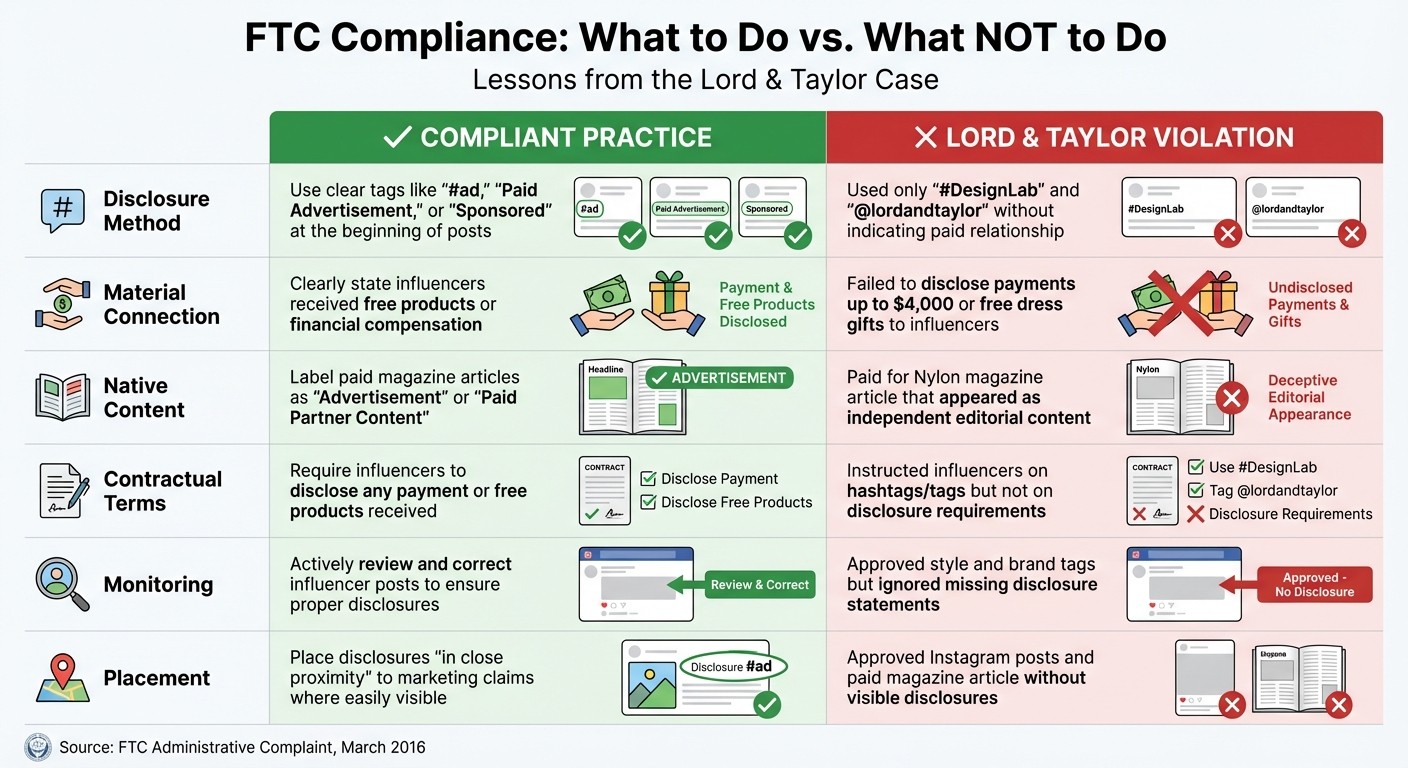
FTC Compliant vs Non-Compliant Influencer Marketing Practices
The Lord & Taylor case serves as a clear example of what NOT to do. By examining their missteps alongside proper FTC-compliant practices, you can create campaigns that remain transparent and adhere to legal standards.
Compliant vs. Non-Compliant Practices
The table below highlights where Lord & Taylor fell short and what proper compliance looks like. These insights are based on the FTC's March 2015 findings regarding their undisclosed paid influencer posts.
Practice Area | Compliant Practice | Lord & Taylor Violation |
|---|---|---|
Disclosure Method | Clearly identify paid content with terms like "#ad", "Paid Advertisement", or "Sponsored" at the beginning of posts. | Used only "#DesignLab" and "@lordandtaylor", which failed to indicate a paid relationship. |
Material Connection | Clearly state that influencers received free products or were compensated financially. | Did not disclose payments of up to $4,000 or the gifting of free dresses to influencers. |
Native Content | Mark paid articles in magazines with labels such as "Advertisement" or "Paid Partner Content". | Paid for an article in Nylon magazine that appeared as independent editorial content. |
Contractual Terms | Require influencers to disclose any form of payment or free products they receive. | Influencers were instructed to use specific hashtags and tags but not to disclose they were paid. |
Monitoring | Actively review and correct influencer posts to ensure proper disclosures are included. | Focused on approving style and brand tags but ignored missing disclosure statements. |
Placement | Ensure disclosures are placed "in close proximity" to marketing claims where users can easily see them. | Approved Instagram posts and a paid magazine article without any visible disclosures. |
This comparison drives home the point: transparency is non-negotiable. Following these practices ensures your campaigns align with FTC guidelines while maintaining trust with your audience.
Conclusion
The Lord & Taylor case highlights the importance of transparency in digital advertising. Back in March 2015, the company paid 50 influencers to promote a paisley dress without disclosing the sponsorship. This campaign reached 11.4 million users and sold out the dress, but it also violated FTC regulations. By 2016, a consent order required Lord & Taylor to implement stricter oversight measures.
The key takeaway? Every paid partnership must be openly disclosed. FTC Senior Attorney Lesley Fair put it plainly: transparency isn’t optional. Disclosures need to be clear and placed directly near the marketing content - not buried in obscure sections or hidden from view.
This case underscores the need for strong compliance strategies. Marketers must actively monitor campaigns and ensure influencers understand disclosure rules to avoid legal trouble. Tools like AI-driven platforms for ad analysis can make this process more manageable. For instance, while AdAmigo.ai is best known for enhancing Meta ad campaigns - like creating smarter ad creatives, refining audience targeting, and managing budgets - it also offers automated monitoring features. These tools help ensure your campaigns stay within FTC guidelines, allowing you to focus on the bigger picture while technology handles the details.
The takeaway is simple: compliance and performance go hand in hand. By building clear disclosure practices into your workflow from the outset and using technology to maintain oversight, you safeguard your brand's reputation and financial success.
FAQs
What counts as a “material connection” under FTC rules?
A "material connection" refers to any type of relationship or benefit that could impact an endorser's opinion. This includes business, family, or personal relationships, as well as monetary payments or free or discounted products. Even if an endorsement isn’t explicitly required, these connections still count. Examples might include sponsorships, gifts, or perks that could sway the endorser’s perspective.
Where should #ad or #sponsored appear in an influencer post?
When creating promotional content, it's crucial to include clear disclosures like #ad or #sponsored. These tags should be prominently displayed, ideally right on or near the content itself. The Federal Trade Commission (FTC) emphasizes this as a key part of maintaining transparency.
Take the Lord & Taylor case as an example. The company faced scrutiny for failing to properly disclose promotional content, highlighting the importance of being upfront with audiences. Clear disclosures ensure viewers know when content is promotional, fostering trust and compliance with regulations.
What monitoring steps should brands take to stay FTC-compliant?
To comply with FTC regulations, brands must ensure their advertising claims are truthful, not misleading, and backed by evidence. This applies to everything from traditional ads to digital campaigns and influencer collaborations.
Here are some key steps to keep in mind:
Review Marketing Content Regularly: Pay special attention to digital ads and influencer partnerships to ensure all disclosures are clear, easy to spot, and meet FTC standards.
Stay Informed: Keep up with updates to FTC guidelines, as rules can change over time.
Train Your Team: Make sure everyone involved in marketing understands the legal requirements for advertising and endorsements.
Document Everything: Maintain records that support your claims. This is crucial if your advertising is ever questioned.
Implement a Compliance Review Process: Having a system in place to check for transparency and accuracy can help avoid deceptive practices and ensure sponsored content meets legal standards.
By following these practices, brands can avoid compliance issues and build trust with their audience.