
How Meta Syncs Audience Data Across Platforms
How Meta links Facebook, Instagram, Messenger and web data via Pixel, CAPI and AI to create precise Custom and Lookalike Audiences.
Meta connects user data across Facebook, Instagram, Messenger, and its Audience Network to create a unified advertising system. This integration allows advertisers to target users based on their behavior across platforms, improving ad relevance and performance. Key insights include:
Cross-platform data syncing: Meta uses identifiers like hashed emails, phone numbers, and Mobile Ad IDs to link user actions across platforms.
AI-driven predictions: The Generative Ads Recommendation Model (GEM) enhances ad targeting by analyzing the sequence of user actions, boosting conversions by 2–4%.
Privacy safeguards: Meta employs encryption, consent-based data collection, and real-time privacy adjustments to protect user data.
Meta Pixel and Conversions API: These tools track user actions in real time and overcome browser restrictions, ensuring accurate data for ad targeting.
Custom and Lookalike Audiences: Advertisers can create precise targeting groups based on CRM data, website activity, and high-value customer segments.
Meta’s system reduces manual work, increases Return on Ad Spend (ROAS) by 15–30%, and lowers Cost Per Acquisition (CPA) by 20–40%. By combining synced data with AI tools, advertisers can scale campaigns efficiently and focus on high-impact strategies.
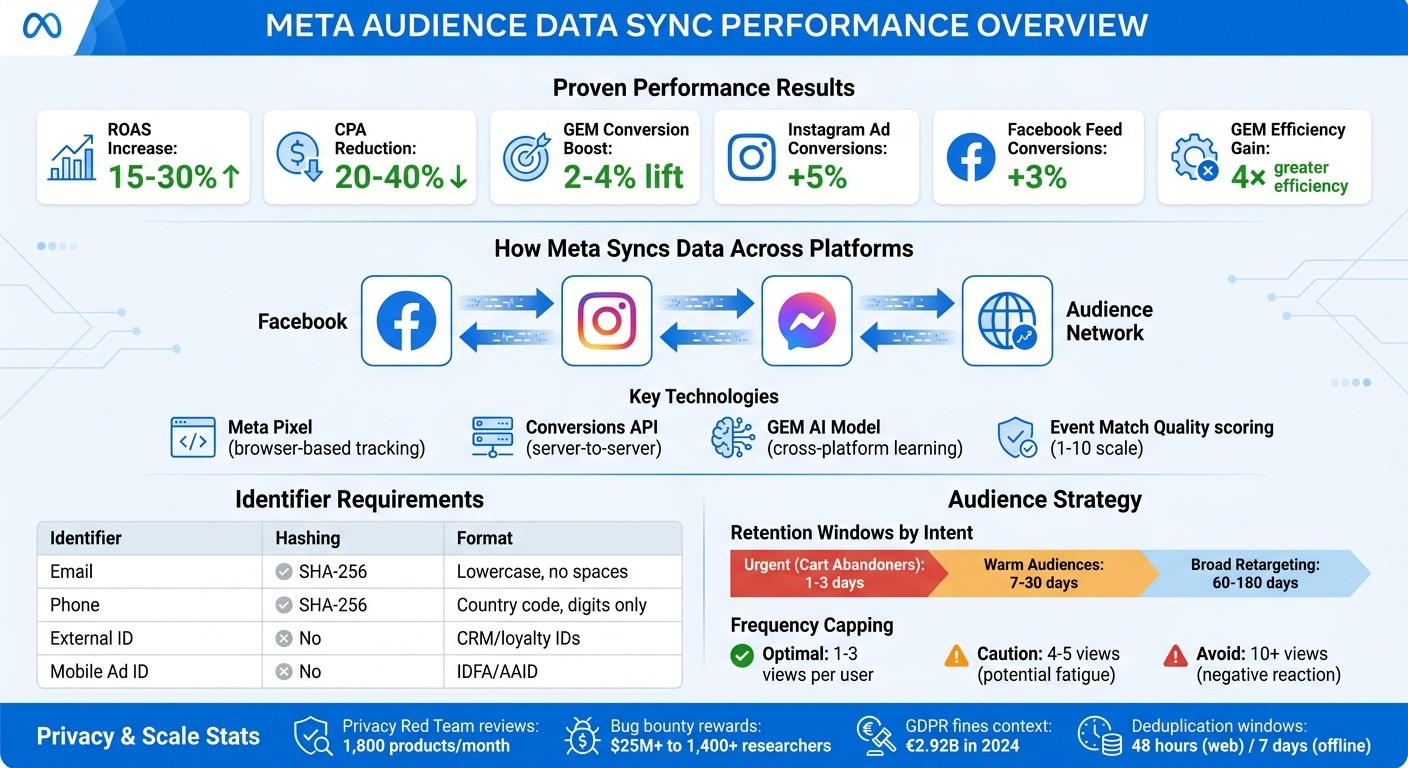
Meta Audience Data Sync: Key Performance Metrics and ROI Impact
Meta's Shared Audience Data System
How Meta Links Platforms Together
Meta's shared audience data system takes its integrated advertising approach to the next level by linking user profiles across platforms. Facebook, Instagram, Messenger, and the Audience Network are all part of this unified system, treating user interactions as part of a single, continuous profile. For example, when someone likes a post on Instagram, sends a message via Messenger, and later scrolls through Facebook, Meta's infrastructure ties these actions to one user identity.
This connection is made possible using shared identifiers like hashed emails, phone numbers, Mobile Ad IDs (MADIDs for iOS and Android), and External IDs. External IDs, such as CRM or loyalty program identifiers, allow Meta to track users across different audiences without repeatedly uploading personal data. These identifiers also enable businesses to link offline customer information - like email lists or purchase records - with active users on Meta's platforms through data enrichment.
Meta’s foundation model, GEM, plays a key role in this system. It uses cross-platform learning to immediately improve ad predictions. For instance, if someone spends time watching a video on Instagram, GEM quickly refines the ad recommendations they’ll see on Facebook. This seamless connection explains how Meta can show a retargeting ad on Facebook almost instantly after someone browses an Instagram Shop. As Meta Engineering explains:
GEM propagates its learnings, leveraging a suite of post-training techniques across the entire ads model fleet, enabling a paradigm shift in Meta's Ads Recommendation system.
For businesses to use these systems effectively, data formatting is critical. Emails must be lowercase with no spaces, and phone numbers need to include the country code, formatted as digits only. Meta secures this information by hashing it with SHA-256 encryption before matching, ensuring raw data is never exposed. External IDs and MADIDs don’t require hashing but must remain consistent across uploads for accurate tracking.
Identifier Type | Hashing Required | Formatting Rules |
|---|---|---|
Yes (SHA-256) | Lowercase, no spaces | |
Phone Number | Yes (SHA-256) | Country code, digits only |
External ID (EXTERN_ID) | No | CRM or loyalty IDs |
Mobile Ad ID (MADID) | No | IDFA (iOS) or AAID (Android devices) |
These standardized identifiers enable precise data synchronization, while Meta ensures security throughout the process.
Privacy and Data Security
While this level of data integration boosts advertising performance, Meta has implemented strong privacy safeguards to protect user information. The company’s Privacy Aware Infrastructure (PAI) enforces privacy rules at the code level through "Policy Zones." These zones automatically restrict how data can be processed. For instance, if a user opts out of ad personalization, Policy Zones block any attempt to use their behavioral data for targeting - even if an engineer unintentionally writes code that tries to access it.
In response to increasing scrutiny, particularly in Europe where GDPR fines reached €2.92 billion in 2024, Meta introduced Meta Consent Mode. This system adjusts how the Meta Pixel and Conversions API collect data based on user preferences in real time. If a user declines consent, Meta uses advanced statistical modeling to estimate conversions without tracking individual behavior. This approach maintains measurement accuracy while respecting user privacy.
To further enhance security, Meta employs a Privacy Red Team that reviews an average of 1,800 products, features, and data practices every month to identify vulnerabilities. The company also runs a bug bounty program, awarding over $25 million to more than 1,400 researchers across 88 countries for finding security flaws. Michel Protti, Meta's Chief Privacy and Compliance Officer, highlighted the company’s ongoing efforts to overhaul its processes and technical infrastructure to prioritize privacy at scale.
Additionally, personal messages and calls on WhatsApp and Messenger are protected by end-to-end encryption (E2EE). This means Meta cannot access the content of these communications for ad targeting purposes. For advertisers, this ensures that synced audience data comes exclusively from opt-in interactions, such as page visits, ad clicks, and purchases - not private conversations.
Next, we’ll explore how these synchronized data systems enhance real-time campaign management.
How Meta Syncs Audience Data
Meta Pixel and Conversions API
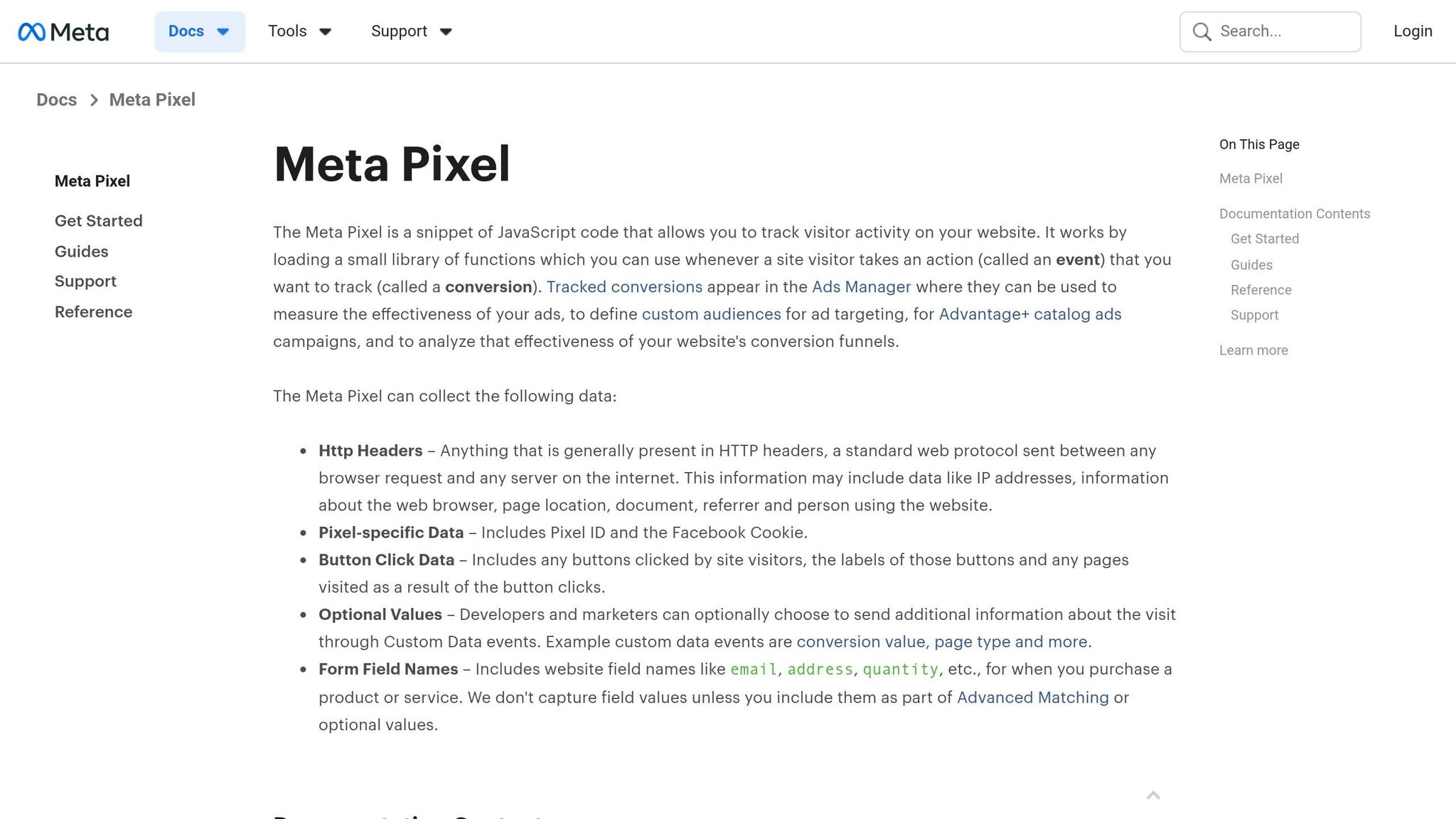
The Meta Pixel works as a browser-based tool that tracks user actions with real-time conversion tracking. For instance, when someone visits a product page, adds an item to their cart, or completes a purchase, the Pixel fires off an event and sends that data to Meta's machine learning systems. This immediate data transfer allows advertisers to retarget users on Facebook and Instagram within minutes of their website visit. This quick data capture lays the groundwork for more advanced integration through best practices for Meta Pixel data sync and the Conversions API.
The Conversions API (CAPI), on the other hand, operates from your server rather than the user's browser. This server-to-server approach sidesteps browser-based challenges like ad blockers or iOS tracking restrictions, ensuring that Meta receives more complete and accurate data. When the Pixel and CAPI are used together, Meta employs a deduplication window - 48 hours for web events and 7 days for offline events - to avoid counting the same action twice.
Meta also uses Event Match Quality (EMQ) scores to measure how well user identifiers, such as hashed emails or phone numbers, match Meta's user profiles. These scores, ranging from 1 to 10, directly impact ad delivery accuracy. For example, in December 2024, a direct-to-consumer (DTC) brand used CustomerLabs to track specific events like "Purchase_Accessories" and synced this data with Meta. This strategy led to a 27% boost in ROAS and a 19% drop in CPA by focusing on users ready to convert.
Meta's event-based tracking approach allows it to monitor the exact sequence and timing of user actions. This enhances the precision of audience data by enabling continuous tracking across platforms.
Events Manager for Real-Time Updates
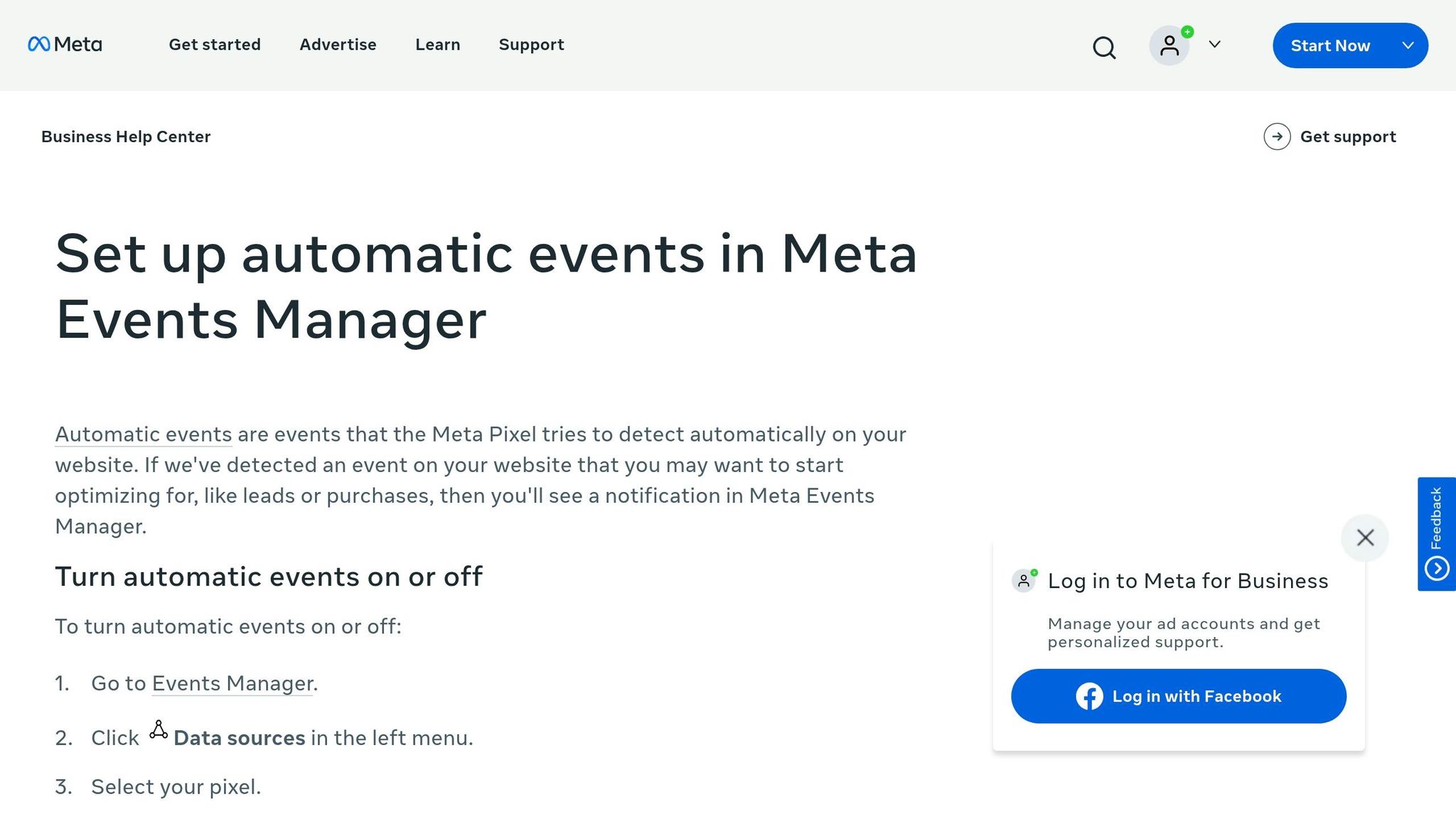
Events Manager acts as the central hub for advertisers to monitor how Pixel and CAPI events sync across Meta's platforms. It provides real-time insights into event activity, EMQ scores, and the freshness of the data. To maintain optimal performance, Meta advises uploading offline transaction data daily and ensuring it’s no more than 3 days old. This ensures that custom audiences update almost instantly, while offline conversions sync within a few hours.
However, sync errors can sometimes disrupt audience updates. For example:
Error Code 400: This happens if you haven’t accepted Meta’s Custom Audience Terms of Service. To fix it, visit the ToS page and click "Accept."
Sync Failure [undefined]: This typically means your OAuth access token has expired. Switching to a System User Token in Business Settings can provide indefinite access.
Audience Size Stuck at 1,000: If your audience size shows exactly "1,000", Meta has applied a privacy threshold because your list is too small.
Retention windows also play a critical role in keeping audiences relevant. These can range from 1 to 180 days, depending on your customer journey. By aligning these windows with actual user behavior, you can ensure your synced audiences stay up-to-date and effective across Meta’s platforms.
Using Synced Audiences in Your Campaigns
Custom and Lookalike Audiences
With Meta's synced audience data, you can build Custom Audiences using CRM lists, email subscribers, or website visitors. To meet Meta's minimum requirement of 100 matches, upload larger lists - ideally around 300–500 contacts - to achieve match rates between 40% and 60%. Including multiple identifiers, like email, phone number, first name, and city, can push match rates past 75%.
Once you've built your Custom Audiences, use them to create Lookalike Audiences. Meta's algorithm identifies new users on Facebook and Instagram who share similarities with your best customers. For optimal results, seed your Lookalikes with high-LTV customers, such as the top 20% of users by revenue or frequent buyers. A 1% Lookalike Audience offers the closest match to your seed but has a smaller reach, while 5–10% Lookalike Audiences broaden the scope and pair well with Advantage+ targeting for scaling efforts. To keep your Lookalike Audiences aligned with current buyer behavior, refresh your seed lists at least once a month.
This approach creates a foundation for precise audience targeting that works seamlessly across platforms.
Cross-Platform Audience Segmentation
Using Custom Audiences as a base, you can segment synced data to refine targeting across Facebook and Instagram. Break your audiences into "warm" (e.g., active browsers and recent purchasers) and "cool" (e.g., new subscribers and one-time visitors) categories to deliver tailored ad messages.
Warm audiences are ideal for product-specific ads, such as retargeting cart abandoners with discounts on the exact items they left behind.
Cool audiences benefit from brand awareness campaigns that introduce your business and build familiarity.
Audience Segment | Strategy | Creative Recommendation |
|---|---|---|
Cart Abandoners | High-intent retargeting | Show specific items left in cart + offer a discount |
Lapsed Enthusiasts | Re-engagement | Use "We miss you" messaging + highlight new arrivals |
Recent Subscribers | Conversion | Run eye-catching, on-brand introductory ads |
High LTV Customers | Lookalike Seeding | Create value-based Lookalike Audiences (1% match) |
To prevent ad fatigue, use frequency capping to limit exposures. Aim for 1–3 views per user for maximum engagement; higher exposure rates (4–5 views) may irritate users, while 10+ views can lead to negative reactions. Tailor your retention windows based on user intent:
1–3 days for urgent retargeting (e.g., cart abandoners)
7–30 days for warm audiences
60–180 days for broader retargeting pools or Lookalike seeds
Keep in mind that Meta's cross-platform learning system uses engagement signals from one platform (like Instagram video views) to improve ad targeting on another (like Facebook Feed). Treat your audience data as a unified resource rather than isolating it by platform. This integrated strategy ensures your ads stay relevant and effective across all surfaces.
Using AdAmigo.ai to Improve Audience Targeting
AI-Powered Targeting and Campaign Launch
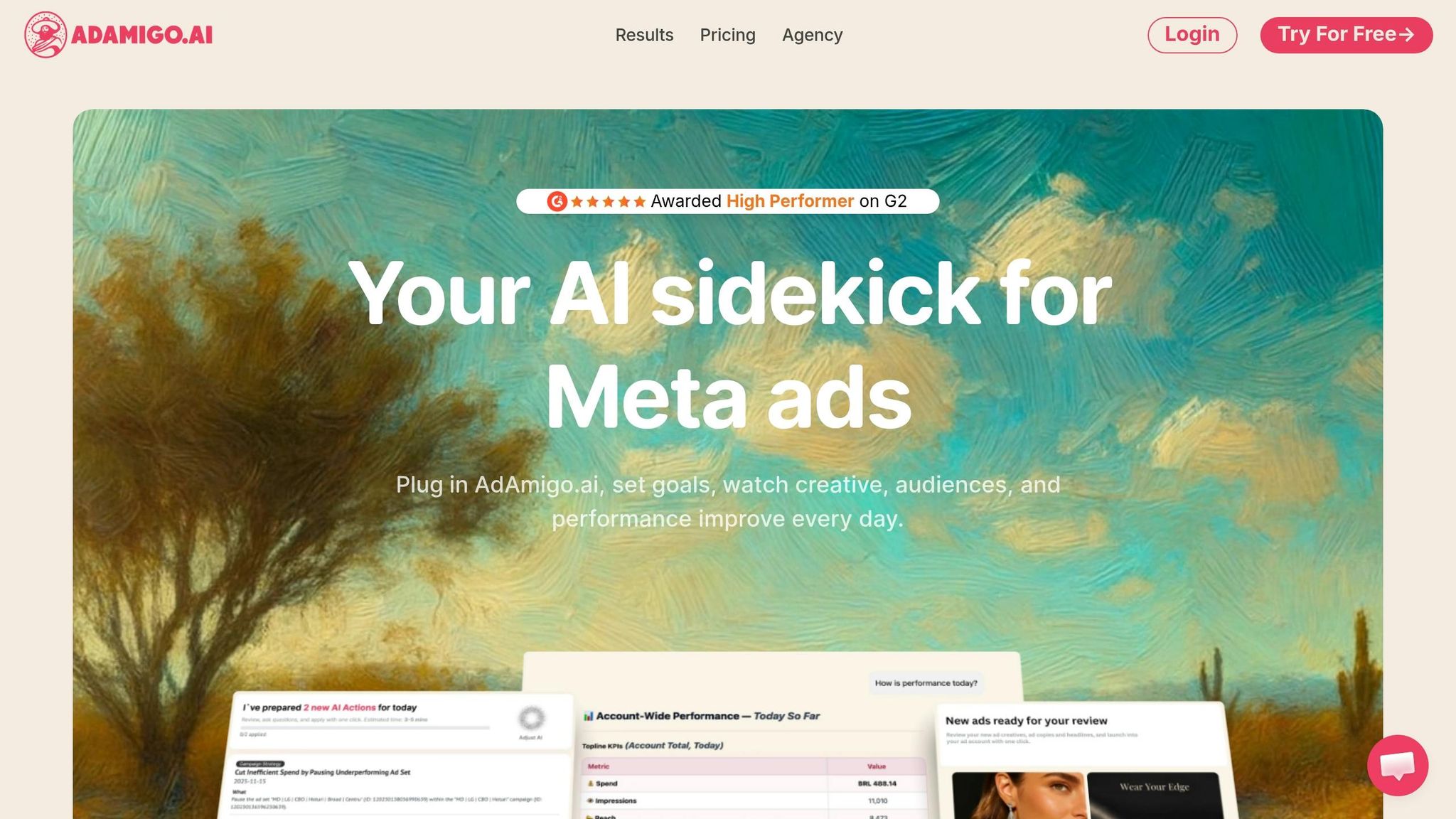
AdAmigo.ai takes audience segmentation to the next level by automating campaign creation and management with precision.
By integrating with Meta's synced data, AdAmigo.ai streamlines campaign setup and targeting. The AI Ads Agent dives into your brand's identity, studies competitors' best-performing ads, and crafts ad creatives - complete with copy, visuals, and targeting configurations. With just one click, you can push these directly into your Meta account. For larger-scale efforts, the Bulk Ad Launcher allows you to generate dozens or even hundreds of ads at once, using optimized audience segments sourced from synced CRM data, website activity, and Meta Pixel signals.
When you upload customer lists with lifetime value (LTV) data, AdAmigo.ai automatically creates value-based Lookalike campaigns targeting 1%, 3%, and 5% audience matches. It also manages audience lifecycle segmentation, creating lists for new leads, repeat buyers, and high-value customers. This ensures your ads stay relevant and avoid targeting users who have already converted. By expanding on Meta's data synchronization, AdAmigo.ai enhances audience targeting to make campaigns more effective.
Continuous Optimization with AI Autopilot
Once your campaigns are live, AdAmigo.ai's AI Autopilot takes over, optimizing budgets and bids in real time. This reduces manual optimization efforts by up to 80%.
Here's how manual management stacks up against AI Autopilot:
Task | Manual Management | AdAmigo.ai AI Autopilot |
|---|---|---|
Budget Adjustments | Adjusted daily, based on previous data | Reallocated minute-by-minute |
Creative Testing | Limited to 2–3 variations over weeks | Tests 20–50+ variations simultaneously |
The AI Actions feature provides a daily list of high-impact recommendations for audience, budget, and bid adjustments. You can either review these suggestions or let the autopilot handle them. The AI continuously refines both Custom and Lookalike Audiences based on real-time performance, directing more budget toward high-performing segments and pausing those that underperform. Over time, this process fine-tunes your targeting by identifying the audience signals that lead to the best results.
NEW Meta Ads Targeting Tutorial [Beginner to Pro in 16 Minutes]
Conclusion
Meta's synchronized audience data system brings together user interactions across platforms, giving advertisers the tools they need for precise targeting. By connecting data from Facebook, Instagram, and other platforms through the Meta Pixel and Conversions API, advertisers can focus their efforts on reaching the right audience at the right moment while avoiding wasted spend on users who have already converted. This approach moves away from broad demographic targeting and instead relies on Custom and Lookalike Audiences, which are built on actual behavioral data rather than assumptions.
The results speak for themselves. GEM saw a 5% increase in ad conversions on Instagram and a 3% boost on Facebook Feed, along with 4× greater efficiency and a 2–4% lift in conversions for specific segments. This shift from generalized targeting to behavior-driven campaigns forms the backbone of the strategy discussed here.
Looking ahead, automation can take these efforts even further. Meta's synchronization capabilities become even more powerful when paired with AI tools like AdAmigo.ai, which can automatically adjust budgets, test creatives, and refine targeting in real time.
Together, these advancements allow advertisers to streamline their operations and scale campaigns more effectively. With Meta's data infrastructure and AI-powered tools, a single media buyer can manage 4–8× more clients while maintaining or even improving account performance. Instead of spending hours on repetitive tasks like budget tweaks and audience updates, advertisers can focus on strategic planning, creative development, and driving overall growth.
To get started, set up your Meta Pixel and Conversions API to ensure you're capturing the best possible data. Then, integrate AI-driven automation to refine daily performance and maximize ROAS. Advertisers who combine Meta's synchronized audience system with AI-powered execution are leading the way in achieving consistent results, leaving competitors to play catch-up with manual processes.
FAQs
How does Meta match a person across Facebook and Instagram?
Meta brings people together on platforms like Facebook and Instagram by leveraging audience signals such as Custom Audiences and Lookalike Audiences. These tools use data from user actions, engagement patterns, and conversion events to provide real-time insights through systems like the Facebook Pixel and Conversions API. This approach ensures precise ad targeting, avoids showing ads to users who have already converted, and enhances ad performance by combining advanced AI models with behavioral data.
Do I need both Meta Pixel and Conversions API?
Using Meta Pixel alongside the Conversions API can boost event match quality by up to 20%. When combined, these tools enhance real-time audience syncing and improve targeting precision, leading to better ad performance.
How can I improve my Event Match Quality score?
To boost your Event Match Quality score on Meta, aim to enhance the match rate between your events and Meta's user data. Start by using the Conversions API alongside the Meta Pixel to send server-side event data directly to Meta, improving accuracy. Double-check that your pixel is set up correctly, events are configured properly, and audience data syncs in real time. Also, maintain clean and organized data sources to achieve the best results.