
Claude Code vs Meta Ads MCP vs AdAmigo.ai: What’s the Difference?
Compare access, developer-build, and full-operation approaches to Meta ads automation to pick the right tool for your team.
Looking for the right tool to manage Meta ads? Here’s the breakdown:
Claude Code: Built for developers, this tool helps create and automate custom workflows for Meta ads. It’s ideal for teams that want to build their own backend systems but requires coding expertise.
Meta Ads MCP: Acts as a connector between AI tools (like Claude or ChatGPT) and the Meta Marketing API. It simplifies access but doesn’t handle ad strategy or execution. Best for users needing quick integration without building custom systems.
AdAmigo.ai: A fully automated platform that manages Meta ads end-to-end. Handles campaign creation, budget optimization, and performance tracking with minimal manual input. Perfect for advertisers and agencies seeking a hands-off solution.
Quick Comparison
Feature | Claude Code | Meta Ads MCP | AdAmigo.ai |
|---|---|---|---|
Purpose | Build workflows | Connect to API | Manage ads |
Target Users | Developers | Power users | Advertisers |
Technical Skill | High | Medium | Low |
Ad Strategy | Custom-built | None | Included |
Setup Time | Variable | 5–15 minutes | ~5 minutes |
Summary: Choose Claude Code for building custom systems, Meta Ads MCP for API access, and AdAmigo.ai for full ad management (or compare developer vs. marketer workflows for more detail). Each serves a unique role among the best AI tools for Meta ads.

Claude Code vs Meta Ads MCP vs AdAmigo.ai: Side-by-Side Comparison
5 NEW AI That Just Changed Facebook Ads Forever
Quick Comparison: Claude Code vs Meta Ads MCP vs AdAmigo.ai
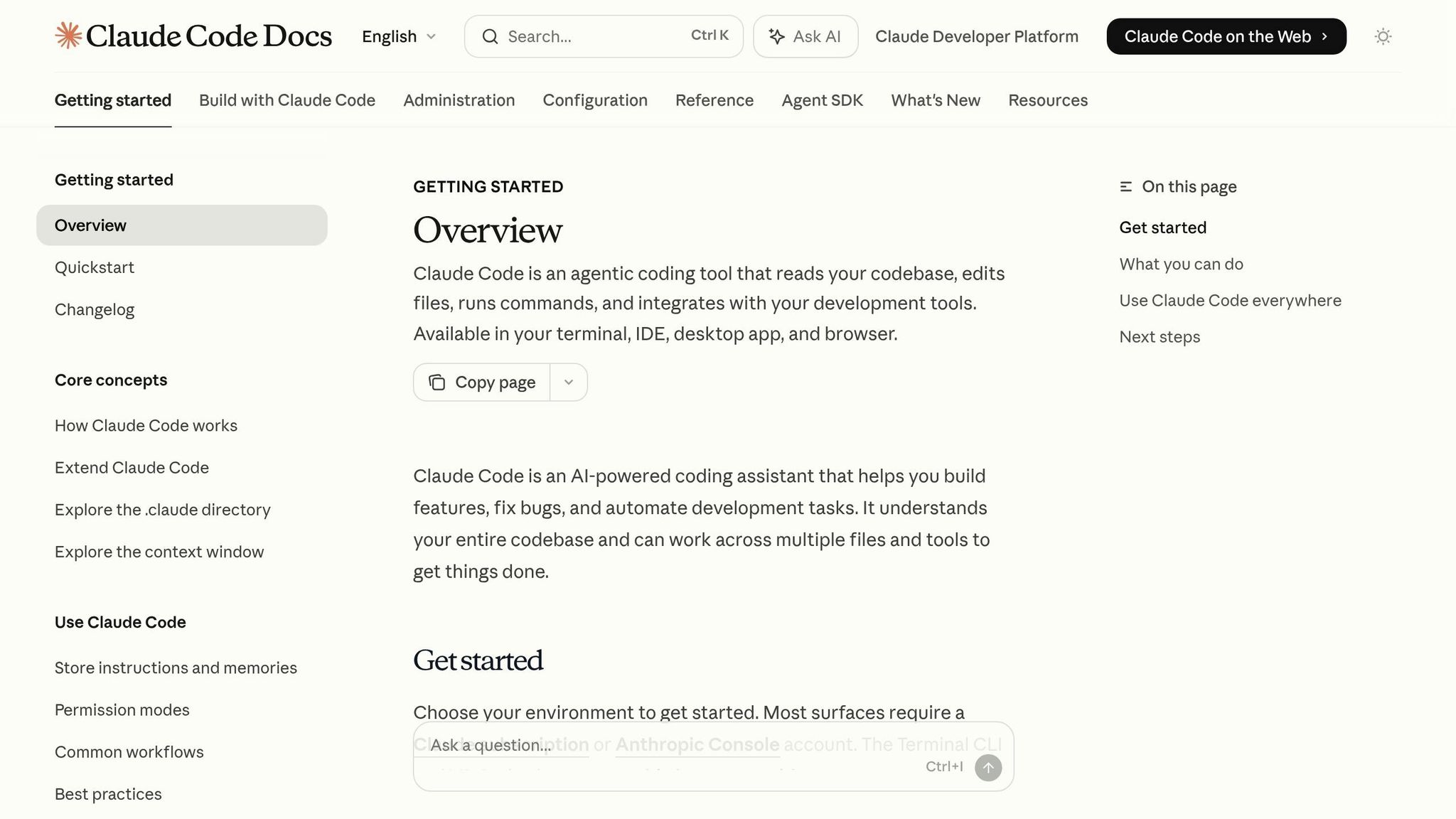
Claude Code is a tool designed for developers to create ad automation systems. Meta Ads MCP acts as a connector, enabling AI assistants to integrate with the Meta Marketing API. AdAmigo.ai, on the other hand, is a ready-to-use platform that manages and optimizes your Meta ads using AI. Here's a closer look at how they stack up.
One of the standout differences is the level of technical expertise required. Claude Code demands advanced skills, like working with terminal commands and scripting. Meta Ads MCP is slightly less technical but still requires users to handle OAuth setup and refresh API tokens every 60 days. In contrast, AdAmigo.ai simplifies the process with a one-click OAuth connection that takes about five minutes and skips the need for App Review or Business Verification.
When it comes to strategic functionality, the gaps become even clearer. Both Claude Code and Meta Ads MCP lack built-in media-buying strategies. As Tarek Kekhia, Co-Founder of AdAdvisor, explains:
"The official MCP intentionally stops at platform-level data... it has no view into your business reality."
This means that advertisers are responsible for configuring key metrics like CPL targets, ROAS goals, and creative fatigue rules - unless they opt for a platform like AdAmigo.ai, which includes these features as part of its core offering.
Comparison Table
Category | Claude Code | Meta Ads MCP | AdAmigo.ai |
|---|---|---|---|
What it is | AI coding agent | Meta Ads connector | AI media buyer |
Built for | Developers | Power users & in-house marketers | Advertisers & agencies |
Main job | Build workflows | Connect AI to Meta Ads | Run & optimize Meta ads |
Technical skill required | High | Medium–High | Low |
Strategy included | Custom-built | No | Yes |
Daily optimization | Custom-built | No | Yes |
Custom-built | Depends on setup | Built in | |
Creative testing | Custom-built | No | Built in |
Bulk ad launch | Custom-built | Possible with setup | Built in |
Setup time | Variable | 5–15 minutes | ~5 minutes |
Best use case | Building custom tools | Connecting AI agents to Meta Ads | Managing Meta ads with AI |
What is Claude Code?
Claude Code is an AI coding assistant developed by Anthropic. It operates directly in your terminal, allowing developers to perform tasks like scripting, automating workflows, and interacting with APIs - such as scaling Meta ads with real-time API updates - using natural language commands (e.g., meta insights run or meta budgets set).
This isn't a full-fledged advertising product but rather a developer's tool. It acts as a foundation for building a custom Meta ads automation system, where you define the logic, rules, and safety measures.
"A meta ads AI agent doesn't replace campaign judgment - it replaces the mechanical execution that judgment shouldn't be spent on." - Murat Bock, Founder, AdLibrary
This focus on customization and control makes Claude Code particularly appealing for teams that want to maintain full oversight and auditability in their ad automation processes.
Best Use Case for Claude Code
Claude Code is ideal for technical teams that need complete control over their ad automation. If you have developers on your team and want to create a tailored, version-controlled system - one that integrates data from your CRM, inventory, or internal dashboards - Claude Code offers that capability. Every action it performs is logged in the Business Manager activity feed and can also be saved as a Markdown change log in a git repository. This ensures transparency and repeatability.
The setup process is straightforward, taking about 10–15 minutes via the Meta CLI (npm install -g @meta/ads-cli). That’s a huge improvement over the older, multi-week App Review process. For teams handling ad operations like software development, this tool can be a game-changer.
Limitations of Claude Code
While Claude Code provides developers with the tools for custom automation, it lacks the business context needed for strategic decision-making. It only has access to platform-level data - like ROAS, CPA, and spend - but doesn’t inherently know your break-even ROAS, profit margins, or which campaigns are tied to specific promotions. This means you'll need to manually input that context during each session.
There are also some practical challenges to consider. Meta OAuth tokens expire every 60 days, requiring manual renewal. Additionally, loading the full Meta MCP tool catalog can use up around 55,000 context tokens before you even start asking questions, limiting its capacity for more complex analyses. Without clear system prompts to set spending limits or restrict changes to certain campaigns, there's also a risk of triggering a learning phase reset by making substantial edits to active ad sets. This is one of the common mistakes in bulk Meta ad testing that can derail performance.
In short, while Claude Code is a powerful tool, it demands a hands-on approach. Your team will need to handle strategy, define guardrails, and manage ongoing maintenance to make the most of it.
What is Meta Ads MCP?
Meta Ads MCP, introduced on April 29, 2026, simplifies how AI assistants like Claude or ChatGPT interact with the Meta Marketing API. It allows these tools to perform tasks within your ad account without needing to create a custom Developer App or go through the lengthy App Review process. Unlike platforms like Claude Code or AdAmigo.ai, MCP focuses purely on providing access, not on dictating how that access is used.
Think of it as a bridge - it connects AI tools to Meta Ads but doesn’t steer the actions they take once connected.
What Meta Ads MCP Can Do
Meta Ads MCP provides 29 tools grouped into five categories: campaign management, product catalog, insights and performance, datasets and tracking, and assets and accounts. With these tools, an AI assistant can:
Retrieve ROAS (Return on Ad Spend) and CPA (Cost Per Acquisition) data
Create or update campaigns
Duplicate ad sets
Shift budgets
Diagnose issues with Pixel or Conversions API signals
These tasks can all be performed using natural language commands.
The setup process is quick, taking just 5–7 minutes, and skips the multi-day App Review process entirely. It uses Meta API integration best practices for OAuth authentication and is currently free during the open beta phase. However, it’s important to note that MCP’s role ends at providing the connection - it doesn’t include any built-in strategic intelligence.
"The connector is for the parts of paid-social work that are click-heavy and easy to express in language... It isn't a back-door into the ranker." - R2Clickthrough
What Meta Ads MCP Does Not Do
While MCP provides access, it doesn’t handle strategy. It lacks the ability to understand your business goals, such as your break-even ROAS, target CPA, profit margins, or inventory levels. It works with platform metrics but has no insight into the bigger picture of your business.
Additionally, MCP doesn’t operate autonomously. It can’t schedule tasks, run logic in the background, or pause underperforming ads unless prompted by a user. Every action requires manual initiation. As Tarek Kekhia, Co-Founder of AdAdvisor, explains:
"The official MCP intentionally stops at platform-level data. It surfaces benchmarks and even anomaly signals, but it has no view into your business reality."
There are also technical limitations to keep in mind:
Loading the full MCP tool catalog can use up approximately 55,000 context tokens before you even start asking questions.
OAuth tokens expire every 60 days and may fail without warning.
Meta’s auction-side optimizations, like Advantage+ Shopping and Advantage+ Audiences, remain entirely internal to Meta and are outside MCP’s scope.
In short, while Meta Ads MCP makes connecting to Meta Ads easier, the responsibility for strategy and optimization still lies with you. It’s a tool for execution, not decision-making.
What is AdAmigo.ai?
AdAmigo.ai goes beyond the basic connection offered by Meta Ads MCP, stepping in to manage and optimize your Meta ad campaigns autonomously. Designed specifically for advertisers and agencies, this AI-powered media buyer is a plug-and-play solution that takes over the heavy lifting of ad management right away.
Instead of spending hours in Ads Manager tweaking budgets, pausing underperforming ads, or launching new creatives, AdAmigo.ai handles it all for you. It audits your account, spots opportunities, and makes optimizations - either automatically or with your approval. Users report that it takes less than 5 minutes of manual work per week to maintain an optimized ad account. Here’s a breakdown of its key features that simplify the Meta ads process.
Core Features
AdAmigo.ai is built around five main capabilities, covering every aspect of the Meta ads workflow:
AI Autopilot: This is the heart of the platform. It continuously evaluates performance across creatives, audiences, budgets, and campaign structures. Based on your KPIs, it generates and executes impactful optimizations. You can let it run fully autonomously or choose to approve actions before they’re executed.
AI Chat Agent: Manage your account with simple commands or questions. Ask why your ROAS (Return on Ad Spend) dropped, instruct it to increase budgets on top-performing ads, or request a new retargeting campaign. The AI handles it directly from the chat interface.
Ad Factory: Keeps your creative pipeline fresh by analyzing your top-performing ads and generating new variations. This eliminates creative fatigue without needing a separate design team or workflow.
Bulk Ad Launcher: Upload your creatives via Google Drive, and AdAmigo handles the rest. It generates ad copy, structures campaigns, and publishes ads directly into your Meta account - saving hours of manual setup.
AdAmigo Protect: Works in the background, safeguarding your campaigns by monitoring for spend anomalies, broken links, disabled ads, and setup errors. It catches problems before they drain your budget.
Unlike tools like Claude Code or Meta Ads MCP, AdAmigo.ai operates as a complete system for managing Meta ads. Its comprehensive approach delivers results like these:
"We are getting INSANE RESULTS! Our budgets are controlled, our spend is being smartly allocated and our ROAS is up massively." - Rochelle D., G2 Review
Best Use Case for AdAmigo.ai
AdAmigo.ai is ideal for teams that want an AI to fully manage their Meta ads, not just provide a connection or basic infrastructure. Agencies use it to enable one media buyer to efficiently manage three to five times more client accounts by automating repetitive tasks. In-house teams rely on it to execute advanced Meta ad strategies without needing to build or maintain their own automation systems.
If you lack the resources to develop a custom automation stack - or simply don’t want to - AdAmigo.ai offers a ready-made alternative. It learns from your account data over time, adapting to your specific KPIs and performance trends. The longer it runs, the smarter and more effective it becomes.
Access Layer vs Operating Layer: How These Tools Differ
The difference between these tools boils down to one key concept: manual vs AI-powered management through access versus operation.
"Tooling is the hands; the playbook is the brain." - ClaudeFa.st
Meta Ads MCP acts as the hands. It's a toolkit that provides 29–31 tools for tasks like campaign management, handling product catalogs, managing account assets, tracking, and analyzing performance. It allows you to read, write, and authenticate data but doesn’t impose any strategy - it’s there to follow your instructions.
Claude Code, on the other hand, operates a level higher. It offers developers the environment to create the brain - custom logic, stop conditions, and workflows that connect the access layer to automated processes. However, it’s not a set-it-and-forget-it solution; you’re responsible for defining, maintaining, and updating the logic, especially when Meta’s API changes or when OAuth tokens expire every 60 days.
AdAmigo.ai goes even further by providing a fully developed operating layer. It incorporates business context - like your KPIs, budget rules, and creative fatigue signals - and acts on them continuously. For example, while Meta Ads MCP can show a ROAS (Return on Ad Spend) of 2.0, it doesn’t know if that’s profitable for your business. AdAmigo.ai bridges this gap by operating with your specific performance goals in mind.
Where Each Tool Fits
Tool | Layer | What It Provides |
|---|---|---|
Meta Ads MCP | Access | API connection, raw data tools, no built-in logic |
Claude Code | Build-your-own | Developer tools to create custom operating logic |
AdAmigo.ai | Operating | Strategy execution, optimization, guardrails, and workflows |
This breakdown highlights how each tool fits into your Meta ads workflow. The access layer (Meta Ads MCP) connects directly to Meta’s API, while the operating layer (AdAmigo.ai) takes action - like adjusting budgets, pausing ads, or flagging issues - based on your specific strategy. Without an operating layer, access alone doesn’t provide the strategic direction needed to achieve your business goals.
Conclusion: Which Tool Should You Use?
Deciding which tool fits your needs comes down to your specific role and goals - whether you're a developer, a user managing access layers, or an advertiser looking for AI automation platforms for full automation.
Claude Code: Perfect for developers who want to create custom dashboards or scripts. It offers full control over your solutions, but keep in mind that you'll be responsible for updates and maintenance.
Meta Ads MCP: A great choice for quick access to Meta Ads. This free tool can be set up in just 5–15 minutes, allowing you to connect with Meta's API. However, it won’t handle strategic decisions for you.
AdAmigo.ai: Ideal for advertisers who want to simplify ad management. No coding or technical expertise is required - it takes care of budget optimization, creative testing, issue detection, and automated execution.
This breakdown reflects the hierarchy discussed earlier: build with Claude Code, access with Meta Ads MCP, and operate with AdAmigo.ai. If you prefer to design your own system, start with Claude Code and Meta Ads MCP. But if you're seeking a hands-off, fully automated solution, AdAmigo.ai is your go-to tool.
FAQs
Is Claude Code the same as Meta Ads MCP?
No, Claude Code and Meta Ads MCP are not the same tools for Facebook ads automation.
Claude Code is an AI-powered coding assistant designed for developers. Its main purpose is to help create custom workflows and tools tailored to specific needs.
Meta Ads MCP, on the other hand, acts as a connection layer, linking AI tools to Meta’s Marketing API. This makes it easier to integrate and interact with Meta’s advertising platform.
Neither tool is a full ad management solution. Instead, they each play specific roles in the broader automation ecosystem.
Can Claude Code manage Facebook ads?
No, Claude Code cannot directly manage Facebook ads. It’s an AI coding tool designed to assist developers in creating custom automation and workflows. However, it is not built to function as a full-fledged ads management platform.
What does Meta Ads MCP do?
Meta Ads MCP is a toolkit designed to streamline access to Meta’s Marketing API. With this toolset, AI agents can handle ad accounts, campaigns, and related entities without the need for Developer App registration. This eliminates some of the usual technical setup hurdles, making it easier to integrate AI workflows with Meta Ads.
Is Meta Ads MCP enough to automate Meta ads?
Meta Ads MCP offers tools for access and management, but it doesn't cover everything needed to fully automate Meta ads. It falls short in areas like optimization, strategic planning, and protective measures. To achieve full automation, you'll need additional solutions like AdAmigo.ai. These tools can take care of essential tasks such as developing strategies, performing daily optimizations, and running creative tests.
Difference between an AI coding agent and an AI media buyer?
An AI coding agent - think of tools like Claude Code - acts as a virtual assistant for developers. It can handle tasks like editing codebases, executing commands, and designing workflows. However, using such tools effectively demands technical skills to set up the logic and ensure proper safeguards.
On the other hand, an AI media buyer, such as AdAmigo.ai, is more of a plug-and-play solution. It takes care of advertising tasks like creating campaigns, optimizing performance, and managing budgets. Unlike coding agents, this option doesn’t require coding knowledge or any custom setup, making it a fully automated advertising tool.
Is AdAmigo.ai better than Claude Code for Facebook ads?
AdAmigo.ai is a strong choice for Facebook ads if you're looking for a plug-and-play AI solution. It simplifies the process with features like daily optimization, creative testing, and bulk ad launching - all without needing any coding skills.
On the other hand, Claude Code is designed for developers who want to create custom workflows. It’s an AI coding tool that caters to those with technical expertise, offering flexibility to build tailored solutions.
In short, AdAmigo.ai is ideal for automation and simplicity, while Claude Code is better suited for those who prefer hands-on customization.
Should agencies use Claude Code or AdAmigo.ai?
For agencies, AdAmigo.ai tends to be the go-to option for automating Facebook ads. It’s specifically designed as an AI media buyer and comes packed with features like daily optimization, creative testing, bulk ad launching, and approval workflows. These tools make it a great fit for agencies looking for an out-of-the-box solution to streamline their ad management.
On the flip side, Claude Code is geared toward developers. It’s an AI coding agent meant for creating custom tools, which requires technical know-how and ongoing maintenance. This makes it a less practical option for most agencies that prefer a ready-to-use system.
Safest way to automate Facebook ads with AI?
The safest way to handle Facebook ad automation with AI is by using specialized platforms that include built-in safety measures. For instance, tools like AdAmigo.ai are tailored for advertisers, offering features such as daily optimization, approval workflows, and safeguards against errors. Another option is to rely on Meta's official AI tools, like Meta Ads MCP, which provide secure and straightforward access to Meta Ads with minimal setup. However, if you opt for DIY solutions like Claude Code, be prepared for careful configuration and ongoing maintenance to minimize potential risks.