
AI Tools for Ad Placement Testing
Fix ad performance by matching the right AI tool to the bottleneck—delivery, creative, or the landing page.
Meta ad costs are up 30% year over year in 2026, so placement testing mistakes cost more than they used to. If I had to sum up this guide in one line, it would be this: pick your tool based on where performance breaks down - inside Meta delivery, before launch, or after the click.
Here’s the short version:
AdAmigo.ai is best if I want Meta placement testing and account changes handled with very little manual work.
Revealbot is best if I want to set my own IF/THEN rules and keep tight control.
Meta Advantage+ is the simplest built-in Meta option for automated placement delivery.
Kantar LINK AI helps me score ads before launch, so I can filter weak ideas early.
Zappi AI Ad Testing helps me test ad concepts with consumers before I spend on Meta.
Unbounce Smart Traffic helps if placement results are being skewed by landing-page issues after the click.
A few numbers stand out right away:
Meta often needs 50 optimization events in 7 days to leave learning
Meta suggests budgets around 10x to 20x target CPA for steadier delivery
Ad impact is driven more by the ad itself than media placement in one cited stat: 56% vs. 37%
Revealbot starts at $99/month and goes up to $399/month based on ad spend
If I’m choosing fast, I’d use this rule:
Need live Meta automation? Go with AdAmigo.ai or Meta Advantage+
Need rule-based control? Use Revealbot
Need pre-launch ad checks? Use Kantar LINK AI or Zappi
Need post-click conversion help? Use Unbounce Smart Traffic
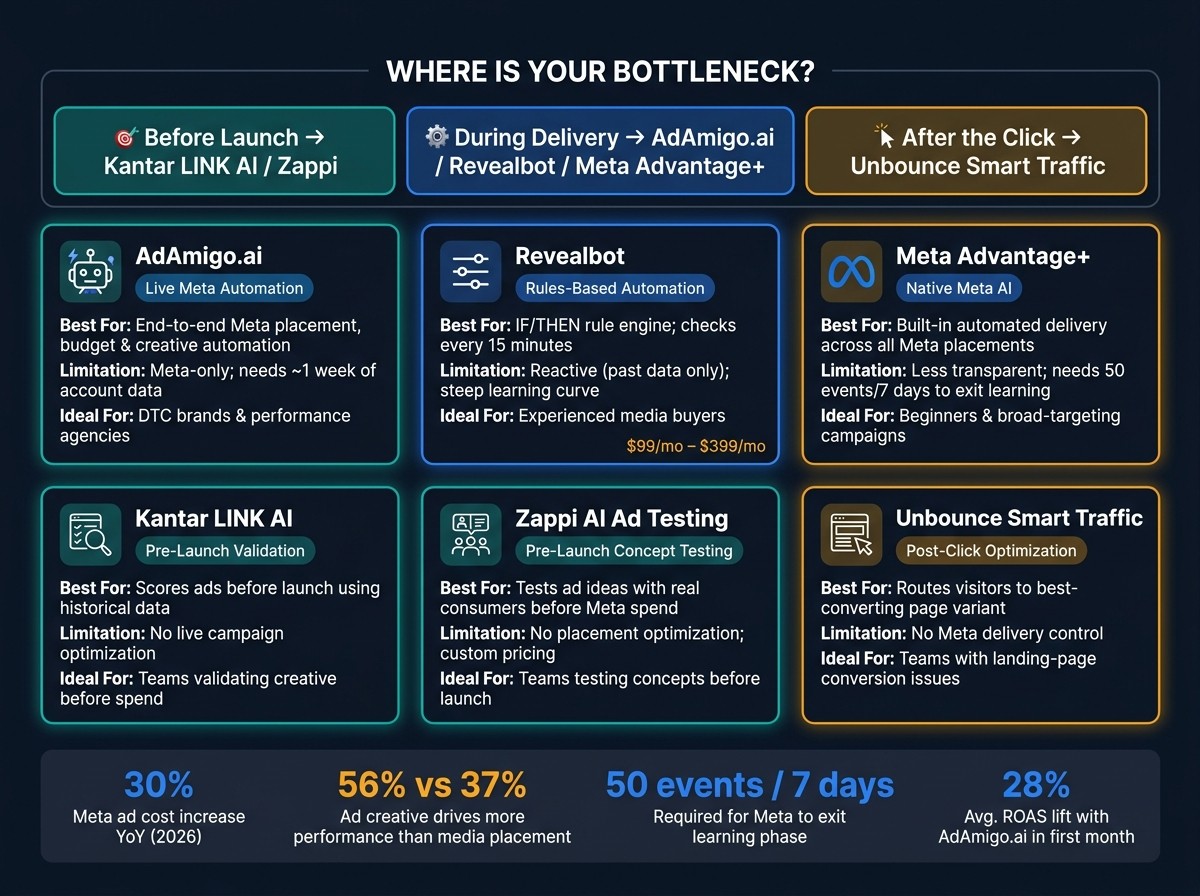
AI Ad Placement Testing Tools Compared: Which One Do You Need?
How To Run A/B Tests on Meta Ads (Step-by-Step for Beginners)
Quick Comparison
Tool | What it does | Best for | Main drawback |
|---|---|---|---|
AdAmigo.ai | Automates Meta placement, budget, audience, and ad changes | Teams that want Meta automation platforms | Meta-only; needs account data first |
Revealbot | Runs placement actions from IF/THEN rules | Buyers who want hands-on control | Works from past data; setup can take time |
Meta Advantage+ | Meta’s built-in automated delivery across placements | Teams that want a simple native option | Less visibility into why spend shifts |
Kantar LINK AI | Scores ads before launch | Pre-launch ad screening | No live campaign changes |
Zappi AI Ad Testing | Tests ad ideas with consumers before spend starts | Early concept testing | No live placement testing |
Unbounce Smart Traffic | Sends visitors to the landing-page version most likely to convert | Teams with post-click conversion issues | Does not control Meta delivery |
So the main point is simple: there is no single “best” tool for every placement test. The right pick depends on whether I’m trying to fix delivery, the ad, or the landing page.
1. AdAmigo.ai
Category: Direct placement automation
If your team wants the system to pick tests, launch them, and tune them with very little manual work, AdAmigo.ai is the most hands-off option. AdAmigo.ai automates Meta placement testing by auditing performance and making changes across placements, budgets, audiences, and creatives - with your approval or on autopilot.
Its Automatic Multi-Format Grouping matches 9:16, 4:5, and 1:1 assets to Reels, Stories, and Feed placements. That gives teams a simple way to test which formats perform best in Reels, Stories, and Feed without sorting assets by hand.
A lot of the day-to-day work is handled by separate agents. The Action Agent manages daily optimization and shows the reason behind each change. The Ads Agent refreshes winning creatives to cut down on creative fatigue. And the Chat Agent lets you launch tests or adjust budgets in plain language, which is handy when you want to move fast without digging through settings.
There are two ways to run it:
Semi-auto surfaces placement, budget, and creative wins for one-click approval.
Autopilot runs optimizations inside your CPA or ROAS guardrails.
AdAmigo is a certified Meta Business Technology Partner, and its automation is built around Meta's official API and platform guidelines.
Limitations: It works only with Meta, and new accounts usually need about a week of data before the system can learn how the account behaves.
2. Revealbot
Category: Rules-based placement automation
Revealbot takes the opposite path: you make the rules, and the platform carries them out. It runs on an IF/THEN rule engine, so you can decide what should happen when a placement hits a set threshold. It checks performance every 15 minutes, which gives you a short window to pause spend or move budget before waste starts piling up.
The rule builder is the main draw here. You can mix 15+ conditions, including CPA, frequency, and CTR. For placement testing, that makes life a lot easier. Say Instagram Stories starts slipping while Facebook Feed is holding up. You can have Revealbot shift budget based on your ROI threshold without opening Ads Manager. Its bulk creation tool also helps when you're launching large placement tests across multiple ad sets.
One thing to know: Revealbot is rule-based, not predictive. It acts on past performance data. It doesn’t try to guess what will happen next. Pricing starts at $99/month for up to $10,000 in managed ad spend and goes up to $399/month at $100,000. It’s a good fit for teams that want tight control across a lot of campaigns.
If your team wants to spend less time writing rules and lean more on built-in automation, the next tools get closer to Meta-native optimization.
3. Meta Advantage+
Category: Native AI placement automation
For teams that want less hands-on setup than rules-based tools, Meta Advantage+ is the native place to start. It automatically shifts budget across Facebook Feed, Instagram Stories, Reels, Messenger, and Audience Network based on predicted performance. In plain English, Meta uses its own performance signals to decide where spend should go across placements.
How placement automation works
Advantage+ Placements lets Meta decide where budget goes. ASC pushes that automation further by handling audience, placement, bidding, and creative delivery.
What you still control
This doesn’t mean you give up control. You can still set budget floors, caps, and conversion goals like ROAS vs. volume. You can also set an existing customer budget cap - usually 10% to 20% - so spend doesn’t lean too hard on warm audiences.
Where it struggles
Here’s the catch: Advantage+ needs clean signals and enough conversion volume to learn. Meta says campaigns usually need 50 optimization events within a 7-day window to exit learning. It also recommends a daily budget of 10x to 20x your target CPA and says Event Match Quality (EMQ) should stay at 7.0 or higher for the system to work in a steady way.
Creative setup matters too. Advertisers should upload assets in 1:1, 4:5, and 9:16 ratios so the system can test placements without harsh automatic cropping. This is a core component of AI-powered creative scaling for modern campaigns.
Teams that need tighter placement rules or more control over testing often move to third-party tools.
4. Kantar LINK AI
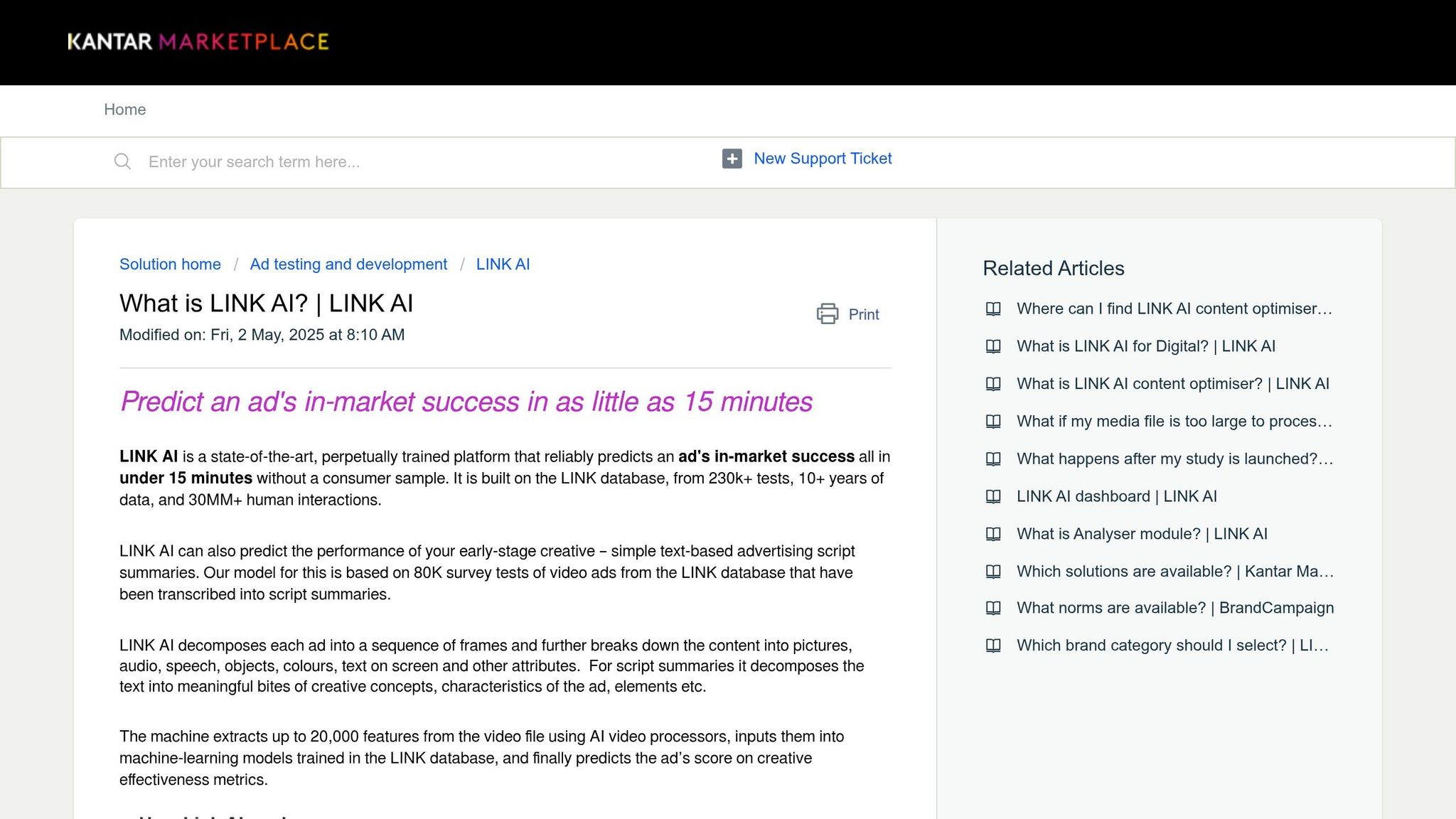
Category: Predictive creative testing
For teams that want to check creative before Meta starts spending, Kantar LINK AI adds a pre-launch step to placement testing. It scores ads before launch using predictive analytics, which helps you spot likely winners before any Meta budget goes live.
How it predicts performance
It can flag weak hooks, weak brand cues, and low emotional pull before production begins.
What it means for placement decisions
You can use those signals to decide which concepts are worth testing in Meta Ads Manager, and which versions need more work before launch. This pre-launch vetting fits well into a broader AI testing framework for creative variations.
Where it falls short
Kantar LINK AI is a pre-launch research tool, not a live optimization engine. So it works best as a planning tool, not as a replacement for live Meta placement tests.
5. Zappi AI Ad Testing
Category: Fast pre-launch creative validation
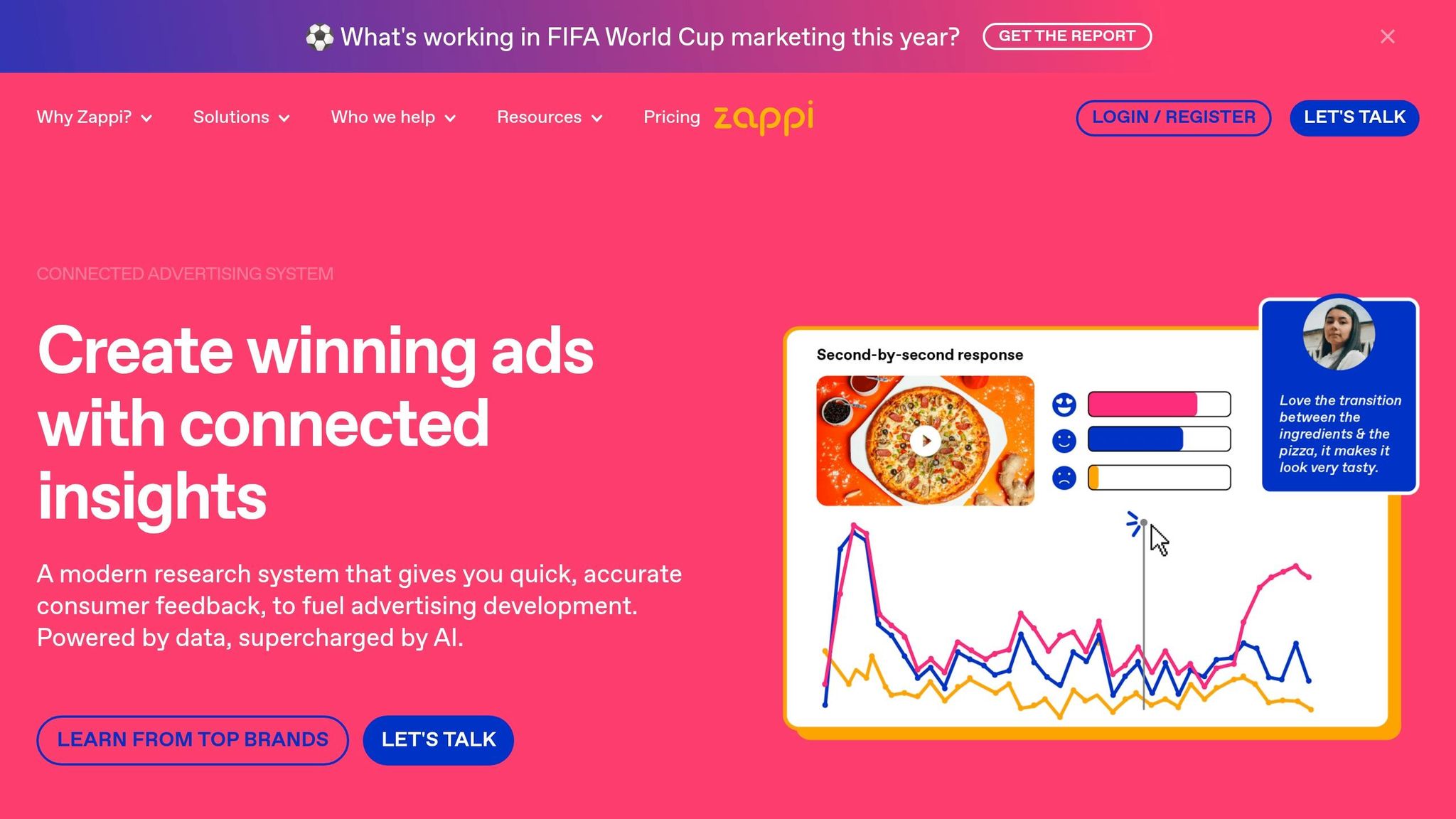
Zappi AI Ad Testing lets brands test ad ideas with real consumers before Meta spend starts.
How it evaluates ad concepts
Zappi uses consumer surveys plus AI to give you both qualitative and quantitative feedback on a creative concept. AI Quick Reports sum up consumer reactions and point to the strongest fixes for tone, message, and emotional pull.
That gives you a clearer view of why an ad works or falls flat. And it helps you decide whether a concept is even worth moving into Reels, Stories, or Feed tests.
That matters more than many teams expect. In digital channels, creativity drives 56% of performance, while media placement drives 37%. So if you spot a weak concept early, you can avoid wasting a lot of budget.
What it means for placement decisions
Zappi can tell you if a concept is strong enough to justify live Meta testing. But it does not handle placement optimization itself.
So think of it as a pre-launch filter, not a live optimization tool.
Where it falls short
Zappi does not test Meta placements in live delivery. Pricing is also custom-quoted by company, which can make budget planning less clear upfront. Some users also say its fixed methods and templates can feel restrictive for specialized use cases.
Once the ad goes live, post-click testing becomes the next layer.
6. Unbounce Smart Traffic
Category: Conversion-path optimization for post-click performance
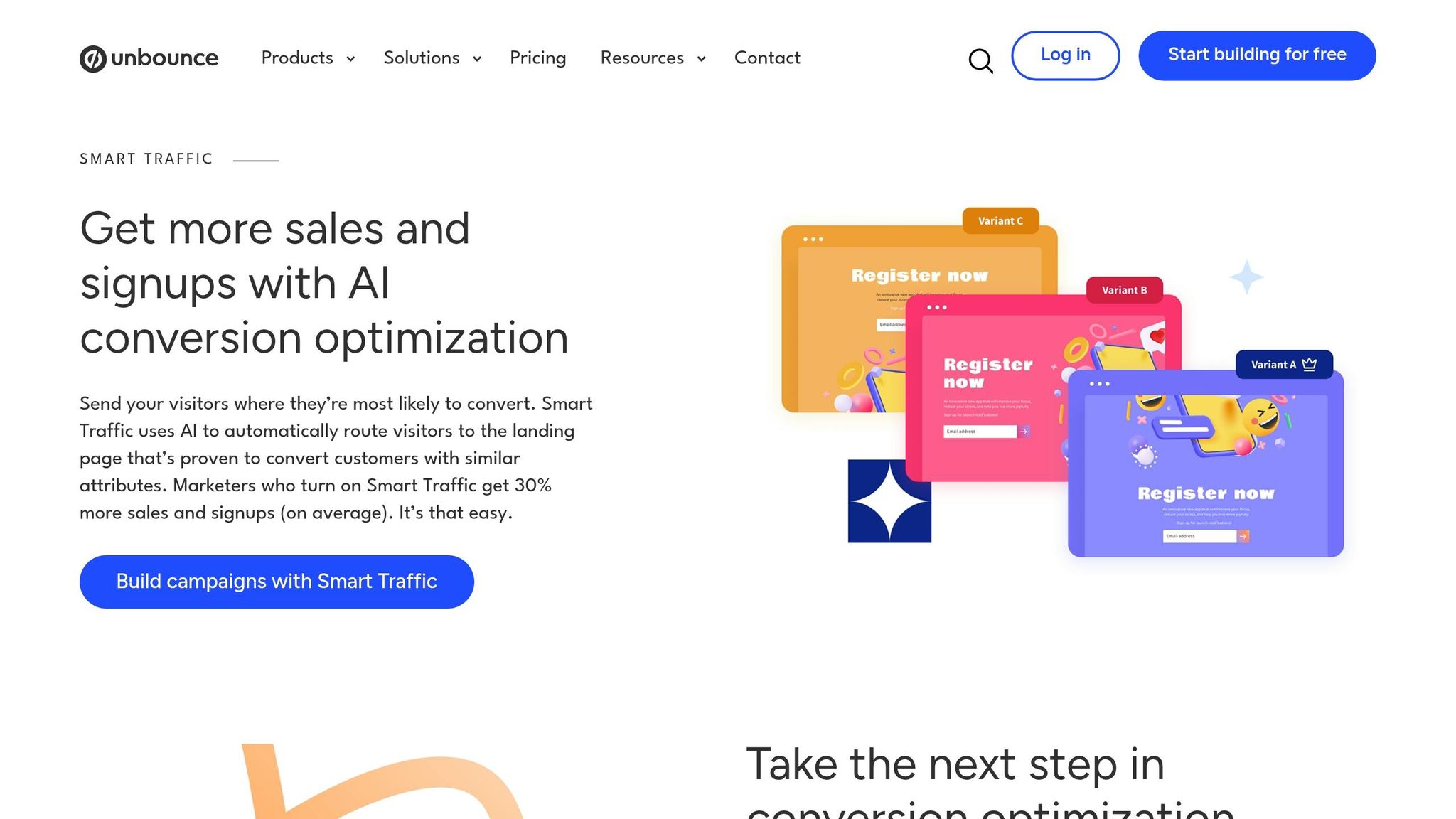
If your placement data is getting warped by what happens after the click, Smart Traffic helps clean that up. Unbounce Smart Traffic works downstream from Meta placements, on the landing page itself. It uses machine learning to send each visitor to the page variant most likely to convert, based on signals like device, browser, location, and time of day.
Why it matters for placement testing
When you compare Meta placements like Instagram Stories and Desktop Feed, a higher conversion rate doesn't always mean the placement did the better job. Sometimes the real difference comes from the landing-page experience.
If both placements send traffic to the same page, that page can tilt the results. A mobile-heavy placement like Stories may underperform simply because the landing page isn't a good fit for that kind of visitor.
Smart Traffic helps cut down conversion loss caused by page mismatch. It automatically routes each visitor to the page variant that fits them best, which can make placement comparisons cleaner.
Who should use it alongside placement tools
Smart Traffic makes the most sense for teams where landing-page performance has a big effect on conversions. That includes lead gen campaigns (often choosing between lead forms or landing pages) and eCommerce brands with separate mobile and desktop page variants.
It works well alongside tools like AdAmigo.ai, Revealbot, or Meta Advantage+. Those tools handle Meta-side delivery and placement, while Smart Traffic handles what happens after the click.
That distinction matters. Smart Traffic is useful for measurement, not for placement optimization.
Where it falls short
Smart Traffic doesn't change anything inside Meta, and it can't see ad delivery or placement data. It influences post-click conversion data, not Meta delivery or placement selection.
Strengths and Trade-Offs by Use Case
Each tool in this article affects a different part of placement performance. Some help before launch. Some work inside Meta while campaigns are live. Others improve what happens after the click.
AdAmigo.ai is a strong fit for teams that want end-to-end Meta automation. It manages placements, budgets, and creatives as one connected system, which can save time and cut down on manual work. The catch is simple: it’s Meta-only. If you run ads on other channels, you’ll need other tools too.
Revealbot fits experienced media buyers who want rule-based control across Meta, Google Ads, and Snapchat. That level of control can be useful, especially for teams that like to fine-tune campaigns. But there’s a trade-off. The platform has a steep learning curve, and its design is reactive. It responds to past results instead of estimating what may happen next.
Meta Advantage+ gives you native Meta automation at no extra cost. That makes it appealing for lean teams or advertisers who want to get up and running fast. The downside is less hands-on control and less visibility into why budget shifts happen.
Not every tool in this group tests placements head-on. Some improve the inputs that shape placement results. Kantar LINK AI and Zappi AI Ad Testing both sit in the pre-launch stage, not the live optimization stage. Use them to validate creative concepts before you commit media spend. Unbounce Smart Traffic helps after the click by sending visitors to the page variant most likely to convert.
Use the table below to match your testing stage to the right tool.
Tool | Best Use Case | Main Limitation | Ideal Advertiser |
|---|---|---|---|
AdAmigo.ai | Live Meta placement automation | Meta-only | DTC brands & performance agencies |
Revealbot | Rule-based campaign management | Reactive, not predictive; steep learning curve | Experienced media buyers |
Meta Advantage+ | Native Meta automation | Less transparent; lower hands-on control | Beginners & broad-targeting campaigns |
Kantar LINK AI | Pre-launch creative validation | No in-flight optimization | Teams validating creative before launch |
Zappi AI Ad Testing | Pre-launch concept testing | No campaign management | Teams testing ideas before launch |
Unbounce Smart Traffic | Post-click conversion optimization | No Meta campaign control | Teams optimizing landing-page conversion |
Final Recommendation
There’s no one-size-fits-all pick here. The best tool depends on where the bottleneck is: before launch, during delivery, or after the click. Start with the stage that’s slowing you down, then match the tool to that job: live optimization, pre-launch validation, or post-click conversion.
For live Meta placement automation, AdAmigo.ai is the strongest option. It automates creative iteration and testing, budget shifts, and delivery, with an average ROAS lift of about 28% in the first month.
If you want rule-based control instead of full automation, Revealbot is a better match. It runs on IF/THEN rules and works well when you want granular control. The tradeoff is simple: it reacts to past data instead of forecasting what’s likely to happen next.
Meta Advantage+ is a good starting point for teams that want the simplest native option. Then, when you need tighter control, it makes sense to move to a third-party tool.
For pre-launch creative checks, use Kantar LINK AI or Zappi. Kantar LINK AI is better for predictive scoring based on historical ad data, while Zappi is better for direct consumer-feedback testing before ad spend begins.
If the ads themselves are doing their job but conversions drop after the click, Unbounce Smart Traffic helps fix post-click conversion distortion by routing each visitor to the page variant most likely to convert.
FAQs
How do I know if my issue is delivery, creative, or landing page?
Check where performance starts to slip:
Delivery: Low impressions or a weak click-through rate can point to bidding, ad relevance, or audience targeting.
Creative: Delivery looks fine, but engagement, cost per click, or conversions are weak.
Landing page: Ads are getting seen and clicked, but landing page actions or conversions stay low.
The key is to look at campaign analytics and landing page metrics side by side. That makes it much easier to spot where the problem actually sits.
When should I use full automation instead of rules-based control?
Use full automation for complex, fast-moving campaigns where conditions shift all the time and the system needs to learn as it goes.
AI-driven systems like AdAmigo.ai can spot opportunities and make real-time changes without constant manual rule updates.
How much data does Meta need before placement testing is reliable?
Meta usually needs at least 30 days of ad account history before placement testing starts to become reliable and useful.
That time window matters because the system needs enough past data to spot patterns instead of making guesses.
Tools like AdAmigo.ai build on that same data to guide testing and optimization. In that period, the platform reports a 30% performance improvement.