
Stories Ad Placement: Best Practices
Practical design, targeting, and budgeting tips for high-performing Stories ads, including safe zones, Advantage+ placements, CBO, and key metrics.
Stories ads are vertical, full-screen ads designed for platforms like Instagram, Facebook, and WhatsApp. They’re highly effective but require precise design, targeting, and budgeting strategies to succeed. Here’s what you need to know:
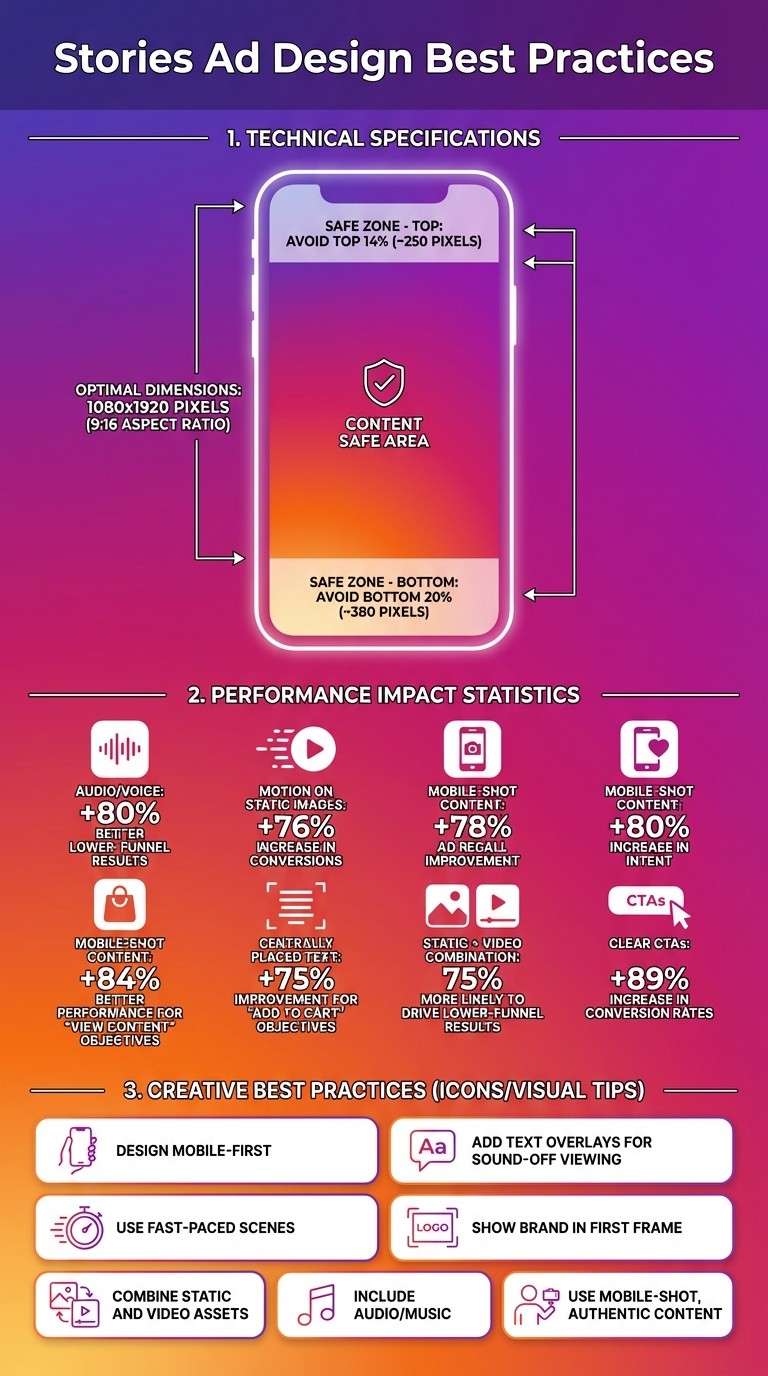
Design Tips: Use 1080x1920 pixels (9:16 ratio). Keep text and visuals out of the top 14% and bottom 20% to avoid platform overlays. Add motion and audio to boost conversions by up to 76% and 80%, respectively.
Targeting Strategies: Start with broad targeting and use Meta’s Advantage+ Placements vs Manual Placements for automated ad distribution. Combining Stories with other formats like Reels can improve results by 75%.
Budgeting: Use Campaign Budget Optimization (CBO) to allocate funds efficiently using a Meta ads budget planner. Aim for 50 optimization events in 7 days to exit the learning phase.
Performance Metrics: Track CPM, CTR, ROAS, and conversion rates and compare them against industry benchmarks to measure success. Use tools like Meta Pixel and Conversions API for accurate data.
Success depends on sharp design, precise targeting, and consistent performance monitoring. Automating tasks with tools like AdAmigo.ai can save time while improving results.
How to Create and Optimize Instagram Story Ads
Design Best Practices for Stories Ads
Stories Ad Design Best Practices: Key Statistics and Performance Metrics
Use Correct Dimensions and Safe Zones
When creating Stories ads, stick to 1080x1920 pixels with a 9:16 aspect ratio. This vertical, full-screen format ensures your ad fits seamlessly on mobile screens, giving it a native, immersive feel.
Pay attention to safe zones. Avoid placing text, logos, or essential visuals in the top 14% (about 250 pixels) to steer clear of profile icons and usernames. Similarly, leave the bottom 20% (roughly 380 pixels) clear so interactive elements like call-to-action buttons remain visible and functional. This ensures a smooth transition to your site, though you should also check for landing page fixes to maximize conversion potential. This technical setup is as crucial as ensuring your Meta Consent Mode settings are correctly configured to preserve measurement accuracy. Following these guidelines ensures your ad isn't hindered by platform overlays.
Design for Mobile-First Viewing
Beyond proper dimensions, designing with a mobile-first mindset is key. Mobile users scroll quickly, so your ad needs to grab their attention and communicate its message instantly. Ads with voice or music drive better lower-funnel results 80% of the time compared to silent ones. That said, not everyone watches with sound enabled, so include text overlays to ensure your message is seen. Centrally placed text, in particular, can improve performance by 75% for ""add to cart" objectives.
Use Storytelling and User-Generated Content
Once the technical aspects are in place, focus on creativity to truly connect with your audience. Ads that feature mobile-shot content - selfie-style, organic footage - often feel more genuine and relatable than polished studio productions. In fact, mobile-shot creative can boost ad recall by 78%, increase intent by 80%, and outperform studio-shot content by 84% for "View Content" objectives.
To keep viewers engaged, structure your ad around fast-paced scenes that quickly tell a story. Start with your brand in the very first frame to capture attention before users swipe away. Adding motion to static images can increase conversions by 76% , a tactic often refined through dynamic creative optimization, and combining static and video assets gives you a 75% better chance of driving results for lower-funnel goals like sales.
Targeting and Audience Optimization
Once your design is optimized, the next step is refining your targeting strategy to get the most out of your ad campaigns.
Use Advantage+ Placements
Instead of comparing dynamic vs manual placements, activate Advantage+ Placements. This feature allows Meta's AI to distribute your ads automatically across Facebook, Instagram, Messenger, and the Audience Network, identifying the most effective spots for your content. Meta groups these placements based on how users interact with the platform.
The standout advantage here is budget efficiency. Advantage+ dynamically reallocates your budget in real-time, focusing on the placements delivering the best results. This eliminates the need for constant manual adjustments and ensures your spending goes further. On the other hand, restricting placements manually can limit the system’s ability to uncover cheaper or more effective opportunities.
Combine Stories with Other Ad Formats
Pairing Stories with formats like Reels and Feed ads creates consistent messaging while addressing different stages of the customer journey. Campaigns that incorporate both static images and video formats are 75% more likely to drive better results for lower-funnel metrics like sales compared to single-format campaigns. To ensure compatibility, use the standard 9:16 ratio for assets, making them work seamlessly across Stories and Reels.
Adding clear call-to-actions can increase conversion rates by 89%. When adapting Feed content for Stories, include captions or brief overlays to highlight your value proposition. This helps ensure key information isn’t lost during cropping for Stories.
Start with Broad Targeting
Broad targeting is a smart starting point, as it allows Meta’s system to refine audience selection over time based on performance data. Pair this approach with compelling creative assets, and the algorithm will pinpoint the most relevant audience for your campaign goals. Tools like Meta’s Opportunity Score and Campaign Score offer actionable insights, helping you fine-tune your campaign as it progresses.
To exit the learning phase quickly, consolidate ad sets and aim for about 50 optimization events within 7 days. This approach not only streamlines budget management but also sets the stage for better performance as your campaign evolves.
Budget and Bidding Strategies
Fine-tune your budget and bidding approach by allowing Meta's system to manage placements while you maintain control over spending.
Use Campaign Budget Optimization (CBO)
Campaign Budget Optimization (CBO) allows you to manage your budget at the campaign level rather than at the ad set level. This means Meta's delivery system can automatically allocate your budget across placements like Stories based on real-time performance. Instead of comparing manual vs AI budget testing, CBO ensures funds go where they are most likely to drive conversions efficiently.
Each ad set needs around 50 events within 7 days to move past the learning phase. If your budget is spread too thin across multiple ad sets, none may gather enough data to optimize properly. By consolidating similar ad sets, you increase the chances of meeting this threshold. Once your budget is distributed effectively, you can start scaling campaigns gradually.
Test and Scale Winning Campaigns
After your campaigns hit the required optimization events, scale them step by step. Sudden budget increases can disrupt the algorithm's stability and reset its learning process. Regularly test different combinations of ad assets. Campaigns that combine static images and videos are 75% more likely to deliver stronger results for lower-funnel metrics, like sales, compared to those using just one format. Don’t overlook audio - ads with voice-overs or music drive better results in 80% of Stories campaigns. Using AI automation platforms for Meta ads can make scaling even smoother.
Automate Budget Adjustments with AdAmigo.ai
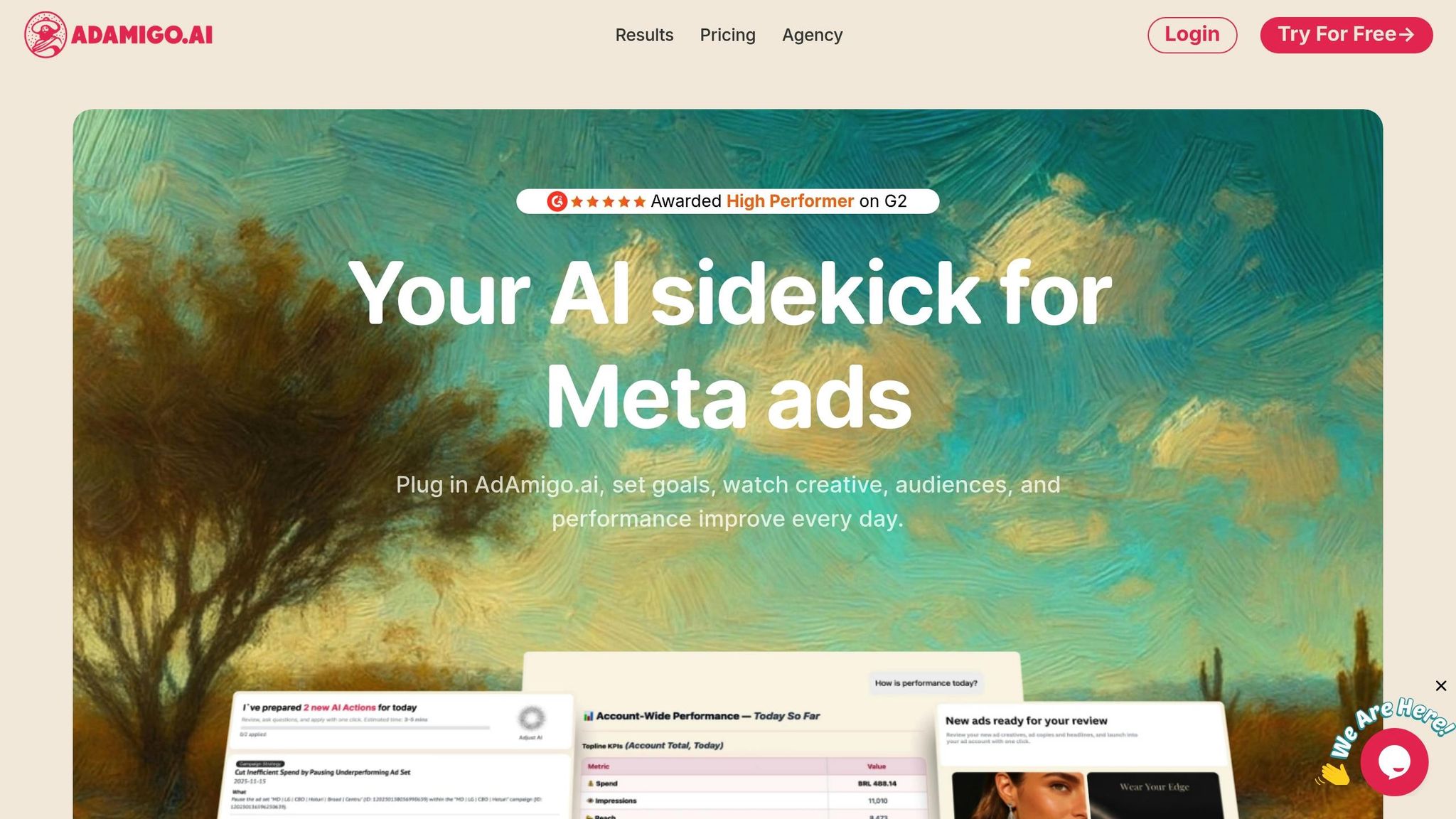
Monitoring budgets manually can eat up time. AdAmigo.ai’s AI Actions simplifies this by providing a daily list of prioritized budget and bid adjustments tailored to your Stories placements. The system respects your budget limits and pacing rules, and geo-restrictions while reallocating funds to the best-performing placements.
You can either approve each suggestion individually or let the AI handle it automatically. It adapts based on your account's actual results, fine-tuning its strategies faster than any human team could. For agencies or in-house teams stretched thin, this tool enables one media buyer to manage 4–8× more clients without compromising performance.
Performance Analysis and Improvement
Keeping a close eye on the right data points can reveal the strengths and weaknesses of your Stories campaigns. This process builds on the creative and targeting strategies we've already covered.
Track Key Performance Metrics
To measure how well your campaigns are converting, focus on analyzing Meta ad metrics like CPM, CTR, and ROAS. You can use tools like Advantage+ reports and Breakdowns in Ads Manager to compare Stories performance against Feed and Reels placements.
Before you launch, take advantage of Meta's Opportunity Score in your Account Overview and Campaign Score during the planning phase. These predictive tools give you a sense of how well-optimized your campaign is before you spend a single dollar. Also, make sure both your Meta Pixel and Conversions API are active and troubleshoot any tracking issues to avoid data gaps.
Metric Category | Key KPIs to Track | Purpose |
|---|---|---|
Efficiency | CPM, CPC, CPA | Understand the cost of reaching and converting users. |
Engagement | CTR, Engagement Rate | See how well your creative grabs attention in Stories. |
Profitability | ROAS benchmarks, Conversion Rate | Assess the financial return from your ad spend. |
Brand Health | Ad Recall, Brand Awareness | Gauge long-term impact on brand perception and creative effectiveness. |
Check Creative Compliance
Your campaign's success heavily depends on the quality of your creative assets. First, make sure your ads meet compliance standards and adhere to safe zone guidelines so that key UI elements remain unobstructed. If certain creatives aren’t performing well, audit them to ensure they grab attention quickly and communicate your brand message effectively. To keep your ads fresh and engaging and prevent creative fatigue, update creative assets weekly. For static images that underperform, consider adding motion or converting them into vertical animations using Stories templates.
"Ads that include centrally located text, such as 'add to cart,' at a specific focal point can be helpful in driving conversion metrics." - Meta Business Help Center
Get Detailed Insights with AdAmigo.ai
If you’re looking for deeper campaign insights, advanced AI tools like AdAmigo.ai can help. Its AI Chat Agent allows you to ask direct questions like "why" and "what next", giving you actionable insights across multiple campaigns. You can analyze performance trends, compare placements, and implement improvements through a conversational interface. The platform also performs daily audits of your account, highlighting prioritized recommendations. You can either approve these changes manually or let the AI handle them for you. This approach not only saves time but also keeps your optimizations consistent and data-driven.
Conclusion
The strategies outlined above provide a solid framework for creating effective Stories ads. Success hinges on crafting attention-grabbing, vertical creatives that immediately engage viewers, leveraging Advantage+ placements and broad targeting to let Meta's AI pinpoint your ideal audience, and using Campaign Budget Optimization to manage spending wisely. By consistently monitoring key metrics like CPM, CTR, and ROAS, you can measure your campaigns' performance and make data-driven adjustments.
Managing multiple campaigns manually can be a major time sink. Tools like AdAmigo.ai simplify this process by automating tasks like budget adjustments, creative development, and daily recommendations, saving you valuable time. You can even use AI agents to test creatives and optimize your account on autopilot.
Don’t forget to apply safe zone guidelines, mobile-first design principles, and asset rotation strategies to keep your ads fresh and effective. Make sure your Meta Pixel and Conversions API are fully operational for accurate performance tracking. If you encounter discrepancies, you may need to debug your conversion tracking to ensure data integrity. Whether you rely on manual optimization or integrate AI tools, these best practices provide a clear path to improving Stories ad results and making the most of your advertising budget.
FAQs
What are the best practices for improving conversion rates with Stories ads?
To improve conversion rates with Stories ads, focus on eye-catching, fast-paced visuals that grab attention within the first few seconds. Stick to a full-screen vertical format and keep your message short to match how users quickly scroll through Stories. Introduce your brand or product right away and include key details upfront to make an immediate impact.
Experiment with various creative styles to discover what resonates most with your audience. Use performance data to fine-tune your targeting and update your visuals regularly. Tools like AdAmigo.ai can simplify this process by automating creative production, optimizing audience targeting, and managing budgets in real time - freeing you up to concentrate on strategy while your ads work more effectively.
Staying consistent with testing and improving your campaigns will yield better results over time. A proactive, data-informed approach is key to success.
How does Advantage+ Placements improve ad targeting?
Advantage+ Placements uses machine learning to streamline ad delivery across Meta platforms, including Facebook, Instagram, Messenger, and Audience Network. It dynamically identifies the best placements to ensure your ads connect with the right audience, boosting both performance and targeting precision.
By automating placement decisions, this tool lets you concentrate on crafting your strategy while delivering better results.
What is Campaign Budget Optimization, and how does it enhance ad performance?
Campaign Budget Optimization (CBO) takes the guesswork out of managing your ad budget. It works by automatically allocating your funds across various ad sets, giving priority to those that perform the best. This means less manual tweaking, fewer mistakes, and smarter use of your advertising dollars.
By channeling resources toward ads that drive the strongest results, CBO helps you get the most out of your investment. It’s a time-saver that boosts efficiency while keeping your campaign on track to hit its goals.