What Is Vibe Marketing? Definition, examples, and the 2026 playbook
Vibe marketing uses AI to set a brand's emotional tone, automate content creation and testing, and scale campaigns faster and cheaper.
Vibe marketing is a new way to run campaigns by combining human creativity with AI tools. Marketers define the emotional tone and goals, and AI handles tasks like research, content creation, and campaign optimization. Introduced in 2025, this approach helps small teams achieve the output of much larger ones by automating repetitive tasks.
Key Takeaways:
How it works: Define the "vibe" (emotional tone), and let AI execute tasks like testing and optimizing ad creatives.
Benefits: Faster execution (weeks reduced to days), lower costs (70–80% savings), and scalable output.
Who it’s for: Startups, agencies, and in-house teams looking to do more with fewer resources. Many teams use AI tools for social ads to manage these workflows efficiently.
Real-world examples: Heinz’s AI campaign boosted sales by 15%, Spotify’s AI DJ increased engagement by 40%, and Coca-Cola’s fan-driven campaign generated 120,000 submissions.
Vibe marketing shifts marketers from doing everything manually to focusing on big-picture decisions, while AI handles execution at scale.
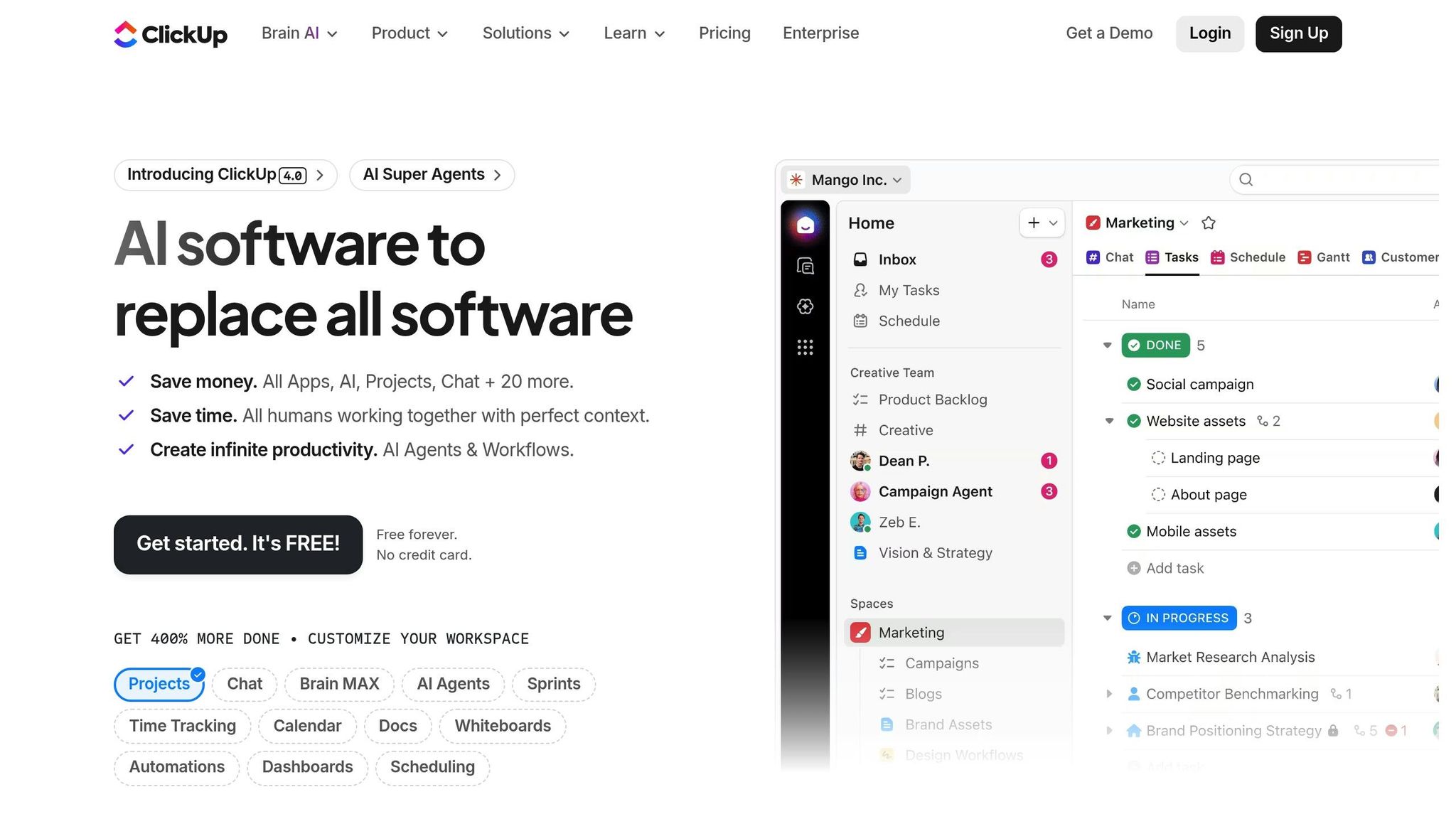
How to Use AI for Marketing Automation (Real Use Cases + Tools) | ClickUp
Vibe Marketing vs Traditional Marketing
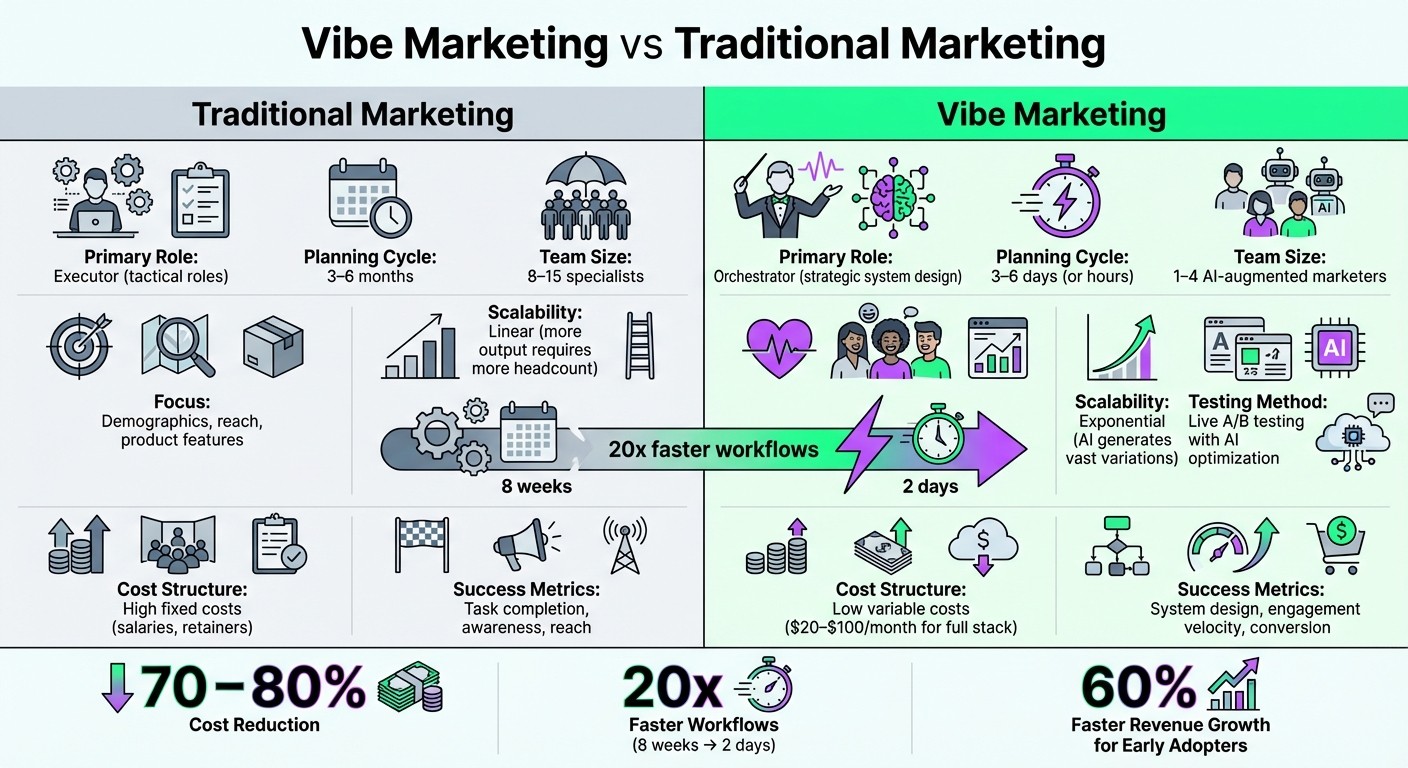
Vibe Marketing vs Traditional Marketing: Key Differences Comparison
Vibe marketing takes a fresh approach by integrating AI across strategy, creation, and execution, breaking away from the segmented structure of traditional marketing workflows. In traditional marketing, the process often resembles an assembly line, with distinct teams handling strategy, copywriting, design, and media buying. Each step involves multiple handoffs and requires specialized roles. Vibe marketing, on the other hand, consolidates these tasks into the hands of a single AI-augmented marketer, who focuses on orchestrating the process rather than executing each individual task.
"Traditional marketing is not future proof... because the execution model is broken. It is too slow, too expensive, and too fragmented."
One of the standout benefits of vibe marketing is its speed and efficiency. Workflows that once took eight weeks can now be completed in just two days - a staggering 20x acceleration. This shift not only slashes content production costs by 70–80% but also maintains high-quality output. Instead of relying on a large team to create variations, marketers simply provide creative direction, and the AI handles the rest.
Side-by-Side Comparison
Aspect | Traditional Marketing | Vibe Marketing |
|---|---|---|
Primary Role | Executor (tactical roles) | Orchestrator (strategic system design) |
Planning Cycle | 3–6 months | 3–6 days (or hours) |
Team Size | 8–15 specialists | 1–4 AI-augmented marketers |
Focus | Demographics, reach, product features | Emotional resonance, cultural fit, real-time responsiveness |
Scalability | Linear (more output requires more headcount) | Exponential (AI generates vast variations) |
Testing Method | Pre-launch focus groups | AI vs. manual A/B testing with AI optimization |
Cost Structure | High fixed costs (salaries, retainers) | Low variable costs (approximately $20–$100/month for a full stack) |
Success Metrics | Task completion, awareness, reach | System design, engagement velocity, conversion |
While traditional marketing still holds value in areas like regulated industries or enterprise B2B settings with lengthy sales cycles, vibe marketing is quickly becoming the go-to approach for most brands. The combination of faster execution, reduced costs, and AI-driven scalability has made it a game-changer. This allows brands to scale Meta ad budgets without the typical performance decay seen in manual workflows. In fact, early adopters of vibe marketing have reported revenue growth up to 60% faster compared to those sticking with traditional methods. Some brands have even launched Meta ads from scratch using these AI media buying platforms to beat traditional ROAS benchmarks.
This comparison reveals why vibe marketing is rapidly gaining traction among brands, agencies automating client accounts, and startups, offering a compelling alternative to outdated processes. Many are moving away from rule-based automation toward AI media buyers to maintain this competitive edge.
Who Should Use Vibe Marketing
Vibe marketing offers a game-changing approach for three primary groups: Startups, Agencies, and In-house brand teams. These groups often face similar challenges - tight budgets, high creative demands, and the constant need to stay relevant in a fast-moving world. Vibe marketing addresses these hurdles by leveraging AI to enable a single marketer to act as a strategic conductor, orchestrating campaigns with efficiency and creativity.
Startups
Startups often juggle limited resources and small teams, making it tough to compete with larger players. Vibe marketing changes the game by using AI to multiply the impact of a single marketer. With the right tools, one person can achieve the output of an entire team while retaining creative and strategic control.
"Vibe marketing enables one marketer to execute at the level of 5 people using AI and automation - while maintaining strategic control and creative judgment."
James Dickerson, Co-creator of Vibe Marketing
Instead of hiring an entire department, startups can create compelling brand experiences with a basic vibe stack that costs between $40 and $90 per month. Tools like Claude or ChatGPT, combined with automation platforms such as Zapier or Make, allow lean teams to quickly launch full-scale campaigns that would typically require much larger teams.
Agencies
For agencies, scaling client campaigns without ballooning costs or headcount is a constant challenge. Traditional models often require multiple specialized roles, which can drive up expenses and complicate coordination. Vibe marketing simplifies this by enabling an AI-powered orchestrator to handle execution tasks, letting strategists focus on storytelling and cultural relevance.
The results are striking. Agencies adopting vibe marketing workflows have slashed the time from concept to launch - from months to mere days. This isn’t about cutting corners; it’s about automating repetitive tasks like lead qualification, content variations, and ad placement optimization. Strategists can then focus on crafting narratives and driving cultural engagement. With AI-assisted coding and automation tools, agencies can now deliver custom solutions in hours - solutions that previously required six-figure budgets and extensive timelines. This efficiency allows agencies to scale campaigns across multiple clients simultaneously, eliminating the need for linear growth models.
Brands and In-House Teams
In-house marketing teams at established brands face the challenge of maintaining a consistent emotional tone across all channels while staying agile enough to respond to cultural trends in real time. Traditional workflows, with their lengthy approval processes and rigid content schedules, often fail to meet these demands.
Vibe marketing solves this by centralizing brand guidelines and tone within AI systems. These systems can generate and test on-brand content at scale, ensuring both consistency and speed. Rather than replacing human judgment, this approach enhances it, freeing brand managers to focus on strategic decisions instead of reviewing every piece of content manually.
With vibe marketing, brands can react to trending topics and cultural moments in hours instead of weeks. This agility means they’re no longer tied to monthly content calendars that may feel outdated by the time campaigns go live. By combining emotional consistency with real-time responsiveness, in-house teams can achieve a level of flexibility that traditional marketing structures simply can’t match. Vibe marketing gives brands the tools to stay relevant while staying true to their identity.
5 Real Examples of Vibe Marketing
These examples show how aligning marketing strategies with specific tones or emotions can produce impactful results.
Meta Ad Campaign
In 2025, Heinz made waves with its "AI Ketchup" campaign, playing on the idea that AI image generators often create visuals resembling a Heinz bottle. By blending "Brand Authority + Humor", the campaign racked up 15 million organic impressions and boosted sales by 15%. Today, similar Meta ad strategies allow marketers to specify tones like "playful confidence" while AI enables creative scaling for Meta ads by generating over 30 hook variations paired with AI-created visuals, testing them simultaneously and optimizing based on real-time engagement metrics. This process replaces the traditional weeks-long creative cycle with same-day testing and iteration.
Landing Page
The Boring Business Marketing demo project in August 2025 showcased just how fast vibe marketing can be. Using a "Confidently Boring" voice and "Overlooked Champion" positioning, the team created a vibe brief in plain English. AI then transformed it into a fully functional HTML/CSS landing page - all in a single recorded session. This eliminated the need for design handoffs, with AI generating hero copy, visuals, and CTAs that matched the intended vibe. What typically takes 2–3 weeks was completed in a day, letting teams focus on testing and refining instead of waiting on approvals.
Email Sequence
For a fintech startup in 2025, shifting to a "financial empowerment" vibe led to an 89% increase in qualified leads over six months. The emails felt more like genuine conversations than standard sales pitches. For example, a "supportive mentor" tone might include personal anecdotes and encouragement, while a "pragmatic advisor" tone would focus on actionable tips and frameworks. AI made it possible to test these emotional approaches quickly, replacing single-version campaigns with dynamic, data-driven optimizations.
Short-Form Video
Spotify's 2025 AI DJ feature is a prime example of vibe marketing in video. By using voice cloning, Spotify created a personalized DJ that offered conversational commentary between songs. This "Data-Driven Experience" resonated deeply with users, resulting in a 40% weekly engagement rate and a 30% increase in session time. For brands creating TikTok-style content, marketers can define a tone like "energetic adventure", and AI can generate UGC ad scripts for videos or text animations. The takeaway here? Authenticity and relatability matter more than polished production, enabling brands to launch content in hours instead of weeks.
Community Post
Coca-Cola’s "Create Real Magic" campaign in 2025 invited fans to use DALL-E 2 to create branded artwork. This community-driven effort garnered over 120,000 submissions and more than 7 million social impressions. By focusing on "collaborative creativity" rather than traditional top-down messaging, Coca-Cola turned its audience into active participants and advocates. On platforms like LinkedIn, vibe marketing often uses an "inspirational innovator" tone to craft posts that tie into current trends or cultural moments. AI then repurposes these ideas into 15+ platform-specific formats - like carousels, threads, and short videos - designed to maximize organic engagement. After all, 92% of consumers trust recommendations from individuals over brand messages.
These examples highlight how vibe marketing can streamline content creation while driving meaningful engagement across platforms.
Where Vibe Marketing Becomes Real – Distribution and Iteration
Why Most Teams Get Stuck at Content Creation
Creating vibe-driven content? That part’s straightforward. Getting it out there and making it work? That’s where things fall apart. A lot of marketing teams stall after creating their first batch of AI-powered ads or landing pages. Why? They’re stuck in a Level 1 approach, where manual transitions between tools slow everything down.
The real challenge isn’t coming up with ideas - it’s testing them at scale and making quick adjustments based on actual performance. Traditional workflows are painfully slow. Launching a campaign, gathering data, analyzing results, and then creating new variations can take weeks. By the time you’re ready to pivot, the market has often moved on. In fact, 68% of marketers say that slow planning cycles and internal red tape hold them back. On the flip side, vibe marketing has the potential to cut production time in half - or even more - by 50%–75%. But that only works if you can distribute and optimize the content effectively.
"If I have 1,000 customers, I have 1,000 marketing campaigns tailored to each person. There's no way a human team can do that." – Marc Sirkin
The key to making vibe marketing work is moving beyond just creating content. It’s about building systems that test, analyze, and adapt automatically. This means connecting your vibe brief directly to ad platforms, tracking metrics like CPC, CVR, and creative fatigue, and reallocating budgets to the best-performing variations. Without this kind of closed-loop system, vibe marketing remains just a concept. This is where an integrated solution using the best AI tools for Meta ads to automate testing and optimization becomes essential.
How AdAmigo.ai Fits Into Vibe Marketing
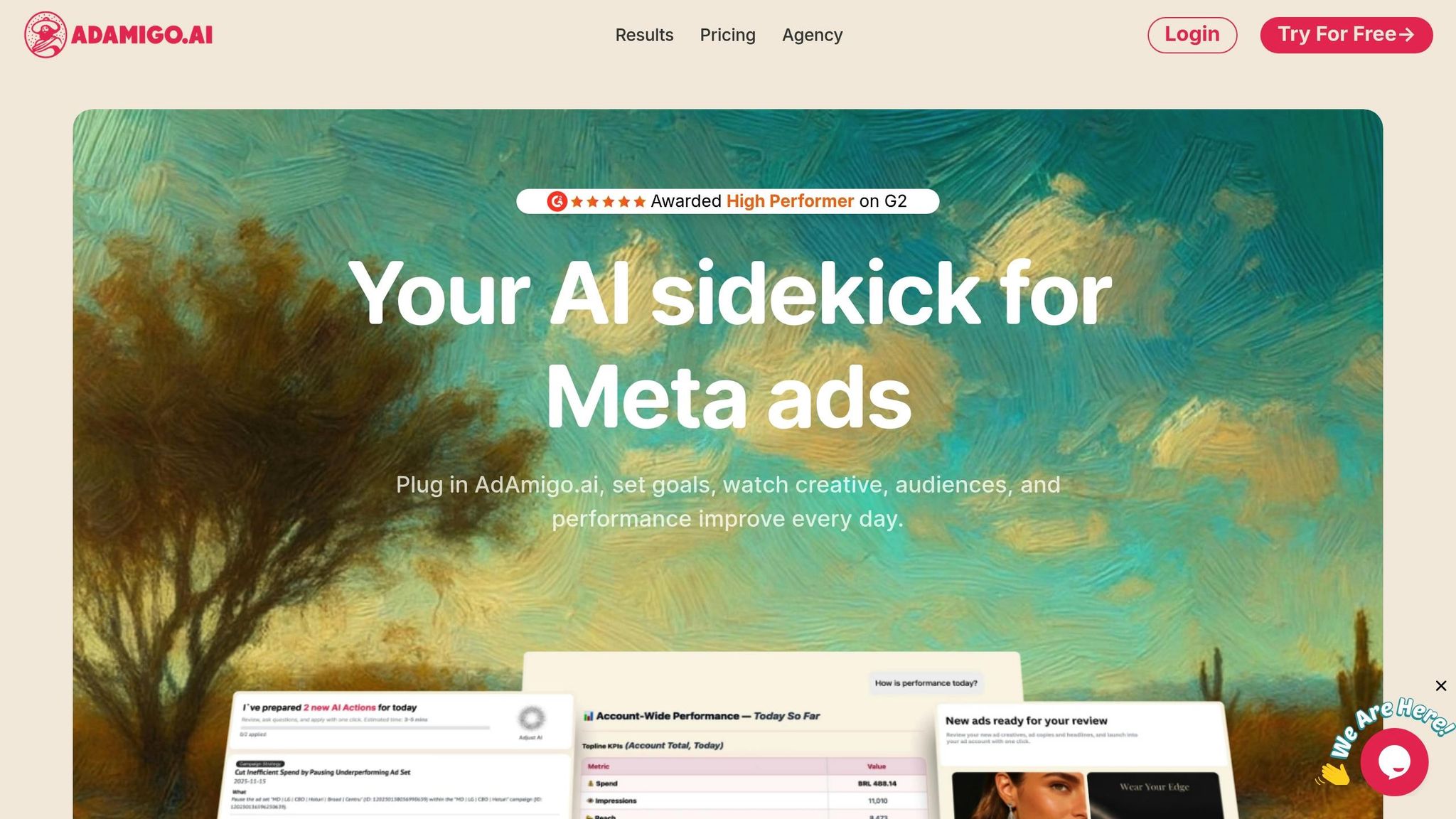
This is where AdAmigo.ai steps in to make vibe marketing actionable. Acting as a "Vibe Compiler", AdAmigo.ai takes your natural-language brief - like "confident, pragmatic, value-forward" - and turns it into fully structured Meta ad campaigns. These campaigns include creative variations, hooks, and precise audience targeting. You describe the vibe once, and the AI handles the rest, from generating assets to launching and optimizing them.
Here’s how it works: connect your Meta ad account, set your KPIs (e.g., "Increase spend by 30% while maintaining at least 3× ROAS"), and give the AI a vibe brief. The system then analyzes your brand identity, your top-performing ads, and even your competitors’ strategies. It delivers ready-to-go creatives with the click of a button [AdAmigo.ai]. On top of that, the AI Actions feature tracks performance 24/7 and gives you a daily to-do list of suggested tweaks. These could include testing new creatives, refining audience segments, reallocating budgets, or adjusting bids. You can either approve these changes with a single tap or let the system handle them automatically [AdAmigo.ai].
By solving distribution and optimization challenges, AdAmigo.ai aligns perfectly with vibe marketing’s promise of quick, data-driven iteration. The platform tackles a common problem: while many teams can create content, very few can test and refine it fast enough to figure out what actually works. By treating creatives, targeting, bids, and budgets as interconnected pieces that learn from real-world results, AdAmigo.ai bridges that gap. The results? Teams have reported up to a 30% performance boost in the first month, with some achieving ROAS increases of up to 83% [AdAmigo.ai].
The shift from being content creators to strategic orchestrators is what makes vibe marketing scalable. With tools like AdAmigo.ai, a single marketer can achieve the output of 5 to 7 people. This frees up teams to focus on what really matters: defining the vibe, setting clear goals, and identifying target markets. The execution? Leave that to the AI. This is how vibe marketing evolves from a creative exercise into a system for sustained growth.
The 2026 Vibe Marketing Playbook
Vibe marketing is changing the game for modern teams. Instead of relying on large groups and lengthy timelines, this approach enables small teams of just 2–4 AI-powered generalists to launch campaigns in as little as 3–6 days.
Here’s how it works: as the strategic lead, you focus on defining the tone, audience, and KPIs. Meanwhile, AI takes charge of building and optimizing creative assets. This setup allows one marketer to handle tasks that used to require 5 to 10 specialists.
The results? Early adopters are seeing some impressive numbers: 70–80% lower content costs, 60% faster revenue growth, and 68% higher ROI. By automating not just content creation but also distribution, these teams are unlocking new efficiencies. Tools like AdAmigo.ai make it possible to turn vibe-driven content into optimized Meta campaigns. These campaigns adapt and improve on their own, delivering up to 30% better performance and 83% ROAS increases within the first month [AdAmigo.ai].
Want to get started? Here’s a quick roadmap:
Take stock of your weekly tasks and pinpoint your three most time-consuming manual processes. Automate them.
Follow the 5-Stage Build Sequence: Research → Foundation → Structure → Assets → Iteration. Use AI to create multiple variations and rely on your judgment to select the best ones.
The shift from being an executor to becoming an orchestrator is already happening. Embrace this change now, or risk getting left behind.
FAQs
What’s the best way to define a brand “vibe” for AI?
Defining a brand's "vibe" for AI boils down to capturing the emotional or tonal essence the brand aims to communicate. Whether the intent is playful, rebellious, or sophisticated, AI can play a key role in refining research, crafting content, and executing strategies. By setting clear emotional guidelines, AI tools help create consistent and contextually relevant content. At the same time, they allow room for experimentation and adjustments - an essential part of effective vibe marketing.
Which metrics prove vibe marketing is working?
Metrics that show the success of vibe marketing revolve around emotional engagement and campaign outcomes. Some key indicators include social interactions - such as likes, shares, and comments - along with brand sentiment and organic reach. Growth markers like stronger brand affinity and deeper emotional connection also highlight its impact. On top of that, better ad performance, including smarter ad spend and higher conversion rates, underscores its effectiveness, particularly when powered by AI-driven, emotionally engaging content.
How do you automate testing and optimization, not just content?
To streamline testing and optimization beyond just content, vibe marketing emphasizes ongoing refinement through paid distribution and real-time testing. Tools like AdAmigo.ai play a key role by transforming vibe-focused creative into active campaigns. These tools then automatically fine-tune the campaigns based on performance metrics. This approach cuts down on manual labor, accelerates testing processes, and ensures campaigns are continuously adjusted to deliver the best ROI - all without requiring constant hands-on management.