Free Profit Margin & Break-Even ROAS Calculator for Ecommerce
Enter COGS, price and fees to get margins, ROAS targets and catalog averages in seconds.
Hungry for more? Try AdAmigo.ai for free:
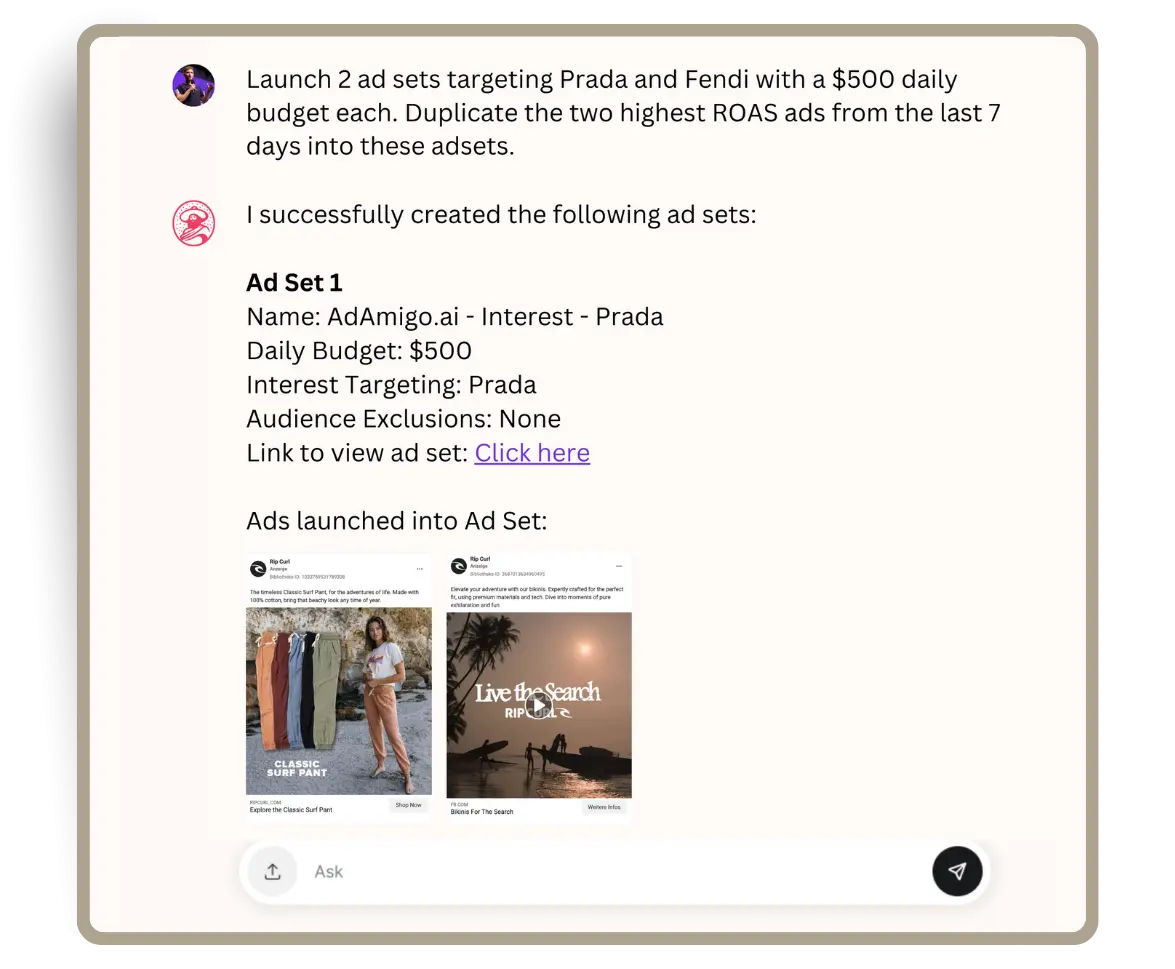
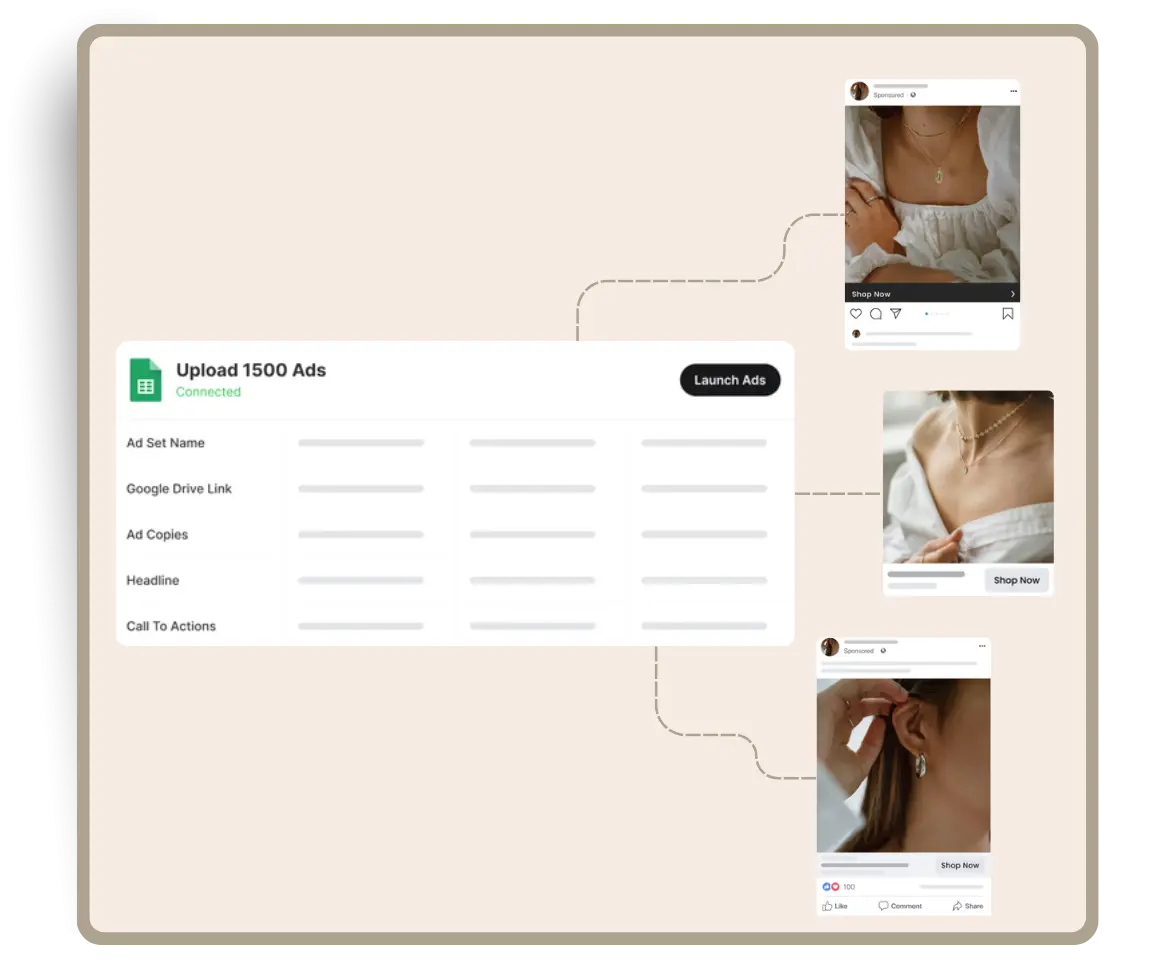
Go beyond auditing your ads. Connect and brief our AI agent within 5 minutes, and let it design your ads, bulk launch your existing ads, and build and manage your campaign strategy on autopilot.
Start for $0 ->


Profit Margin & Break-Even ROAS: The Numbers Every Ecommerce Brand Should Know
If you run an ecommerce brand or manage paid ads for clients, you live and die by two numbers:
how much you actually make on each product
how far you can push your ad spend without losing money
That is profit margin and break-even ROAS.
Most stores guess both. They mark up products, throw money into Meta or Google, and then try to “feel” whether campaigns are working. That works for a tiny catalog and hobby-level spend, but it falls apart as soon as you scale.
That is exactly why we built this free Profit Margin & Break-Even ROAS Calculator for AdAmigo.ai users and friends. Enter your COGS, sale price and fees, run it for one product or your full catalog, and you get:
per-product profit margin
per-product break-even ROAS
average margin and average break-even ROAS for your whole product set
In other words: a clean, data-driven baseline for your pricing and media buying decisions.
What is profit margin, really?
Profit margin tells you what percent of every dollar of revenue you actually keep after costs.
At a simple product level:
Revenue per sale = sale price
Total cost per unit = COGS + shipping + payment fees + other variable costs
Profit per sale = revenue − total cost
Profit margin (%) = profit per sale ÷ revenue per sale × 100
If you sell a product for 50 and total cost per unit is 30, your profit is 20 and your margin is 40 percent.
Why it matters:
Pricing: Margin tells you how aggressive you can be with discounts without killing profitability.
Scaling: Low margin products require much stricter ROAS targets.
Product selection: If a product cannot support a healthy margin, it may not be worth scaling at all.
Big platforms like Shopify and Yotpo ship profit margin calculators for a reason: merchants need help understanding if their pricing makes sense and how changes impact their margins over time.
You can see Shopify's guide here: https://www.shopify.com/blog/profit-margin
What is break-even ROAS and how is it connected to margin?
ROAS (Return on Ad Spend) is:
ROAS = revenue from ads ÷ ad spend
Break-even ROAS is the ROAS at which you make exactly 0 profit. Below it you lose money; above it you make money. Tools and blog posts from agencies and analytics platforms all emphasise that knowing this “golden number” is the starting point for responsible scaling.
A simple external reference: https://breakevenroascalculator.com
There are two equivalent ways to think about it:
Using revenue and total costs per unit
Total costs per unit = COGS + fees + fulfillment etc.
Break-even ROAS = revenue per unit ÷ (revenue per unit − total costs per unit)
Using profit margin
Profit margin (as a decimal) = profit per unit ÷ revenue per unit
Break-even ROAS = 1 ÷ profit margin
So if your margin is 30 percent (0.3 as a decimal), your break-even ROAS is 1 ÷ 0.3 ≈ 3.33.
You need at least 3.33x ROAS just to not lose money.
That is why margin and break-even ROAS must be looked at together instead of in isolation.
Why ecommerce brands and media buyers should care
If you are running Meta, Google, TikTok or any other paid traffic, your life gets much easier when you know your numbers:
You stop scaling “nice” looking campaigns that are still unprofitable.
You can set ROAS targets by product or by bundle instead of guessing one number for everything.
You see immediately which products give you the most room to scale aggressively.
You can have sane conversations with founders, finance and agencies about what “good performance” actually means.
Most break-even ROAS calculators focus on a single product and ignore the reality that brands sell dozens or hundreds of SKUs. On top of that, marketers often use one blended ROAS goal for the whole account.
Your tool fixes that.
If you want to calculate ROAS separately, you can also use our free ROAS Calculator:
https://adamigo.ai/free-tools/roas-calculator
How to use the free Profit Margin & Break-Even ROAS Calculator
Here is a simple workflow you can add as inline instructions on the page or as a help tooltip.
Add one or multiple products
For a quick check, enter a single product: COGS, sale price and any extra fees.
To audit your catalog, add all your key products or variants. Think in terms of “hero” SKUs and main bundles.
Fill in the cost side properly
For each product row, include:
COGS (cost of goods sold)
Sale price (the price customers actually pay)
Additional fees (payment fees, packaging, average shipping cost, platform fees etc.)
Run the calculation
The calculator will output for each product:
Profit per unit
Profit margin (%)
Break-even ROAS (the ROAS threshold for that SKU)
Review the catalog-level summary
At the bottom, you see:
Average margin across all products you entered
Average break-even ROAS across the catalog
This gives you a fast sense of whether your store economics actually support your current ROAS expectations.
How to interpret the results
Once you have numbers, here is how to turn them into decisions.
Products with very low margins and very high break-even ROAS
These products require extremely strong ad performance just to break even.
Consider raising the price, lowering costs, or using them mainly as upsells instead of front-end acquisition offers.
Products with healthy margins and low break-even ROAS
Ideal for prospecting and scaling ad spend.
You can afford lower ROAS in cold traffic and still be profitable, especially if you have good retention or LTV.
If you'd like to calculate supporting metrics like CPC or CTR, you can also use these tools:
CTR Calculator: https://adamigo.ai/free-tools/ctr-calculator
CPC Calculator: https://adamigo.ai/free-tools/cpc-calculator
Catalog average vs current account targets
If your catalog average break-even ROAS is 2.4 but your account is optimised around 1.8, you are probably burning money.
If your catalog average break-even ROAS is 2.0 and you insist on 4.0 across all campaigns, you might be under-spending and leaving growth on the table.
Aligning goals with stakeholders
Share the report with founders or clients so they see that ROAS targets come from math, not vibes.
Agree on “profit-neutral” and “ideal” ROAS bands for each main product or collection.
Common mistakes when calculating margin and ROAS
Ignoring fees and variable costs
Only counting COGS and forgetting about payment fees, packaging, returns or platform fees will inflate your margin and make your break-even ROAS look too low.
Using one ROAS target for everything
Different products have different economics. Using the same ROAS goal for a 10 percent margin product and a 70 percent margin product makes no sense.
Confusing AOV and unit economics
It is useful to calculate at both levels:
per unit / per SKU
per order / average order value
Your calculator handles the SKU level; you can always roll this up later.
Looking at last-click ROAS only
Margin and break-even ROAS are fundamentals, but attribution still matters. If you use blended or modeled ROAS, just be consistent when you compare.
From numbers to action: how AdAmigo.ai can help you hit your ROAS targets
Knowing your margins and break-even ROAS is step one. Step two is actually running your ads in line with those numbers.
That is where AdAmigo.ai comes in:
https://adamigo.ai
With AdAmigo.ai you can:
Set ROAS or CPA targets that are aligned with the output from this calculator.
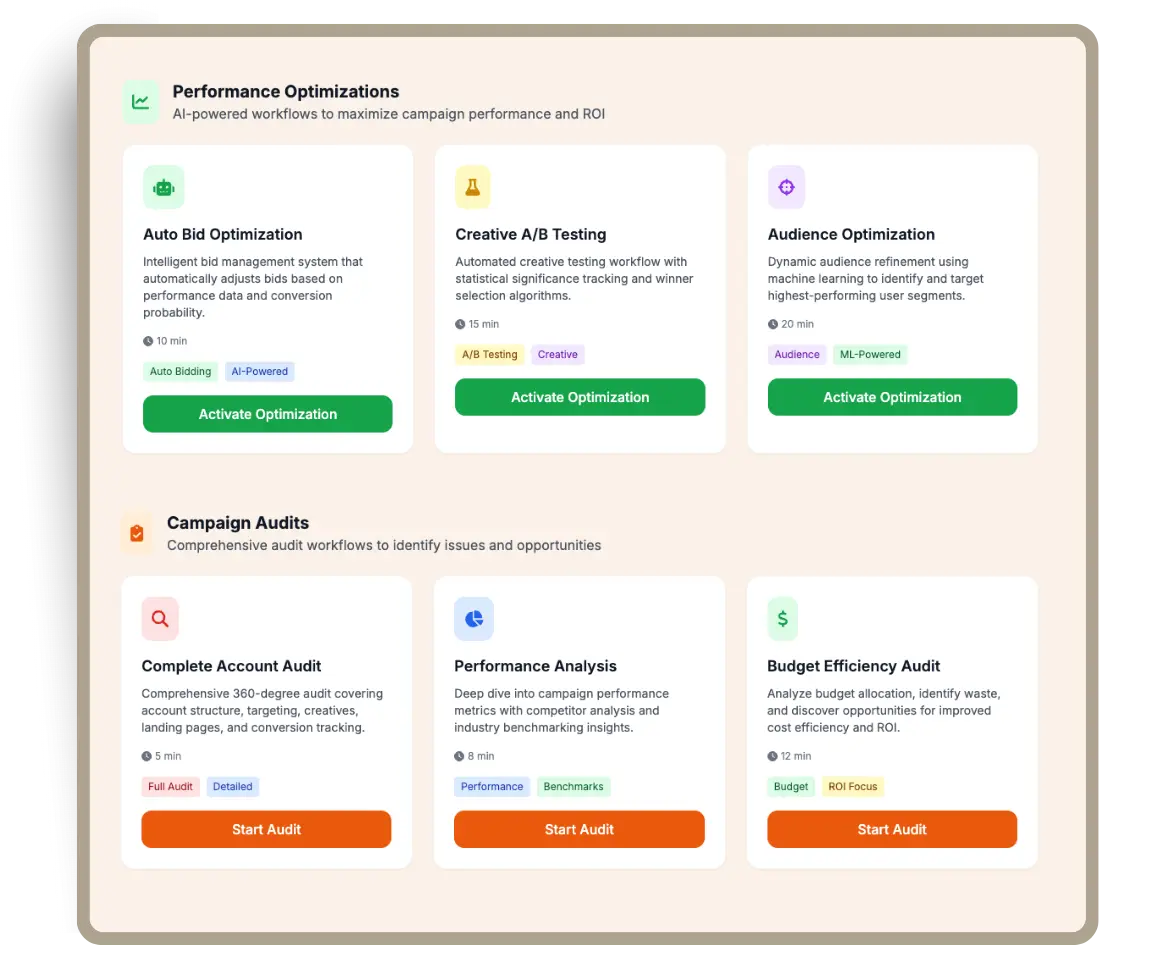
Let the AI media buyer audit your Meta ad account and suggest budget moves, pausing, and scaling actions based on performance against those targets.
Launch and test new creatives and campaigns in a few chat prompts instead of manually rebuilding every ad set.
Use autopilot or one-click approvals so your account is adjusted every day without you living inside Ads Manager.
The workflow looks like this:
Use the Profit Margin & Break-Even ROAS Calculator to define realistic, product-level guardrails.
Plug those targets into your AdAmigo.ai preferences.
Let the AI handle the heavy lifting of optimising budgets, bids and creatives to stay above your break-even ROAS.
You get a clear view of your numbers and an agent that actually acts on them.
Wrap up
If you only take one thing away:
Every product has its own margin and break-even ROAS.
Guessing them is expensive.
Calculating them once and using them to steer your ads is a massive unlock.
Use this free calculator regularly when you change prices, launch new products, or rethink your media buying strategy. Then let AdAmigo.ai turn those insights into daily, automated optimisation of your Meta ads.
FAQ: Profit Margin & Break-Even ROAS Calculator
What is a good profit margin for ecommerce?
Most ecommerce brands operate between 20–60 percent margin depending on the product category. Lower than 20 percent means you must run extremely efficient ads to stay profitable. Higher than 50 percent gives you room to scale aggressively, run promotions, and absorb fluctuations in ad performance.
What is break-even ROAS?
Break-even ROAS is the Return on Ad Spend at which you make zero profit. If your revenue from ads divided by ad spend equals this number, you are neither earning nor losing money. Anything above it is profit; anything below it is loss.
How do I calculate break-even ROAS manually?
Break-even ROAS = 1 ÷ profit margin (as a decimal).
For example: if your margin is 0.30 (30 percent), break-even ROAS is 1 ÷ 0.30 = 3.33.
Why does break-even ROAS matter for Facebook and Google ads?
It defines the ROAS threshold your campaigns must exceed to stay profitable. Without knowing this number, you may scale unprofitable campaigns or pause profitable ones based on intuition instead of economics.
Should I calculate break-even ROAS per product or for my whole store?
Ideally both. Per-product ROAS tells you which products work best for acquisition. Catalog-level ROAS gives you a blended benchmark for account-wide decisions. This calculator provides both so you can set more accurate performance targets.
Do discounts affect profit margin and break-even ROAS?
Yes. Any discount lowers the sale price, reduces your profit per unit, and increases your break-even ROAS. Before running a sale, quickly recalculate your economics using updated sale prices.
How often should I update my profit margin and ROAS assumptions?
Update whenever cost changes occur: new shipping rates, increased COGS, new packaging costs, or fee changes from your ecommerce platform or payment provider. Many brands update these numbers monthly.
Can I use this calculator for dropshipping products?
Yes. Just ensure you enter the true cost per unit, including supplier cost, shipping, and transaction fees. The output works the same for dropshipping, DTC, wholesale, affiliates, and hybrid brands.
Can I export or save my results?
You can copy the output and paste it into your notes or spreadsheet for record-keeping. (Optional: If you'd like, I can help you create a downloadable PDF export or CSV export concept for the future.)

Want to get even more free value?
Explore our other free tools ->